


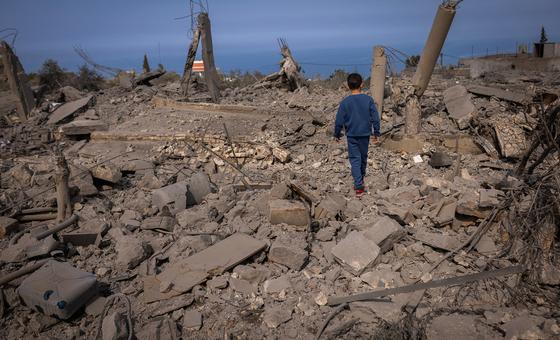
Over the weekend, the UN peacekeeping force in Lebanon (UNIFIL) observed intensive activity by Israeli forces, including extensive airstrikes near several villages, continued naval operations off the coast of Naqoura, and drone activity close by – including drones reportedly operated by Hezbollah militants.
On Friday, UNIFIL patrols faced restrictions near Al Bayyada, where Israeli tanks blocked the road. Another UNIFIL position was impacted by machine gun fire, with one round hitting a UN vehicle parked inside a compound.
“We reiterate once again that our peacekeepers must never be targeted, and their safety and security must be guaranteed at all times by all parties,” UN Spokesperson Stéphane Dujarric told journalists at his regular press briefing in New York.
Despite the insecurity, UN peacekeepers facilitated an aid convoy of around 30 trucks to the border town of Rmeich, where approximately 7,000 residents remain, amid difficult and dangerous conditions.
Humanitarian situation
On the broader humanitarian front, the situation continues to deteriorate. Lebanese authorities reported that 13 people – including one child and four women – were killed, and 32 injured in strikes across southern Lebanon on Sunday.
Authorities say more than 124,000 people are now sheltering in 625 schools and public buildings, while new displacement orders issued in 11 towns in Nabatieh were followed by airstrikes, forcing additional families to flee.
Some residents attempting to return home have instead gone back to shelters after finding their houses destroyed or inaccessible.
Healthcare under strain
According to the latest update from UN agencies and partners, the situation remains “highly volatile,” particularly in southern areas and locations where displaced people are attempting to return.
Health services are severely constrained. Three hospitals and 41 primary healthcare centres remain non-operational, while several others are only partially functioning.
These limitations are placing intense pressure on remaining facilities, reducing the quality and continuity of care and leaving many communities without access to essential services.
If gaps are not addressed, health officials warn of rising complications, avoidable deaths and a growing healthcare crisis.
In Gaza displaced families are living in overcrowded tents and makeshift shelters, surrounded by waste and debris, with limited access to safe water and sanitation services.
Gaza aid teams call for access, civilian protection
The UN’s top relief official, Tom Fletcher said aid teams continue to work “strenuously to help Palestinians in Gaza,” but need “sustained access, the protection of civilians, neutrality and partnership.”
Last week, humanitarian partners delivered tents, bedding and other emergency supplies to nearly 4,500 households, while improved emergency shelters were installed in the devastated southern area around Khan Younis to provide temporary protection for displaced families.
Health concerns are mounting. Aid workers report rising cases of skin diseases and other illnesses linked to pests and poor living conditions, while more than 6,600 people require prosthetic and rehabilitation care.
That includes thousands of civilians who’ve had limbs amputated since the violence erupted in October 2023, yet there are only eight prosthetic technicians on hand in Gaza.
Humanitarian partners say that 20 per cent of amputees are children, warning it could take five years or more to address current needs, due to the chronic shortages.


