


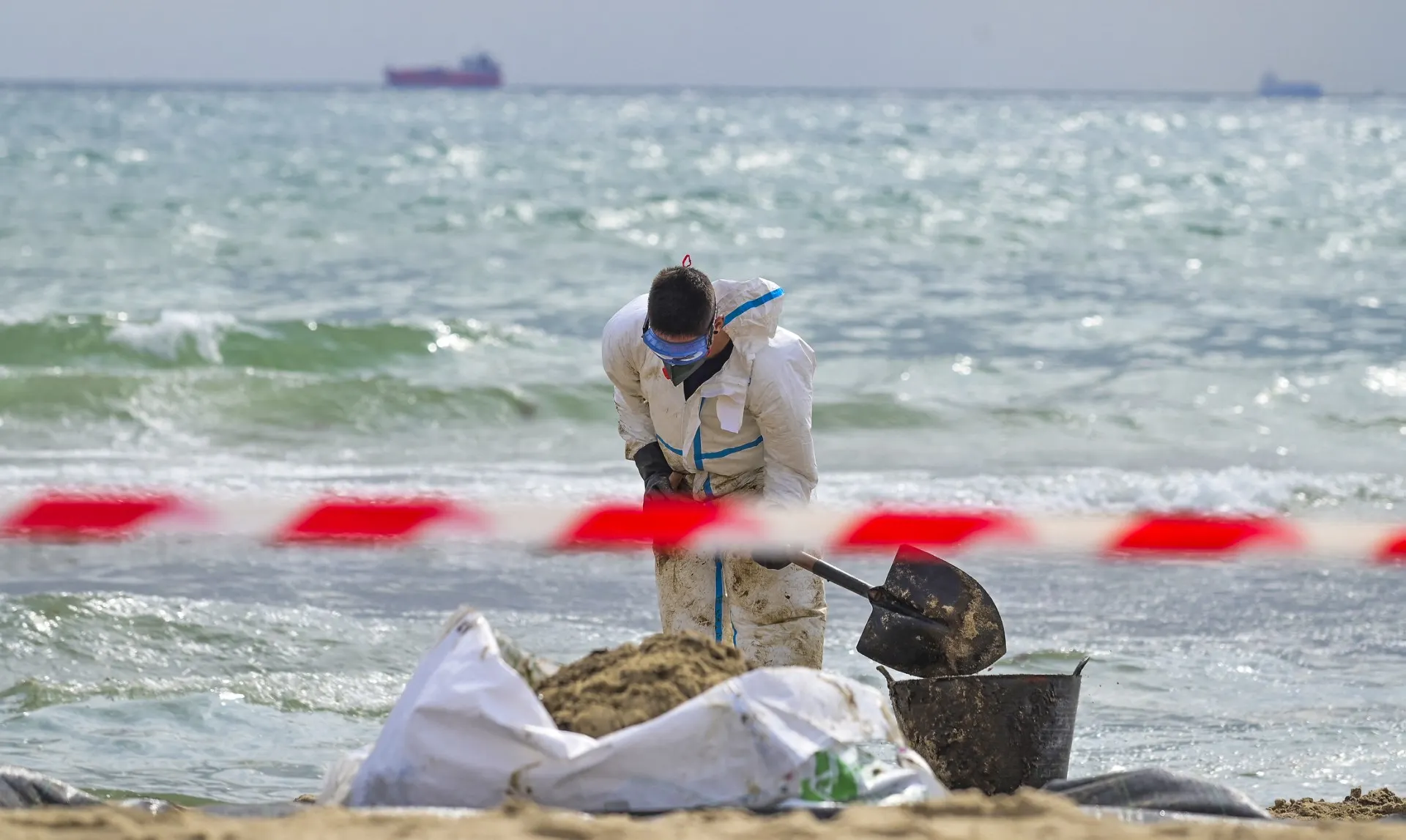
Environmental groups in Spain have handed out nearly 50 dreaded ‘black flag’ awards to beaches in Spain, with many suffering from pollution in popular tourist areas.
A new list of Spain’s black flag beaches has been released, with many in popular tourist areas revealed to be chemically polluted or swimming in human waste.
After analysing Spain’s 8,000 kilometres of coastline, the Ecologistas en Acción group awarded its annual black flags to 48 coastal locations.
When presenting the report on Tuesday, the organisation emphasised that “there could be many more” worthy of the black flag across the country.
READ ALSO: Spain crowned country with most Blue Flag beaches in 2026
The situation is so bad in places, the organisation’s spokesman said, that “in many cases, we’re swimming in our own filth,” according to Lucas Barrero during Tuesday’s presentation of the 186-page report in Avilés.
Among the locations highlighted are 14 due to dumping and serious wastewater treatment problems. There are also 9 included due to impacts on biodiversity, 8 due to urban development and encroachment on public land, and seven due to chemical pollution.
On a regional level, this year Catalonia has been awarded six black flags, two for each of its three coastal provinces. Specifically, the coastline at l’Ametlla de Mar (Tarragona), Sant Adrià del Besós (Barcelona) and Golfet de Palafrugell (Girona) were given the undesired accolade for pollution.
The report notes the “continuous discharge of sewage” onto Paella beach in Torredembarra, Tarragona, the mouth of the River Llobregat in El Prat de Llobregat in Barcelona and the coastline of the Begur Mountains in Girona.
A further six black flags were awarded in the Valencian Community. In Alicante at Almadrava beach, due to pollution, as well as Albufereta and Cap de l’Horta, both due to poor management.
In Castellón, the beaches of Surrach in Benicarló and La Ribera in Cabanes have received black flags.
And in Valencia, the coastal sanitation system has been criticised for “sewage contamination and shortcomings” and the beaches around Valencia port have been cited for “serious impacts” caused by expansion works which are generating “sediment plumes from sand transport operations, affecting the biodiversity of the area”.
READ ALSO: How to check seawater quality at any beach in Spain
On the Canary Islands, Las Teresitas – Tenerife’s most popular beach, in the capital of Santa Cruz – was given a black flag due to pollution.
In the south of Tenerife, the beach in Puertito de Adeje also received the black flag label as it’s the site of the controversial new Cuna del Alma hotel complex.
Gran Canaria received one for poor management and pollution, including “chronic discharges and acute episodes of pollution” on the coast of Telde.
The report also noted the pollution impacts of cruise ships in Lanzarote specifically.
In Andalusia, Ecologistas en Acción handed out a further 10 black flags, two for each of the coastal provinces. These include the Huelva Estuary, Algeciras Bay (Cádiz), Maro Beach (Málaga), La Charca beach in Salobreña (Granada) and Quitapellejos beach (Granada).
Due to poor management, they also included the central beach at Isla Cristina (Huelva), as well as Vejer, Barbate and Tarifa (Cádiz), the dune area in Marbella (Málaga), Los Berengueles beach in Almuñécar (Granada) as well as the beaches the Punta Entinas-Sabinar Nature Reserve in Almería.
For a full breakdown of the black flags awarded across the country, use the interactive map below.
READ ALSO: Ten colourful characters you’re likely to spot at Spain’s popular beaches
However, despite the black flags, this year Spain was once again the world leader when it comes to the number of Blue Flag beaches.
In 2026, Spain has a total of 677 Blue Flag beaches, 35 more than last year and more than any other country in the world.
Blue Flags are awarded by the Foundation for Environmental Education (FEE) and recognises beaches for their water quality, environmental management, safety, and the quality of facilities.
READ ALSO: Where are Spain’s Blue Flag beaches?


