


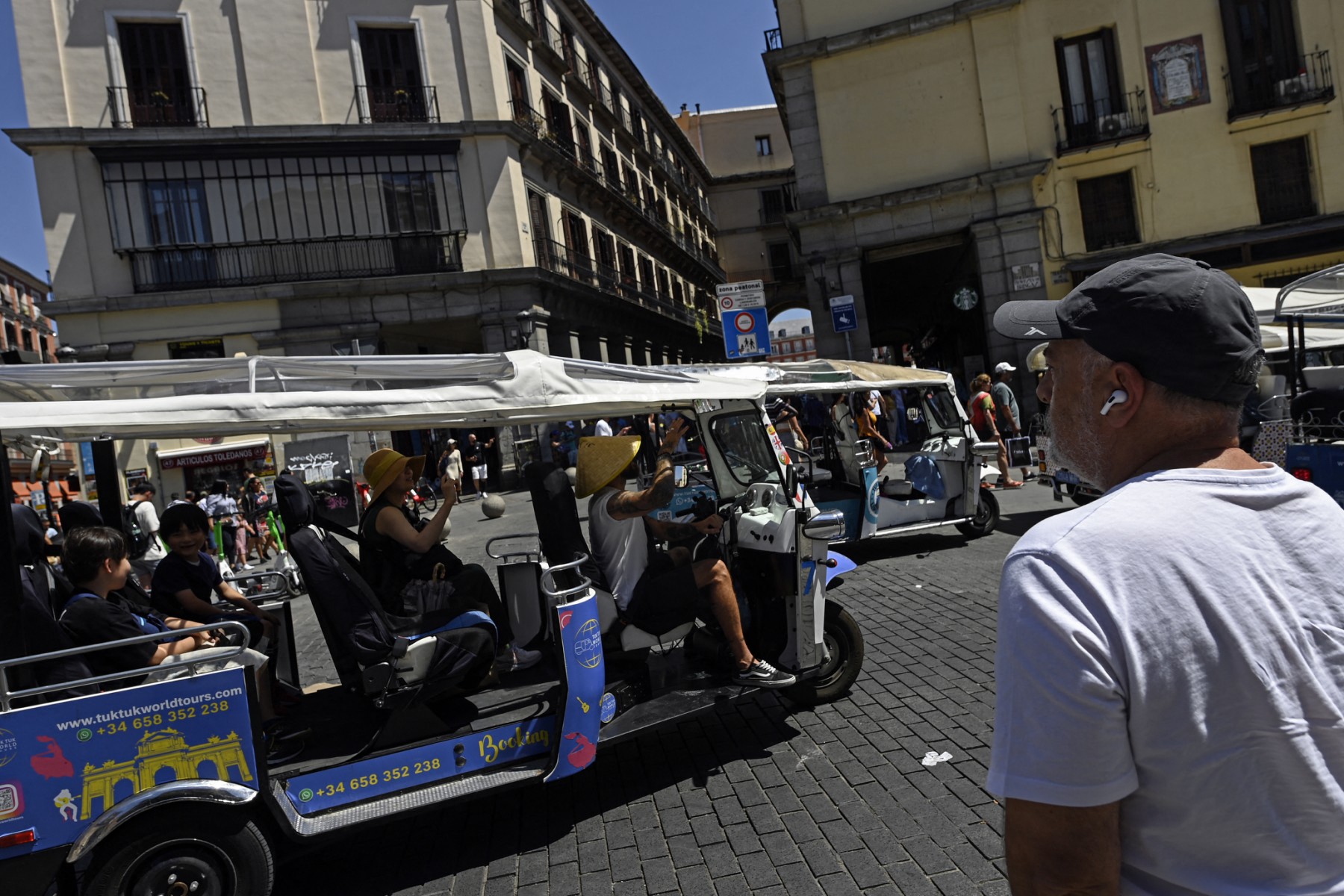
Tuk-tuks, the motorised rickshaw-style taxis popular in Asia, are “conquering” Madrid and causing concern among locals.
Locals and residents associations in Madrid are pleading with the local council to take measures against the growing numbers of ‘tuk-tuk’ taxis in the capital.
Tuk-tuks, which are a form of motorised tricycle or rickshaw taxi popular in Asia, are increasingly drawing criticism for their contribution to traffic congestion in Madrid city centre as well as a lack of training for drivers who often act as unofficial tour guides or take business from regulated taxis.
The rising problem, combined with alleged police inaction, is becoming so bad that some in the Spanish media have dubbed the tuk-tuk scene in Madrid the “law of the jungle.”
Many complain about tuk-tuks travelling at speed in pedestrianised parts of town. Another outlet has described them as “conquering Madrid” with surging numbers of tuk-tuks and little oversight.
READ ALSO: Madrid bans e-scooters on all public transport
Víctor Rey, president of the Sol y Letras Association, a residents group, told Spanish daily El Diario about the problems these tricycle taxis generate in the neighbourhood, saying the problem is nothing new.
“The inconvenience on certain streets in the Letras neighbourhood and the Palacio district is widespread and well known. We’ve been putting up with a situation for years that is not at all pleasant and is out of control. It causes real chaos to traffic, especially in narrow streets that already have a high level of traffic,” Rey said.
Tuk-tuks have very quickly become a familiar feature of traffic jams and over-tourism in central Madrid, meaning their presence has grown unaccompanied by specific rules to regulate them.
But now Madrid council, spurred on by pressure from locals and opposition parties, is finally turning its attention to the unlicensed taxis.
Primary discussions about drawing up specific legislation were held at Cibeles city council in January, with the current lack of tax obligations made on tuk-tuk drivers in particular being raised as a potential way of cracking down.
Advertisement
Spokesperson for Más Madrid, Esther Gómez, asked councillor Engracia Hidalgo about specific tax regulations, but it seems they are still at the developmental stage. Hidalgo referred only to “a previous evaluation that, due to its complexity, is still being developed.”
For Gómez, the three-wheel taxis “raise many questions about the legal margins they are using to provide their services,” adding that tuk-tuks are essentially able to “use public space for an economic activity that is free of charge as they are not affected by municipal taxes.”
Gómez compared this to the taxes paid by newsagents or ice cream sellers, licensed taxi drivers themselves or any other street business.
Similarly, Madrid’s Professional Taxi Federation has raised concerns for some time, which it claims instead of being simply a tourist attraction is silently eating away at the legal taxi market: “We are starting to see them picking up tourists with suitcases from hotels and taking them to the stations.”
READ ALSO: ‘Gentrified out of existence’ – Madrid protest adds weight to Spain’s anti-tourism wave


