


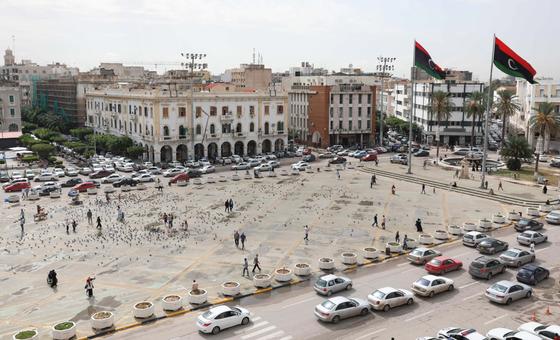
Nearly 15 years after the fall of Muammar Gaddafi and the emergence of rival administrations in 2014, the country remains divided, with the internationally recognised Government of National Unity (GNU) based in Tripoli in the northwest and the Government of National Stability (GNS) in Benghazi in the east.
“Every day, ordinary Libyans face recurring crises, whether economic, security or political,” Hanna Tetteh, Special Representative of the UN Secretary-General for Libya, told ambassadors in the Security Council on Thursday.
She said that most Libyan leaders agree on the need for an inclusive political process, ending unilateral actions, unifying institutions and restoring stability. Some believe a new unified government is the solution, while others argue it could extend the transition.
Similarly, though there is consensus on holding elections, opinions differ on whether a constitutional framework should precede them.
“Political will for compromise is crucial to develop a consensual roadmap resolving Libya’s political crisis and completing the transition. Elections must be integrated into a comprehensive political framework promoting state-building by unifying and strengthening institutions,” Ms. Tetteh added.
Divisions due to economic competition
The competition for Libya’s oil wealth lies at the heart of its political and economic challenges.
“The protracted institutional and political divisions, coupled with harmful unilateral actions and the struggle for control of resources by a privileged few, hold the aspirations and needs of the Libyan people captive,” Ms. Tetteh said.
She warned that overspending of Libya’s vast resources without an agreement on the national budget could lead to an economic collapse if not urgently addressed.
“This is despite the fact that the country’s resources could provide adequately for the safety, security and well-being of its citizens.”
Security and human rights challenges
While the 2020 ceasefire continues to hold, Libya’s security landscape remains precarious, marked by periodic tensions and localized outbreaks of violence.
Recent military build-ups in Tripoli and disputes over territorial control have heightened fears of renewed conflict.
Arbitrary detention continues to be widespread, with legal professionals and political opponents among those targeted. Although some detainees have been released in both eastern and western Libya, many remain held in unlawful detention without due process.
The broader human rights situation also remains deeply concerning – particularly regarding the treatment of migrants, refugees and humanitarian workers. Xenophobic and discriminatory rhetoric has further inflamed social divisions and jeopardised the safety of vulnerable communities.
Women, in particular, face serious threats, including gender-based violence and limited access to legal or social protection.
UNSMIL’s continued support
Amid ongoing challenges, the UN Support Mission in Libya (UNSMIL) – which Ms. Tetteh heads – continues to engage with political actors, civil society representatives and technical experts to support a Libyan-led path forward.
The Mission is facilitating the work of the Advisory Committee, which it established in February. The Committee is tasked with identifying options to resolve contentious electoral issues and is expected to submit its report with proposals by the end of April.
UNSMIL is also consulting economic experts on reforms to strengthen financial sustainability and transparency.
At the same time, efforts to enhance communication and information sharing between military authorities from eastern and western Libya are ongoing, including the establishment of joint security coordination centres.
International collaboration and political will essential
Ms. Tetteh also emphasised the importance of international support for Libya’s political and economic recovery.
While Libyan leaders continue to grapple with their differences, there is a growing recognition that external actors must collaborate to support a comprehensive, Libyan-led solution to the country’s crisis.
“The international community must come together to collaborate on a unified plan to support a democratic state that addresses the Libyan people’s fundamental needs and aspirations, fosters economic growth and equitable development,” she noted.
“Inaction will be more detrimental than the cost of change.”


