


Developed by the Food and Agriculture Organization (FAO), the World Food Programme (WFP) and the Ministry of Agriculture, the report reveals that the impact of hostilities on agriculture and the economy will likely slow recovery.
Some 1.65 million people are now facing crisis or emergency levels of hunger, with 400,000 additional people classified as acutely food insecure compared to early 2024.
Among them, over 200,000 are in emergency conditions, a figure that has doubled since the conflict’s escalation late last year between Israeli forces and Hezbollah militants.
A fragile ceasefire agreement signed in late November has largely held, enabling the withdrawal of Israeli troops and militants from the south, while Lebanese Government forces redeploy to guarantee the peace alongside UN peacekeepers.
“Lebanon’s worsening food security is no surprise,” said Matthew Hollingworth, WFP Representative in Lebanon. “66 days of war, preceded by months of conflict, have shattered lives and livelihoods,” he emphasised.
Refugee populations
The burden of food insecurity weighs heavily on Lebanon’s refugee populations.
Approximately 40 per cent of Syrian and Palestinian refugees in the country are facing crisis-level hunger.
“While some can return home after the ceasefire, others face the harsh reality of having no home left to return to,” said Mr. Hollingworth, stressing the urgency of rebuilding food systems and livelihoods.
Economy devastated
The Lebanese economy has shrunk by 34 per cent since 2019, with key sectors such as agriculture, tourism and trade badly affected.
The destruction of agricultural land and assets during the fighting, including the burning of 12,000 hectares of farmland, has caused losses exceeding $1 billion in the sector alone.
“The escalation of hostilities has severely impacted farmers’ livelihoods, as well as agricultural assets and infrastructure, leading to heightened food insecurity and threatening the sustainability of farming activities,” said Veronica Quattrola, FAO Representative in Lebanon.
Inflation and the removal of wheat subsidies have further strained household budgets, pushing food prices beyond reach for many vulnerable families.
Major food price increases have left families adopting coping mechanisms such as skipping meals or consuming less nutritious food.
Most vulnerable at risk
Malnutrition continues to pose a significant risk, particularly to children and women.
A recent survey revealed that three in four children under five are eating diets with very little diversity, leaving them vulnerable to stunted growth and a low weight for their age.
Syrian refugee children are disproportionately affected, with stunting rates significantly higher than the national average.
Humanitarian assistance
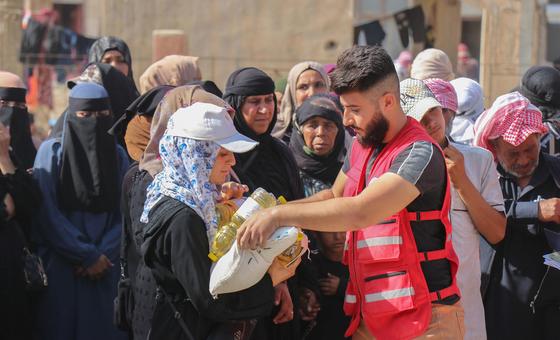
In response to the crisis, WFP provided food assistance to 750,000 people in 2024 and plans to support 2.5 million people in 2025, including nearly 900,000 Syrian refugees.
However, funding shortfalls and logistical challenges have hindered efforts to deliver aid to conflict-affected regions.
Meanwhile, “FAO is steadfast in its commitment to helping farmers resume production and supporting communities in rebuilding and enhancing their resilience,” said Ms. Quattrola.
The Lebanese Ministry of Agriculture, led by Abbas Al-Hajj Hassan, emphasised the need for international support to rebuild the country’s agricultural sector and compensate affected farmers.
“Sustained cooperation is key to achieving sustainable development for Lebanon’s agricultural sector,” Dr. Hassan stated, calling for stronger partnerships.
Looking ahead
While a ceasefire was announced in November 2024, recovery remains uncertain.
The report projects that food insecurity is expected to persist over the next three months, with no short-term return to pre-crisis conditions.
“At this critical moment, our mission is clear: to support the Government and the people in rebuilding their lives and food systems” said Mr. Hollingworth.


