


In this week’s Inside Spain, we look at why many ordinary Spaniards feel justified to ‘cheat the system’ in a country where corruption among the political elite is rife.
España, país de la picaresca (Spain, the country of roguishness) is a line you’ll hear quite often from Spaniards.
Picaresca comes from the word pícaro (rogue or rascal), a term which actually came to refer to a genre of Spanish prose fiction developed in the 1500s, la novela picaresca or picaresque novel.
The earliest example of this type of satirical work is the anonymous 1554 classic El Lazarillo de Tormes, which tells the story of an impoverished boy from Salamanca who after being accused by his stepfather of stealing is taken under the wing of a blind beggar, who in turn teaches him how to survive in an unjust world.
Some commentators argue that this distrust for institutions and desire to ‘beat the system’ has lived on in Spanish society, and that achieving better social positioning through illicit acts or deception is more socially accepted than in other countries.
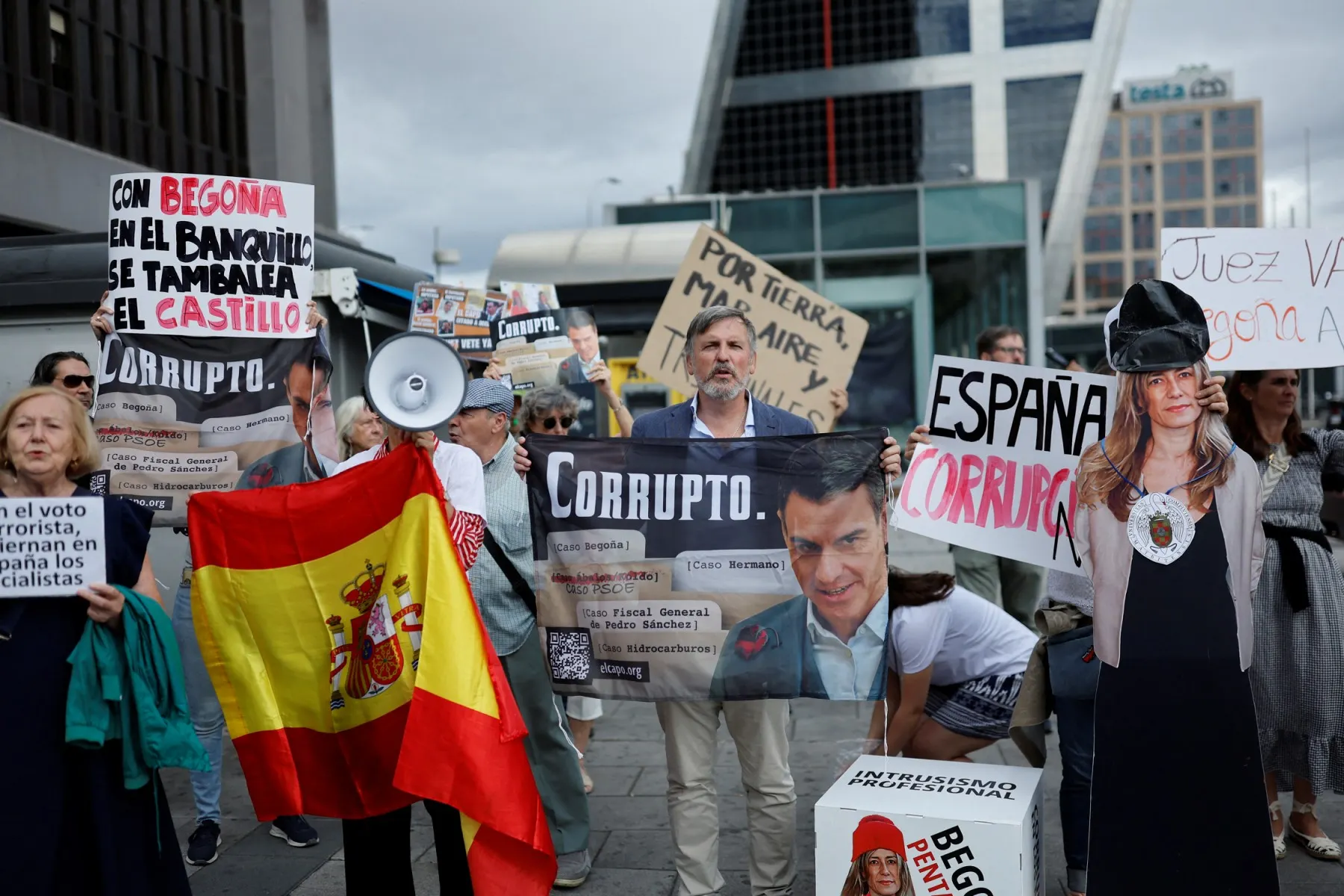
Fast-forward to modern times and corruption – or alleged corruption – is dominating the news cycle in Spain given the numerous scandals affecting mainly Spain’s ruling Socialists, but also the conservative PP.
We make a point of mentioning alleged corruption because it remains to be seen if all accusations of influence-peddling, abuse of office or embezzlement affecting some people within the Prime Minister’s inner circle (Spain’s former Prime Minister Zapatero, Sánchez’s brother David and Sánchez’s wife Begoña Gómez) are in fact true.
There are rumours that the opposition could be harnessing what’s known as ‘lawfare’ to unjustly tarnish the Socialist’s reputation, which is in itself another example of picaresque behaviour to gain the upper hand.
So is it any surprise that in a country where most if not all political parties appear to be engaging in shady behaviour, Spaniards rich and poor feel justified to also ‘cheat the system’ sometimes?
READ ALSO: How bad is corruption in Spain in 2026?
From the bar owner who gets paid in cash and doesn’t declare it, to the developer who wines and dines the local councillor to get the green light to build on protected land, or the person getting unemployment benefits whilst also working – many people from different walks of life do it, but of course not all Spaniards.
Nor is this guile unique to Spain (for example, Brits make the most bogus claims about food poisoning while on holiday).
We’re not condoning this behaviour, simply pointing out that the Spanish political class certainly don’t set a good example.
According to Spain’s Centre for Sociological Research, more than 90 percent of Spaniards believe that tax fraud is rampant in the country, but only 5 percent admit to ever fudging their own tax return.
And it’s not always overtly illicit actions, sometimes it’s more about cutting corners in a slightly cheeky and dubious way.
For example, Spain is the European country where most pirated football streams are broadcast from.
Sharing the same Netflix account with a friend to avoid having to pay twice is also very common among Spaniards.
Spanish people also often register at a family member’s address to get some sort of benefit, be it a place for their kids at a school of their choice, to pay less driving circulation tax or benefit from flight discounts to the islands.
READ ALSO: Is it better to live off benefits than to work in Spain?
So there is a bit of this trickery in Spanish society but usually it’s institutions rather than other people who are the victims of it.
And is this attitude any surprise given that multinationals and politicians engage in far worse offences than the vast majority of ordinary Spaniards?
“Thieves thrive, the honest fail; it’s not the most knowledgeable who prevails, but the loudest; the decent are ridiculed, and the scoundrel is applauded,” theatre director Sandro Cordero, who adapted El Lazarillo de Tormes to a more contemporary play called Anónimo, told Spanish daily El Diario Montañes about the message behind Spain’s most iconic picaresque novel.
“Do we Spaniards do that? Well, as everywhere, some will and some won’t. Believing an entire country has the same character is like believing in horoscopes.”
READ ALSO: ‘Spain is different’ – Why do Spanish people say this in English when criticising Spain?


