


Iran’s Internet shutdown has now surpassed 1,248 hours or 52 days, making it the longest national-level blackout since Libya’s outage of nearly six months during the Arab Spring in 2011.
But the comparison understates the scale: Iran’s population over 90 million is roughly 15 times larger than Libya’s was at the time, making this arguably the largest government-directed communications outage in recorded history, with Internet monitoring watchdog NetBlocks describing it as “unsurpassed in scale and severity in a connected society.”
The shutdown began on February 28 in the immediate aftermath of US and Israeli air strikes against Iran. Since then, publicly available network data shows that cross-border Internet traffic has remained below 1 percent of the country’s pre-shutdown average for nearly the entire period.
In other words, for the overwhelming majority of Iranians, access to any website or application outside the country has been effectively impossible.
What distinguishes this shutdown from the January blackout is not only its duration but the architecture of control Iran has built around it.
Rather than a total blackout, authorities have maintained an elaborate whitelisting system of selectively granting connectivity to favored institutions, companies, and individuals while leaving the rest of the population cut off.
In recent weeks, that system has been formalized further through a paid scheme called Internet Pro that allows business owners and academics to purchase access at pre-shutdown levels, a development critics have quickly labeled a form of tiered or class-based Internet.
Amnesty International has criticized Iranian authorities for imposing what it calls “digital darkness,” describing access to the nternet as “a basic human right and indispensable in times of conflict.”
The Price Of Disconnection
On April 12, Iran’s Chamber of Commerce convened a joint session of its commissions, bringing together representatives from government, parliament, and the private sector to confront what participants described as an escalating economic emergency.
The figures presented were stark. Afshin Kolahi, head of the chamber’s knowledge-based economy commission, cited direct daily losses of between $30 and $40 million, with indirect damage reaching $70 to $80 million per day.
To make the scale tangible, he reached for a reference that was still raw in the national consciousness: 10 days earlier, on April 2, US air strikes had partially collapsed the B1 bridge in Karaj — the tallest bridge in Iran, connecting Tehran to its western suburbs — reportedly killing eight civilians. Kolahi put the cost of that bridge at around $20 million to build.
The Internet shutdown, he said, was destroying the equivalent of four such bridges every single day — or two power plants, at roughly $3 million per megawatt of generating capacity.
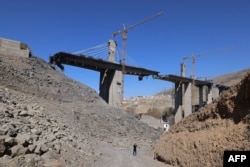
Between 300,000 and 500,000 people employed in small Internet-dependent businesses are at risk of losing their jobs, he added, with only a small fraction carrying any form of insurance.
Those figures align with estimates from inside the government itself.
Telecommunications Minister Sattar Hashemi has put the daily cost to the digital economy’s core at $35 million, with knock-on damage to the broader macro-economy.
Kolahi framed the losses in terms that went beyond economics.
“A nationwide Internet shutdown creates lasting anger in society,” he told the session, before posing a pointed question to the officials present: What cost-benefit analysis had actually been conducted before the decision was made?
Why Selective Access Solves Nothing
The chamber session also produced a sharper critique of the whitelisting approach, one that challenged not just the shutdown itself, but the government’s preferred workaround.
Mehdi Omidvar, spokesman for the Iran’s Guilds Chamber, argued that restoring Internet access to businesses while leaving consumers offline makes no sense. Digital commerce depends on both ends of the transaction being connected; a vendor with access is worthless if the customer trying to reach them has none.
Omidvar described the Internet as an inseparable part of the economic life of every active business. Cutting it had not merely disrupted trade; it halted the trajectory of Iran’s digital economy at precisely the moment other developing nations were accelerating theirs.
The longer-term risks, he warned, go beyond lost revenue. Tiered access risks deepening social fractures, eroding trust in the digital sector, and accelerating the emigration of skilled workers.


