The figure represents a two-thirds increase in displacement over the past five years, with Burkina Faso, Mali and Niger at the epicentre of overlapping humanitarian emergencies.
“Across the central Sahel, people are being driven from their homes by violence, insecurity, and the devastating effects of climate change,” said Abdouraouf Gnon-Kondé, Regional Director for West and Central Africa at the UN refugee agency (UNHCR).
“Women and children make up 80 per cent of the displaced population, and the protection risks they face – from gender-based violence to trafficking and forced recruitment – are worsening.”
UN reports from the region note that entire communities having been emptied in Burkina Faso, northern Mali and western Niger as violence between armed groups, intercommunal clashes and military activity spreads.
Rising insecurity and shrinking access
Most displaced families remain within their countries, but cross-border movements are becoming increasingly frequent as insecurity spreads and livelihoods collapse.
“These onward movements highlight the urgent need to expand assistance and enable people to remain closer to home,” Mr. Gnon-Kondé said, warning that families are under increasing pressure as basic services buckle.
Insecurity, he warned, has forced the closure of more than 14,800 schools across the region, leaving three million children without access to learning or safe spaces.
Over 900 health facilities have also shut down, cutting off millions from essential care.
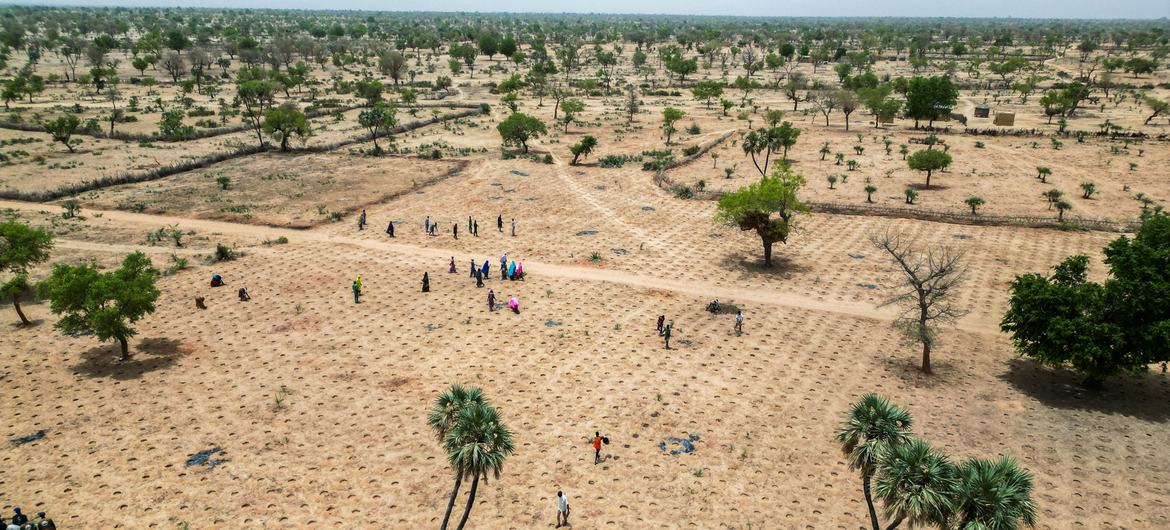
Communities across the Sahel are facing acute food insecurity due to extreme weather. Pictured here, farmers in Niger attempt to reclaim degraded land.
Hunger driving displacement
Food insecurity has become a growing driver of flight, with the proportion of displaced people citing hunger as a primary reason for leaving doubling in recent years.
The situation has been described by humanitarians as a chronic hunger emergency. Estimates indicate that more than 32 million people across the wider Sahel require humanitarian assistance and protection – many of them urgent food and nutrition interventions.
Farming and cattle rearing have also been affected by families constantly on the move and harsh weather conditions.
“Climate-related shocks further amplify risks, intensifying competition over scarce natural resources such as land and water,” Mr. Gnon-Kondé said.
This is not only fuelling new displacement but also straining social cohesion.
Funding gap threatens critical services
UNHCR said humanitarian access and funding have reached breaking point. Its 2025 appeal for $409.7 million to cover needs in the Sahel is only 32 per cent funded, forcing cuts to registration, shelter, education and health programmes.
The broader $2.1 billion humanitarian appeal for Mali, Burkina Faso and Niger – which encompasses all sectors – tells a similar story, just 19 per cent funded so far.
UNHCR called for a “renewed international commitment” to the region, warning that the crisis will only worsen without sustained support.
“Protecting millions of displaced families and securing a safer future demands more than words,” Mr. Gnon-Kondé said. “It requires unified, sustained action and true solidarity with the Sahel.”