


Venture capital is bigger than it’s ever been—but that doesn’t mean the industry is better than it’s ever been.
I’ve often written in this newsletter about how venture capital is becoming a hyper-concentrated, seesaw-skewed sector of finance. And no matter how much harping on this I do, the numbers continue to surprise me, as was the case this week when PitchBook and the National Venture Capital Association released their 2026 midyear report. Unequivocally, we’ve never seen capital flow like this: In the first half of 2026, U.S. VCs deployed $412.7 billion, a record that surpasses the full year of 2025 by 30%.
If you believe bigger is always better, you probably reckon that sounds dandy. But the under-the-hood numbers are eyebrow-raising (if unsurprising): AI deals constituted 86% of all those venture dollars, and a jarring 91% of capital went to deals of $100 million or more. In short, there’s the bucket filled with the most sought-after companies and the VCs with the most capital to deploy—and then there’s everyone else.
“This market is split into two very distinct areas,” said PitchBook director of U.S. venture capital research Kyle Stanford. “The trends we’re seeing now are going to continue for a long time, because the capital is there for the top companies. The top-line figures show a very strong, but also very concentrated market.”
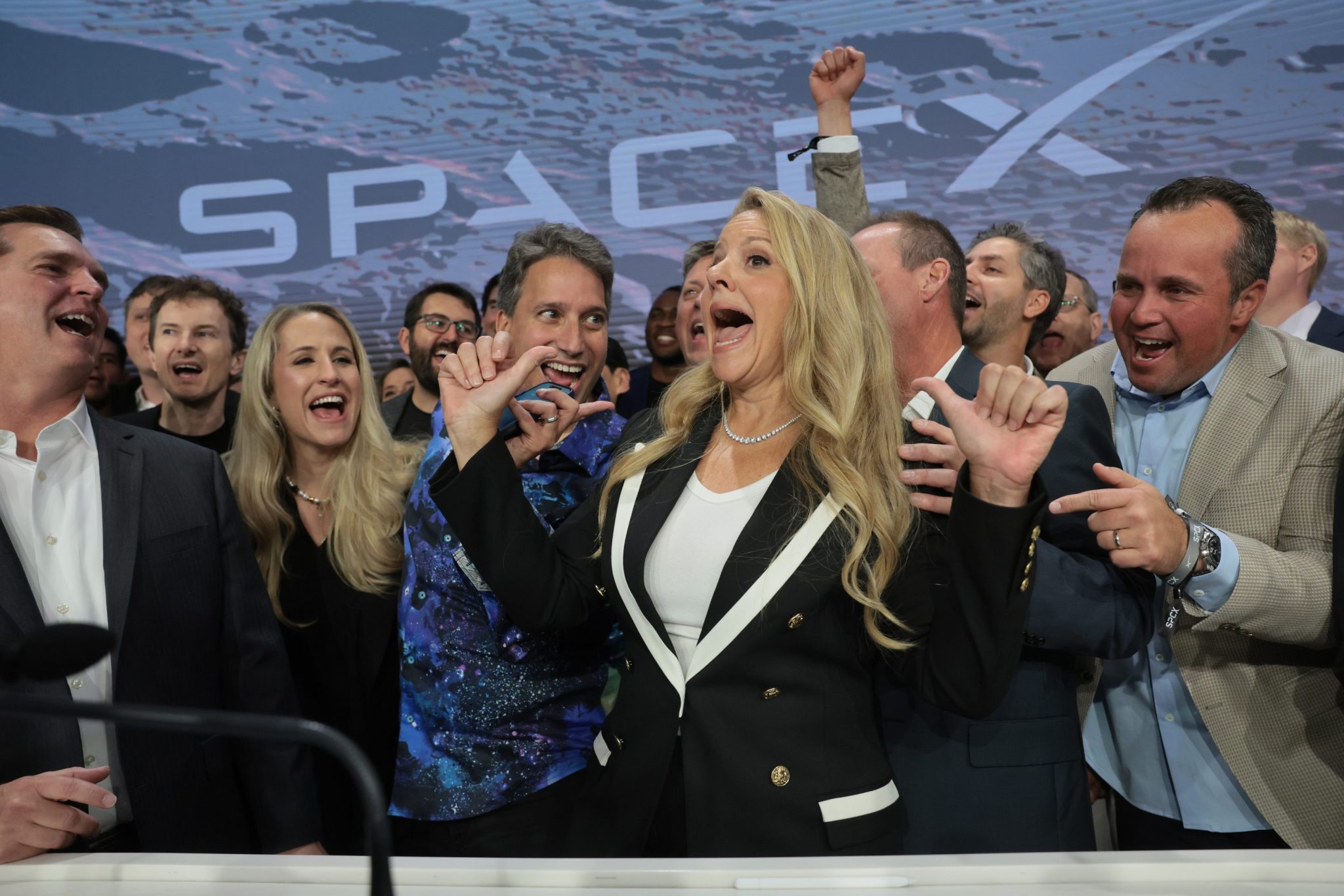
When you get closer to the bottom line—for VCs, that’s exits—things look dicier. The overwhelmingly dominant source of exit value and liquidity in 2026 so far has been SpaceX, SpaceX, and more SpaceX. It’s curious because, at the top, the exit value number, $2.2 trillion, does look great.
“SpaceX accounts for all of the exit value, pretty much,” Stanford said. “$1.7 trillion of that’s the SpaceX IPO. $250 billion of that is xAI, and next quarter, we’ll have another $60 billion going to Cursor, which is also SpaceX. My first sentence of our report was ‘SpaceX is the center of the universe for VC.’ It’s where everything has gone through.”
Stanford and I happen to agree: Venture has changed for good. The long timelines and lines to IPOs that may not come for decades are just a feature now, not a temporary state. In this new paradigm, I’m increasingly interested in the plight of the mid-tier success: The decidedly successful, low-level unicorn that 20 years ago would have been catnip to the public markets (think: unicorns that haven’t raised an equity round since 2024 or off-trend stalwarts with IPO ambitions like Strava). Those companies are now in a tough spot, built for a market that doesn’t entirely exist anymore.
“There are mid-tier companies sitting there, saying ‘theoretically we could go public in a good year,” said Stanford. “But right now, you have to fight, narratively and practically. You have to fight for the B-squad of all the investment banks to underwrite your IPO, because everyone’s A-squad is on SpaceX, Anthropic or OpenAI.”
Now, the two other biggest prospective IPOs of the year (and maybe, well, ever) are still in the pipeline: OpenAI and Anthropic. And there’s a theoretical world where those successful debuts boost the market overall. But with rumors swirling that OpenAI will push to 2027, much is flux. Stanford says that the market, sooner rather than later, demands OpenAI or Anthropic list.
“Broadly, the market needs one of them to go public this year to see what everyone is investing in,” he said. “You hear tidbits, but I think everyone’s really looking for someone to say: ‘Here are my books, this is the cost of AI, this is what everyone needs to know.’ Then, you can start to see a recalibration of the market. People will be able to say that it’s too expensive, that things are moving along as expected, or even ‘wow, this is going to be better business than we even thought.’”
Now, if both push back, questions will start to get loud, not just for OpenAI and Anthropic, but for the VCs who’ve funneled capital at historic highs into these companies that, frankly, still have a lot to prove beyond Silicon Valley.
See you Monday,
Allie Garfinkle
X: @agarfinks
Email: alexandra.garfinkle@fortune.com
Submit a deal for the Term Sheet newsletter here.
Joey Abrams curated the deals section of today’s newsletter. Subscribe here.
VENTURE CAPITAL
– Ollama, an open-source platform for running large language models locally, raised $65 million in Series B funding. Theory Ventures led the round and was joined by Benchmark, 8VC, and others.
– QIZ Security, a Lewes, Del.- and Ra’anana, Israel-based post-quantum cryptography and quantum-readiness security platform, raised $17 million in seed funding. Bessemer Venture Partners and Merlin Ventures led the round and were joined by Evolution Equity Partners, Qbeat Ventures, Singtel Innov8, and Qino Cyber Capital.
– Aria, a Paris, France-based embedded invoice financing platform, raised €7 million ($8 million) in a Series A extension. 115K led the round and was joined by 13books Capital.
PRIVATE EQUITY
– DecisionHR, a portfolio company of Coalesce Capital, acquired Paymasters, a Detroit Lakes, Mich.-based provider of Professional Employer Organization (PEO) and human resources outsourcing solutions. Financial terms were not disclosed.
– PSG Equity acquired a majority stake in BrightAnalytics, a Hooglede, Belgium-based provider of CPM software for CFOs. Financial terms were not disclosed.
EXITS
– EQT agreed to acquire Copia Power, a Dana Point, Calif.-based energy and digital infrastructure company, from Carlyle. Financial terms were not disclosed.
FUNDS + FUNDS OF FUNDS
– Serent Capital, an Austin, Texas-based private equity firm, raised $1.3 billion for its sixth fund focused on software and tech-enabled services companies.
PEOPLE
– Greycroft, a New York City-based venture capital firm, promoted Carley Phillips to partner.


