• Login
Tuesday, May 5, 2026
Geneva Times
  • Home
  • Editorial
  • Switzerland
  • Europe
  • International
  • UN
  • Business
  • Sports
  • More
    • Article
    • Tamil
No Result
View All Result
  • Home
  • Editorial
  • Switzerland
  • Europe
  • International
  • UN
  • Business
  • Sports
  • More
    • Article
    • Tamil
No Result
View All Result
Geneva Times
No Result
View All Result
  • Home
  • Editorial
  • Switzerland
  • Europe
  • International
  • UN
  • Business
  • Sports
  • More
Home Switzerland

How to celebrate Easter the Swiss way

GenevaTimes by GenevaTimes
April 17, 2025
in Switzerland
Reading Time: 4 mins read
0
How to celebrate Easter the Swiss way
0
SHARES
0
VIEWS
Share on FacebookShare on Twitter


If you want to add a Swiss twist to your Easter this year, Swiss food writer Franziska Wick from Little Zurich Kitchen has some suggestions for you.

Make an Easter tree


The Osterbäumli (small Easter tree) is a lovely Swiss tradition that brings spring into your living room. Cut some sprigs off a tree or bush, put them into a vase and hang them with colourful Easter eggs. They don’t need to be real eggs, the smaller plastic ones from the supermarkets do the job perfectly too. 


Decorate boiled eggs


There’s no Swiss Easter without dyed eggs; there are various colours available in the supermarkets to dip the eggs into, to paint them with a brush or to smear them with paint using your hands.


Or, for some more elaborately dyed eggs, do it the traditional Swiss way with red and yellow onion skins and nature objects, instructions here. 


Have an Easter egg hunt


On Easter Sunday morning hide your eggs, your favourite Easter chocolates and sweets and some small toys if you have children and go on an Easter egg hunt. 


Must haves for Swiss Easter sweets and chocolates are the small nougat eggs filled with chocolate (Nougateili), the large nougat eggs without filling (Nougatei), the sugar-coated jelly eggs (Gelée-Eili) and of course the chocolate bunnies – buy a handcrafted one at a bakery or artisan chocolate shop for high-quality chocolate or, if you don’t want to spend quite as much money, go for a Chocolates Frey bunny, which in my opinion is the best factory-made chocolate available in Switzerland – sold in Migros only. 


Osterchüechli (small Easter cakes) are another Swiss Easter treat; their base is made of sweet shortcrust pastry and the sweet filling is either made with rice or semolina. You can buy them in bakeries or supermarkets or make your own small or large cake (recipe with rice here). 


Smash your eggs


When I was a child, Easter lunch after the morning church was the thing do to, but nowadays Easter brunches are equally popular. Whether you decide on lunch or brunch, don’t forget to do an Eiertütsch (egg smash) with another person before you eat your dyed egg: both people choose an egg and hit the broad side of the egg against each other’s egg, then repeat with the pointy sides.


If one person ends up with both ends cracked, the one with the intact egg wins. If both have one cracked side, they repeat the procedure with the intact sides. The one who ends up with one intact side wins. 


If, after Easter, you end up with too many Easter eggs, you can make what I’ve been eating after Easter ever since my childhood – Eierbrötli (small egg breads): spread some butter onto a slice of bread, cover it with sliced egg and sprinkle it with salt and chopped chives. 


Recipe for Easter Zopf breads


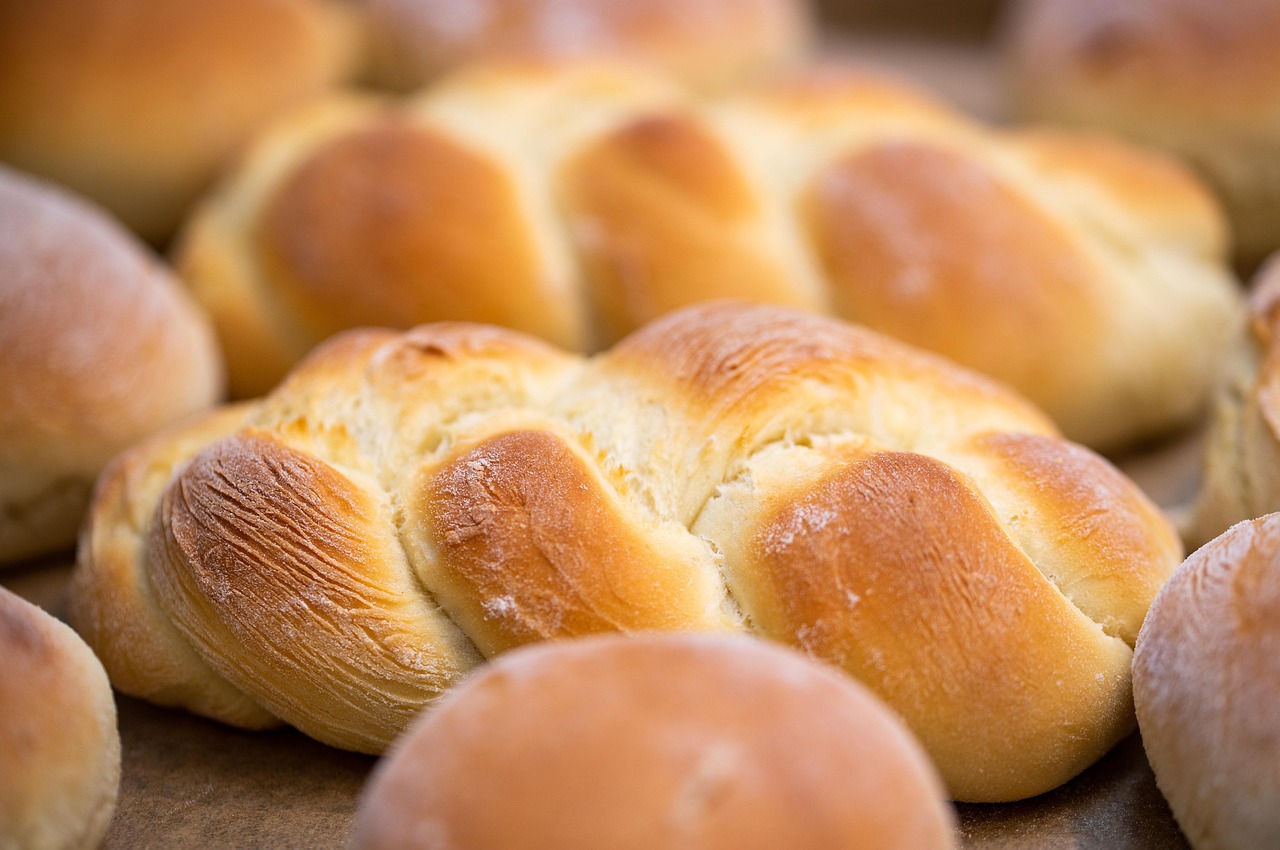
Zopf is the braided bread the Swiss traditionally eat for breakfast or brunch on Sundays (here’s our Zopf recipe). Besides making braided breads, the Swiss also use this enriched dough for making bread animals, like the Easter bread bunnies:


Take a large bowl and add 500g plain flour or Zopfmehl (Zopf flour), 1.5 tsp salt, 1 tsp sugar and mix well. Add 2 tsps dried instant yeast or 20g fresh yeast, crumbled up, and stir again. 


In a pan, melt 60g butter and then add 3dl milk. Warm it up until the mixture reaches room temperature. Then pour the milk butter mixture into the flour and stir until combined. 


Knead the dough for 10 minutes by hand or 5 minutes using an electric mixer. Then let the dough rest in the bowl, covered with clingfilm, until doubled in size. This will take 2-2.5 hours.


Once proved, knock the air out of the dough and form three to four bunnies or Easter nests with a boiled egg in the middle (rub the egg with oil so it doesn’t stick to the dough after baking. You can bake the egg nest including the boiled egg; the egg is still edible after baking. But use a non-dyed egg and replace with a dyed egg after baking if you like). 


Prove the breads for another 30-45 minutes, paint with the egg wash of one egg and sprinkle them with coarse sugar (Hagelzucker).


Bake at 220C for 20–30 minutes, depending on the size of your breads. The breads should look nicely browned and sound hollow when you knock the base with your finger. More detailed instructions here.


A version of this article originally appeared in The Local in April 2017.


Read More

Previous Post

Azerbaijan-Slovenia Business Forum kicks off in Baku

Next Post

Mariners vs. Reds Highlights | MLB on FOX

Next Post
Mariners vs. Reds Highlights | MLB on FOX

Mariners vs. Reds Highlights | MLB on FOX

ADVERTISEMENT
Facebook Twitter Instagram Youtube LinkedIn

Explore the Geneva Times

  • About us
  • Contact us

Contact us:

editor@thegenevatimes.ch

Visit us

© 2023 -2024 Geneva Times| Desgined & Developed by Immanuel Kolwin

Welcome Back!

Login to your account below

Forgotten Password?

Retrieve your password

Please enter your username or email address to reset your password.

Log In
No Result
View All Result
  • Home
  • Editorial
  • Switzerland
  • Europe
  • International
  • UN
  • Business
  • Sports
  • More
    • Article
    • Tamil

© 2023 -2024 Geneva Times| Desgined & Developed by Immanuel Kolwin