


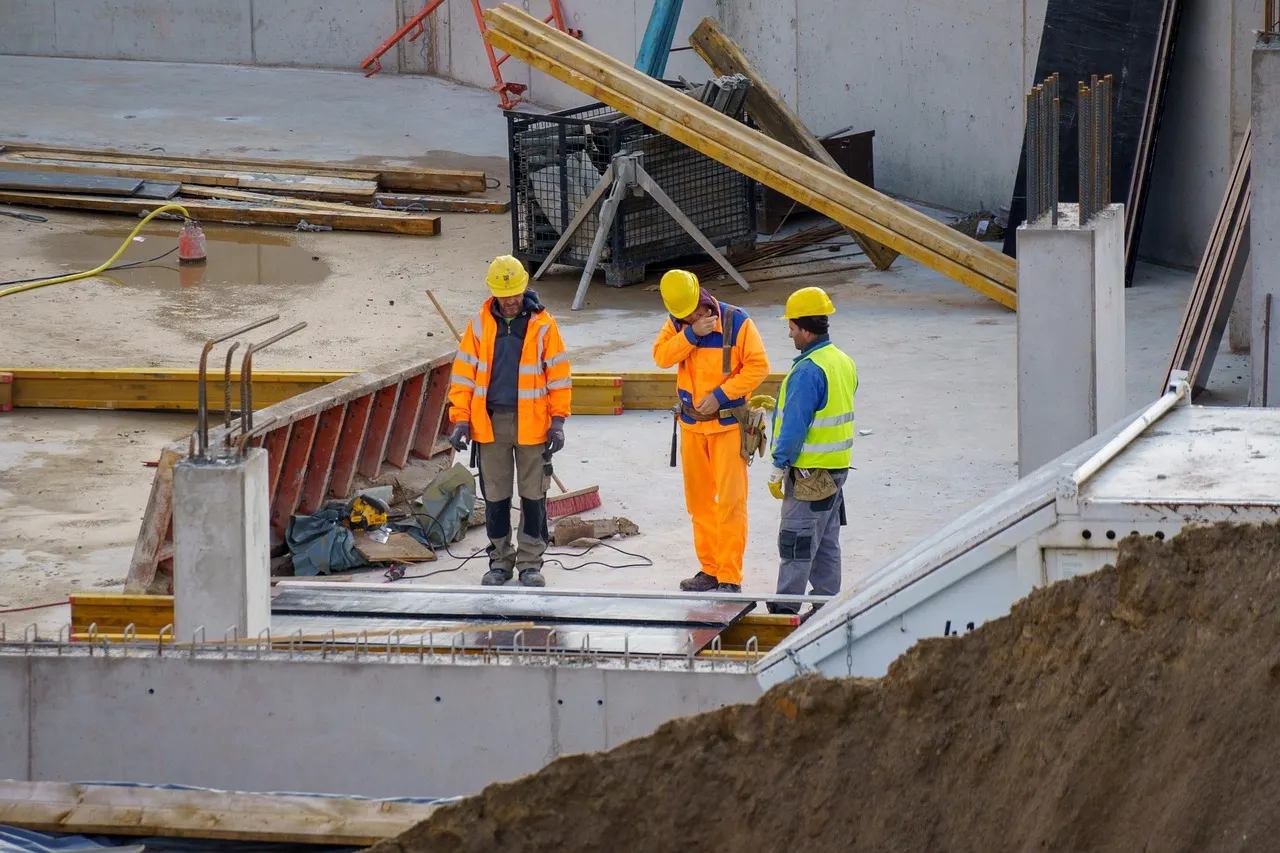
As the right-wing Swiss People’s Party (SVP) continues its calls to curb immigration, there’s a significant body of research that indicates that Switzerland’s economy would not be as strong without the foreign workforce.
In promoting its initiative, ‘No to Switzerland of 10 million people’, which will be brought to a national vote in 2026, the SVP is seeking to drastically cut the number of immigrants from the European Union and EFTA nations (Norway, Iceland, and Liechtenstein), and put an end to their access to the country’s labour market.
READ ALSO: What Switzerland’s new vote to limit immigration could mean
The party has focused only on the (perceived) negative effects of immigration – such as, for example, higher crime rate – but there is in fact good evidence of the benefits of immigration for Switzerland.
Here’s a look at some of those;
Boost to the economy
Research has shown the positive impact that immigrants have on Switzerland’s famously stable economy.
For instance, a joint study by the Federal Polytechnic Institute in Lausanne (EPFL) and the University of Geneva, reiterates just how essential the foreign workforce is for the country.
“We’re aware that the current discourse on immigration is often based on a stereotype that’s far removed from reality,” said Mathias Lerch, the head of EPFL’s Urban Demography Laboratory.
“Perceptions seem stuck in the 1990s when immigrants arrived from all over the world. Many of them were asylum seekers from the Balkans, who were mostly Muslim, and in numerous cases the migrants were followed by their families,” he added.
However, “today’s immigrants are typically highly skilled and have the same cultural background as native Swiss people.”
The study found that about 60 percent of people who migrate to Switzerland with a B or C permit have a college degree. The remaining 40 percent have a middle- or lower-level education and work mainly in the services sector which has been suffering from staff shortages – including healthcare, social services, hospitality and construction.
Advertisement
‘Better qualified’
“Immigrants in Switzerland are often better qualified than the native workers,” said Andreas Beerli, an economist with the KOF Economic Institute.
“In some regions, such as Zurich and Zug, the proportion of tertiary-qualified people among new immigrants is an impressive 75 percent.”
Furthermore, “even those who are low-skilled often fill gaps in the local labour market. It is often difficult, for example, to attract enough Swiss nationals to do strenuous jobs in construction, services and waste disposal. This explains why the profiles of immigrants fit so well with the needs of the Swiss economy,” Beerli pointed out.
Advertisement
Public finances and social system
Another important contribution: Foreigners who are gainfully employed in Switzerland pay taxes, which fill the municipal, cantonal, and federal coffers.
They are also paying into the obligatory social security scheme (KVG/AVS), which means they have had a positive effect on the state pensions.
As a matter of fact, according to research carried out by Universities of Zurich and St. Gallen, immigrants pay proportionally more into the AHV/AVS, disability, and unemployment insurance schemes than they receive in return.
In 2023, “persons born abroad paid more than 40 percent of the total contributions, while receiving less than 30 percent of the benefits,” the study found.
Advertisement
On the other hand, “persons born in Switzerland paid less than 60 percent of the contributions, but received more than 70 percent of the benefits.”
Switzerland’s own State Secretariat for Economic Affairs (SECO) has laid out how much more foreign workers contribute to the welfare system.
In terms of disability insurance, foreign nationals paid 26.5 percent into the scheme, receiving only 14.9 percent of benefits in return.
READ ALSO: How immigrants in Switzerland make a positive contribution


