


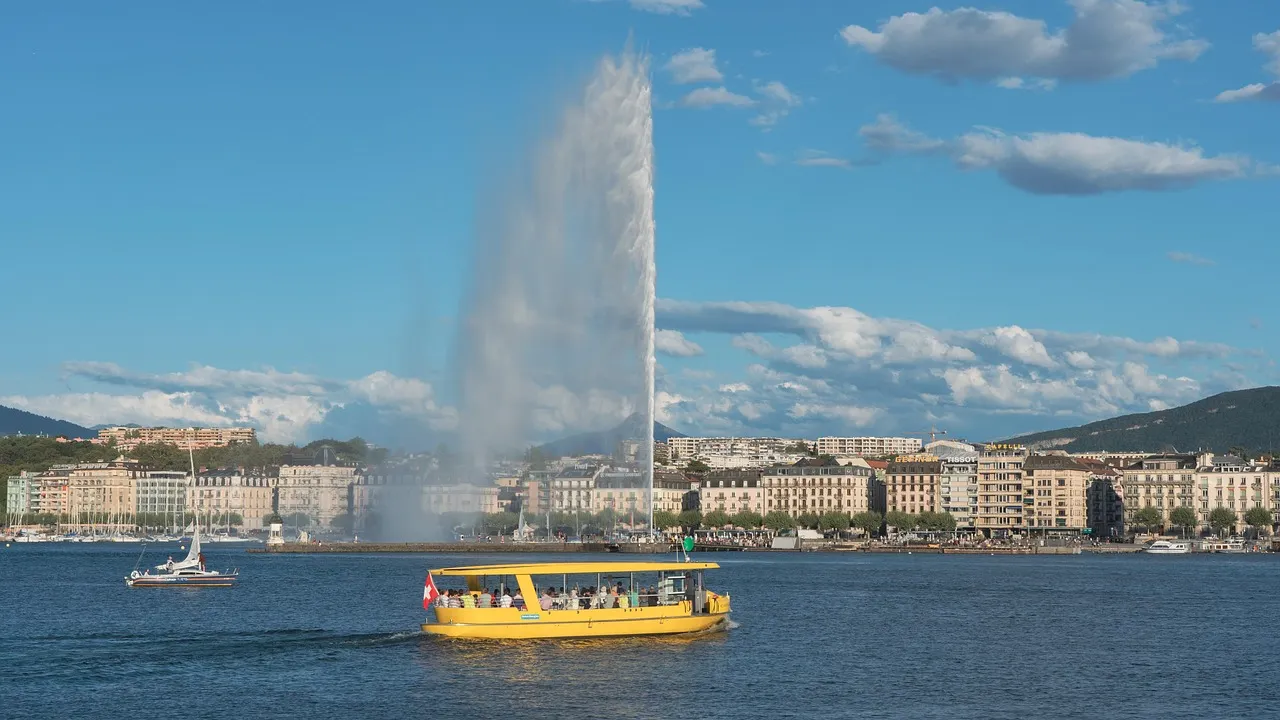
The Swiss city of Geneva is notorious for its heavy traffic and frequent congestion on its roads. Authorities therefore want to solve this problem by developing alternative transport on Lake Geneva.
The Department of Health and Mobility (DSM) has a plan for “better exploiting the potential of the lake as a key transportation hub,” the canton announced on September 12th.
“This approach is part of the strategy to diversify transportation modes and reduce road traffic pressure, while offering innovative and attractive solutions,” the DSM added.
Studies conducted by the cantonal transport office (OCT) confirm that the lake – called Lac Léman locally – can be “a competitive route for commuter travel, provided that fast, regular, and well-connected routes to the land network are guaranteed.”
What is being planned?
Today, the boats called ‘mouettes genevoises’ operate four lines, primarily used for leisure activities, carrying approximately one million passengers per year.
These lines, however, “remain poorly integrated into the public transport (TPG) network, which limits their role as a genuine transportation alternative.”
But the potential is definitely there.
Each year, nearly 9 million passengers are transported by the TPG between the two shores of the lake via the Mont-Blanc Bridge, which is often congested during rush hour.
Therefore, authorities envision increasing the frequency, integrating the TPG fares, as well as the ability to take bicycles on board, to make this mode of transport appealing not only for tourists, but also primarily for Geneva commuters.
Advertisement
New routes
The DSM highlights two priority areas.
First, “long” links between the two shores, to bypass the city centre, such as the future “blue route” between Corsier and Bellevue.
This regular service will be integrated into the cantonal perimeter and the Unireso (TPG) fare system if it proves to be successful following the planned three-year pilot project.
Second, direct cross-lake connections are also under consideration, with a priority being the future link between Cologny and the centre, via Les Pâquis or Les Nations.
“These short-distance connections, identified as a strategic corridor, would make it possible to cross the lake in just a few minutes and avoid the detour through the city centre and multiple transfers on the land network,” according to the DSM.
READ ALSO: Why has traffic in Geneva become a nightmare for residents?


