


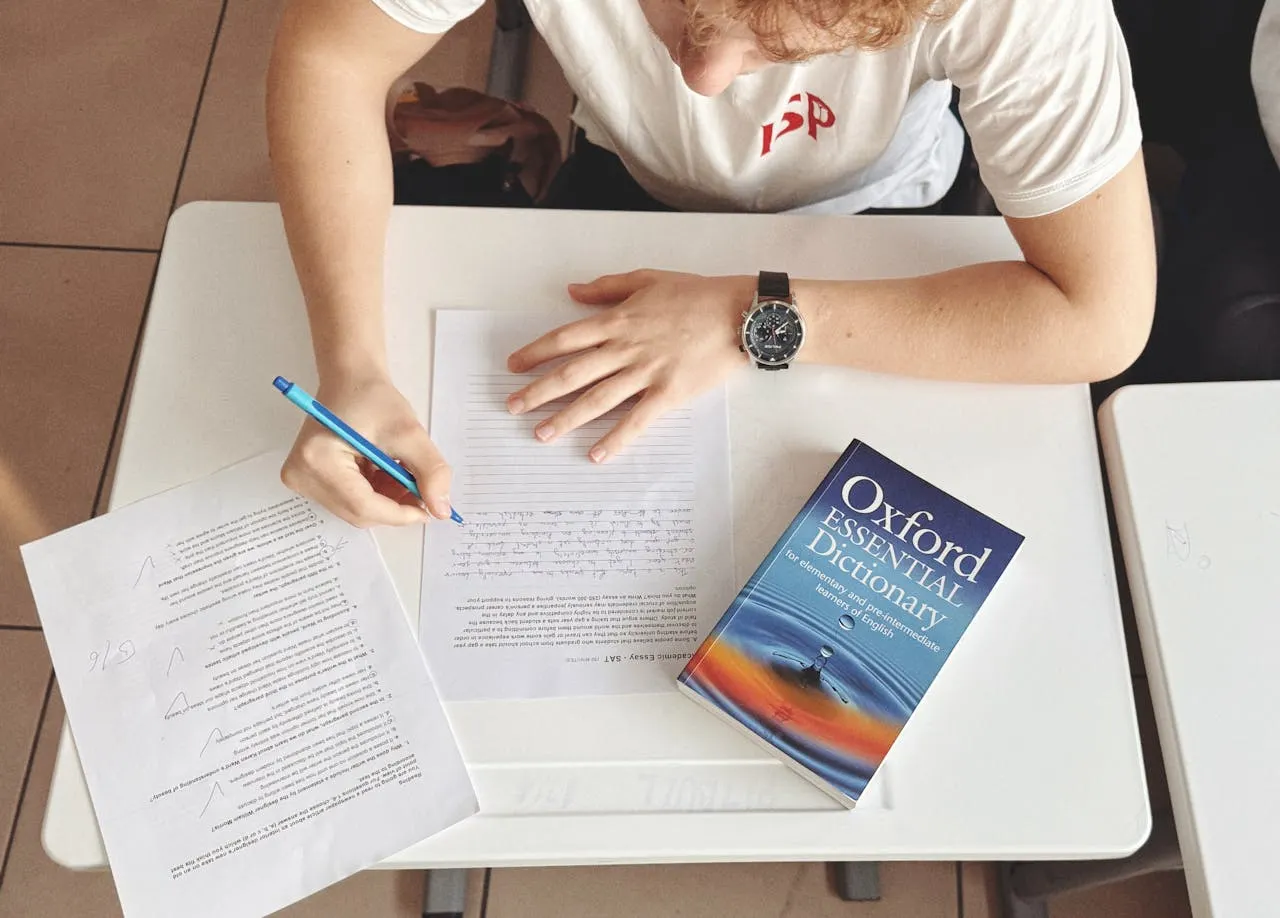
While it is not one of Switzerland’s four national languages, the use of English has nevertheless become more widespread in recent years, especially in certain cities.
According to media analysis of official statistics, the proportion of people who state English as one of their primary languages has increased significantly in all Swiss cities.
This trend is reportedly most widespread in Zurich, where the proportion of people with English as their primary language rose to 12.9 percent – up from 10.8 percent in 2022.
(In terms of cantons rather than cities, Zug has the largest English-speaking population in Switzerland: 14.1 percent of those over the age of 15 have English as their primary language.)
Next is Basel-City, where 12.5 percent of the population speak English, followed by Geneva, (11.8 percent), and Vaud (9.1 percent).
READ ALSO: Where in Switzerland is English most widely used?
Why is English becoming increasingly more popular in a multilingual country like Switzerland?
One of the main reasons is this language’s importance in the business world.
“English has become the language of international communication and business,” according to LFM broadcaster. “Swiss companies find mastery of English essential to remain competitive on the global stage.”
“With four official national languages, one might think that English would be relegated to the background. However, it is remarkable how prominent English is in the Swiss linguistic landscape,” it added.
And as Basel’s newspaper BaslerZeitung put it, “English has become virtually normal in Switzerland if you work in a job with a somewhat international network. English is spoken in video conferences and continuing education courses, and it’s expected in university seminars as well.”
Advertisement
Early start
However, not everyone in Switzerland sees the ‘expansion’ of English as a positive trend – especially when it is at the detriment of one of the national languages.
That’s because out of 19 German-speaking cantons, only 12 currently teach French as a second language in primary schools, and more are thinking of abandoning it in favour of English.
Typically, schools start teaching English at the age of around eight or nine, though this may vary by cantons.
READ ALSO: How is English taught in Swiss primary schools?
Advertisement
‘A mistake’
The Liberal Radical Party (PLR), however, has been seeking to change this approach.
It is arguing that “it is a mistake on which the cantons have wasted millions of francs,” because teaching non-native languages to primary-age children is “useless.”
However, there is no push from any other political groups to eliminate English from the public schools’ curriculum.


