

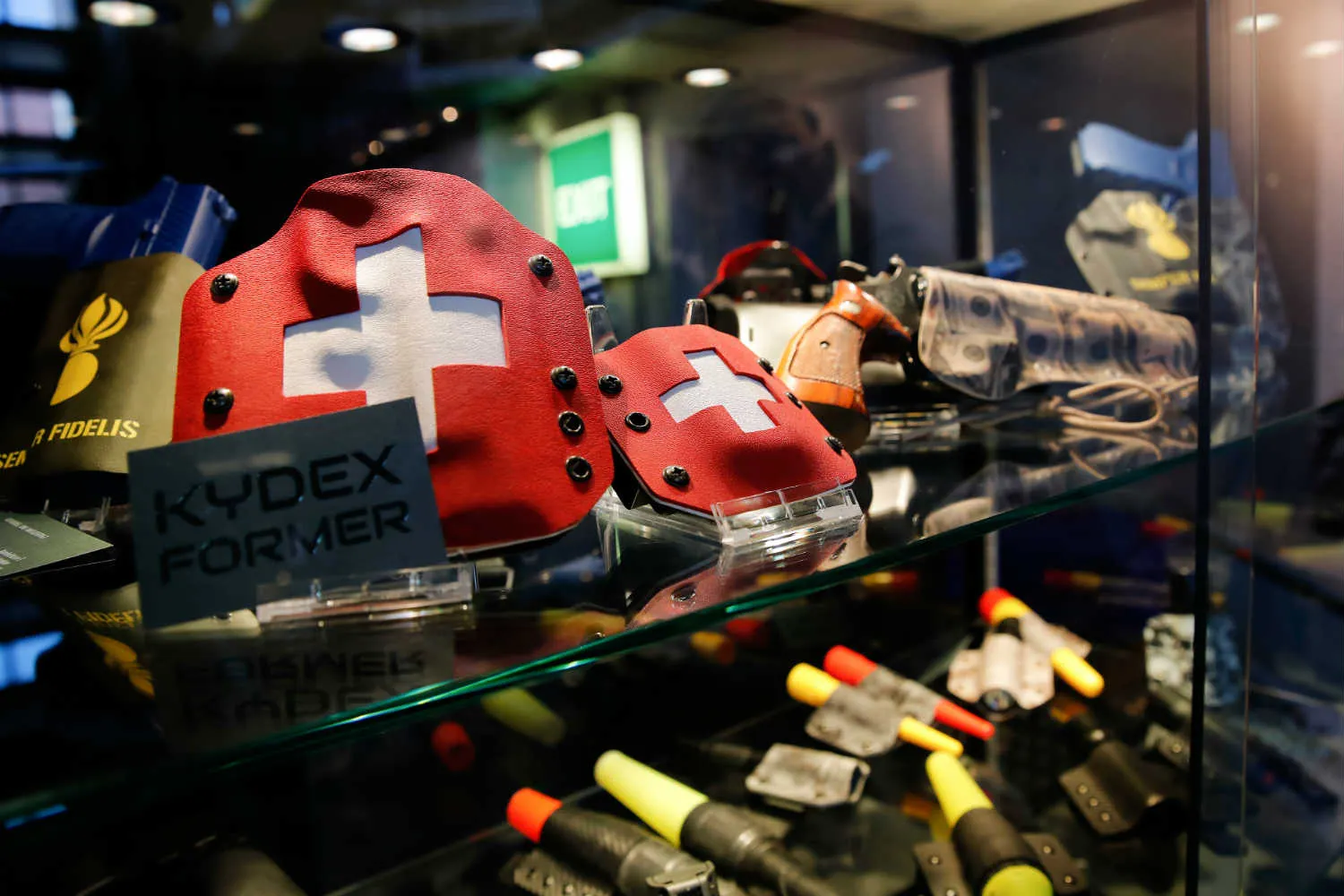
Switzerland has one of the highest civilian gun-ownership rates among developed countries. It also has a very low murder rate. Here’s what you need to know about Swiss gun culture.
From being the world’s second biggest weapons exporter per capita to having the highest gun ownership rate of any European country, Switzerland has a relatively strong pedigree when it comes to weapons.
People in Switzerland can legally get their hands on weapons which are illegal in a number of other countries.
But unlike the United States, people in Switzerland are not just passionate about pistols and giddy about guns. They’re also strong supporters of gun control regulations – which are some of the strictest in the world.
Arms across Switzerland
The nation of just over 9 million people has approximately 2.3 million guns (though some estimates mention oer 4 million), giving it the third highest gun ownership rate in the world after the United States and Yemen. Approximately 48 percent of Swiss households have at least one gun.
Contrast this with the United States, where the number of guns overtook the number of people in the country in 2009. A study from the Swiss Graduate Institute of International and Development Studies found that there over 390 million guns in the US for nearly 342 million people.
The US lobby group the National Rifle Association (NRA), frequently points to Switzerland’s widespread gun ownership and low crime rates – the country’s murder rate is almost zero – as a reason for fewer gun control restrictions.
However, the organisation fails to mention the widespread restrictions across Switzerland when it comes to using and owning weapons.
While Switzerland does have a higher rate of gun deaths than the European average, these are mainly due to suicides.
Swiss gun laws
Switzerland’s gun culture is mediated by a strong set of gun regulations on prospective and current gun owners.
The goal of Swiss gun regulators is to prevent the “violent and the incompetent” from owning guns. Anyone who possesses a “violent or dangerous attitude” will be restricted from gun ownership.
There are federal laws which regulate gun ownership; however, a large proportion of gun regulation happens at the cantonal level.
Swiss authorities in each canton keep a log of all gun owners in the region, while cantonal police are also given the power to talk to psychiatrists or talk to representatives from other cantons as part of the vetting process when someone applies for a gun licence.
People who have been convicted of a crime as well as individuals with substance abuse problems are prevented from owning a weapon.
There are also strong restrictions on carrying weapons, with so-called ‘concealed-carry’ permits rare for regular citizens in Switzerland.
Anyone who wants to carry a gun will be required to pass a test which shows they can shoot their weapon, as well as load and unload it.
While hunters in some cases will be permitted to carry their guns from home to the shooting range or the hunt, they are prevented from stopping off on the way – even just for coffee and doughnuts – as they need to take the shortest route possible from the range to their residence.
Switzerland voted in 2019 to strengthen gun control laws to come into line with EU requirements, with restrictions on high-powered semi-automatic rifles.
Last but certainly not least: education and training
What possibly distinguishes Switzerland from other high firearm-ownership countries (and certainly the US) is the so-called ‘responsible gun culture.’
The Swiss learn to shoot from an early age in clubs that are strictly regulated by the government, where they develop a deep sense of responsibility toward their firearms.
There are plenty of gun clubs throughout the country where people of all ages — including children as young as five — can hone their sharpshooting skills. These clubs are grouped under the umbrella organisation, the Swiss Target Shooting Federation.
This may sound shocking to some, but in fact, firing guns in Switzerland — whether by soldiers or civilians — is all about safety.
READ MORE: Why you might hear gunfire in your Swiss neighbourhood
