Higher direct payments do not stop scrub encroachment on alpine pastures
Keystone-SDA
Generated with artificial intelligence.
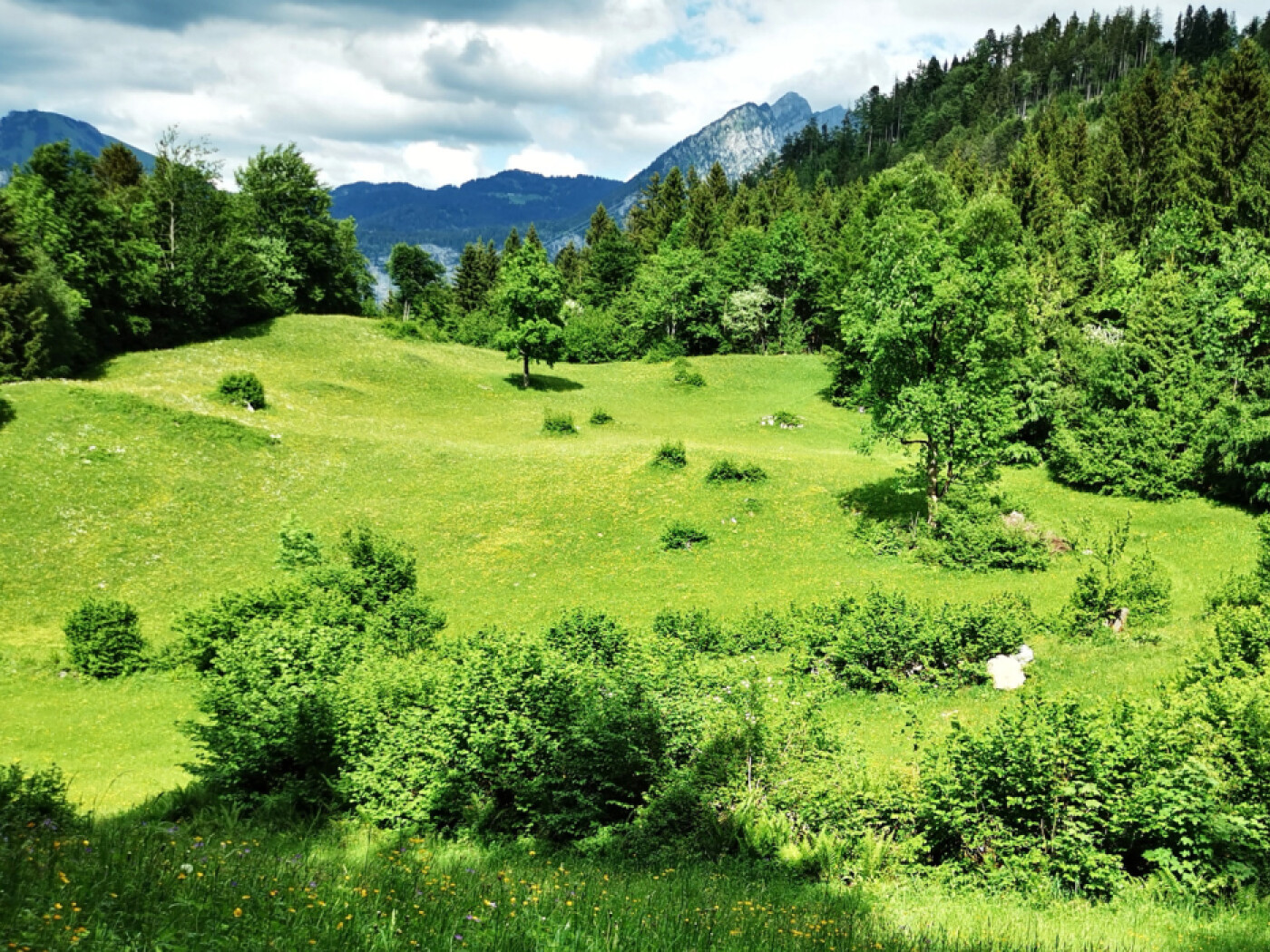
The encroachment of scrub vegetation on Swiss alpine pastures leads to the loss of grassland and damages the typical landscape. It is also responsible for the decline in biodiversity. Despite higher direct payments, scrub continues to spread.
This content was published on
This conclusion was published by the Swiss agricultural research institute (Agroscope) on Tuesday. According to the study, scrub encroachment is the result of abandoned cultivation and a change in the type and intensity of agricultural use. Green alder dominates the scrub encroachment, which also leads to a decline in biodiversity.
To counteract this, there are various incentives in the form of direct payments for alpine farming. In 2014, the federal government increased one of them or introduced two new ones. The summer grazing contributions were increased. Direct payments for biodiversity promotion areas and quality contributions for the maintenance of typical regional landscapes are new.
For the study, Agroscope analysed the effects of subsidies on grassland and scrub encroachment for the first time using data from alpine farms in the canton of Graubünden.
According to the researchers, the study indicates that the increased direct payments led to an average 2% higher loss of grassland. This corresponds to an average of 4.7 hectares per farm within ten years. Agroscope did not analyse the impact on species richness, the diversity of structural elements in the landscape and income.
False incentives identified
For the agricultural experts at Agroscope, several factors could be causing the loss of grassland. Firstly, the distribution of livestock on the alpine pastures could have changed. In order to protect sensitive species, alpine herdsmen and women no longer drove their cattle onto the biodiversity promotion areas. As an unintended side effect, scrub encroachment increased.
More
More
The difficult search for real Swiss cows
This content was published on
Swiss cow breeds have conquered the world but are struggling to survive in their homeland.
On the other hand, the covering of the soil with unrotted plants, i.e. mulching, may also have decreased on the biodiversity promotion areas. According to Agroscope, mulching is the most effective and cheapest method against scrub encroachment.
However, these disincentives need to be investigated further, the competence centre wrote. Agroscope suggests, however, that direct payments should be more closely linked to specific measures for open grassland. The study was published in the Journal of Agricultural EconomicsExternal link.
Adapted from German by DeepL/ac
We select the most relevant news for an international audience and use automatic translation tools to translate them into English. A journalist then reviews the translation for clarity and accuracy before publication.
Providing you with automatically translated news gives us the time to write more in-depth articles. The news stories we select have been written and carefully fact-checked by an external editorial team from news agencies such as Bloomberg or Keystone.
If you have any questions about how we work, write to us at english@swissinfo.ch
More
Swiss nuclear plant is off the grid for an indefinite period
This content was published on
The operator must provide evidence of fallback in case of a possible overload in the feedwater pipework system.
Swiss population satisfied with life according to survey
This content was published on
In a survey, the population of German-speaking and French-speaking Switzerland expressed general satisfaction with their lives. Respondents were less happy with politics and their personal finances, according to the online comparison service Moneyland.
WHO ‘extremely concerned’ about growing vaccination scepticism
This content was published on
According to the World Health Organisation (WHO), vaccination scepticism and a collapse in funding for vaccination campaigns pose a major threat to the health of the world’s population.
High-net-worth individuals prioritise well-being over material possessions
This content was published on
The priorities of wealthy private individuals have shifted against the backdrop of ongoing geopolitical tensions and trade disputes. While spending on luxury goods is declining, demand for travel and experiences is unabated.
Swiss researchers sequence genome of 1918 Spanish flu virus
This content was published on
Researchers from the Universities of Basel and Zurich (UZH) have sequenced the genome of the Spanish flu virus, thanks to a sample taken from an 18-year-old Swiss boy who died in the city on the Limmat in 1918, when the pandemic spread around the world.