


Extreme heat and lack of rain have contributed to worsening drought across many Swiss regions, with some faring worse than others.
Persistent drought, as is currently the case across Switzerland, doesn’t only mean parched land and yellowing vegetation.
In a dispatch dated July 9th, MeteoNews weather service writes that the drought is also manifesting itself iin “in the levels and flows of major lakes and rivers, which are sometimes reaching historically low levels for this time of year, as well as in the historically low filling rates of reservoirs across Switzerland.”
“Furthermore, increasingly large agricultural areas require irrigation. Many meadows are already appearing more yellow to brown than green, and the effects of the drought are also becoming increasingly visible on some trees. Currently, it is the birch trees, which thrive in moist conditions, that are suffering the most; some have already changed color and are losing their leaves due to the drought and lack of water.”
That’s the general situation. What is happening regionally?
According to the government service, the National Drought Platform (NDP), limited rainfall at the beginning of July “provided only regional and temporary relief. Extreme drought continues and worsens in the north of the Alps and in Valais. South of the Alps and in parts of Graubünden, the deficit is significant, even substantial.
As the map below from the Swiss government’s Natural Hazards portal indicates, many areas of Switzerland are significantly drier than others.
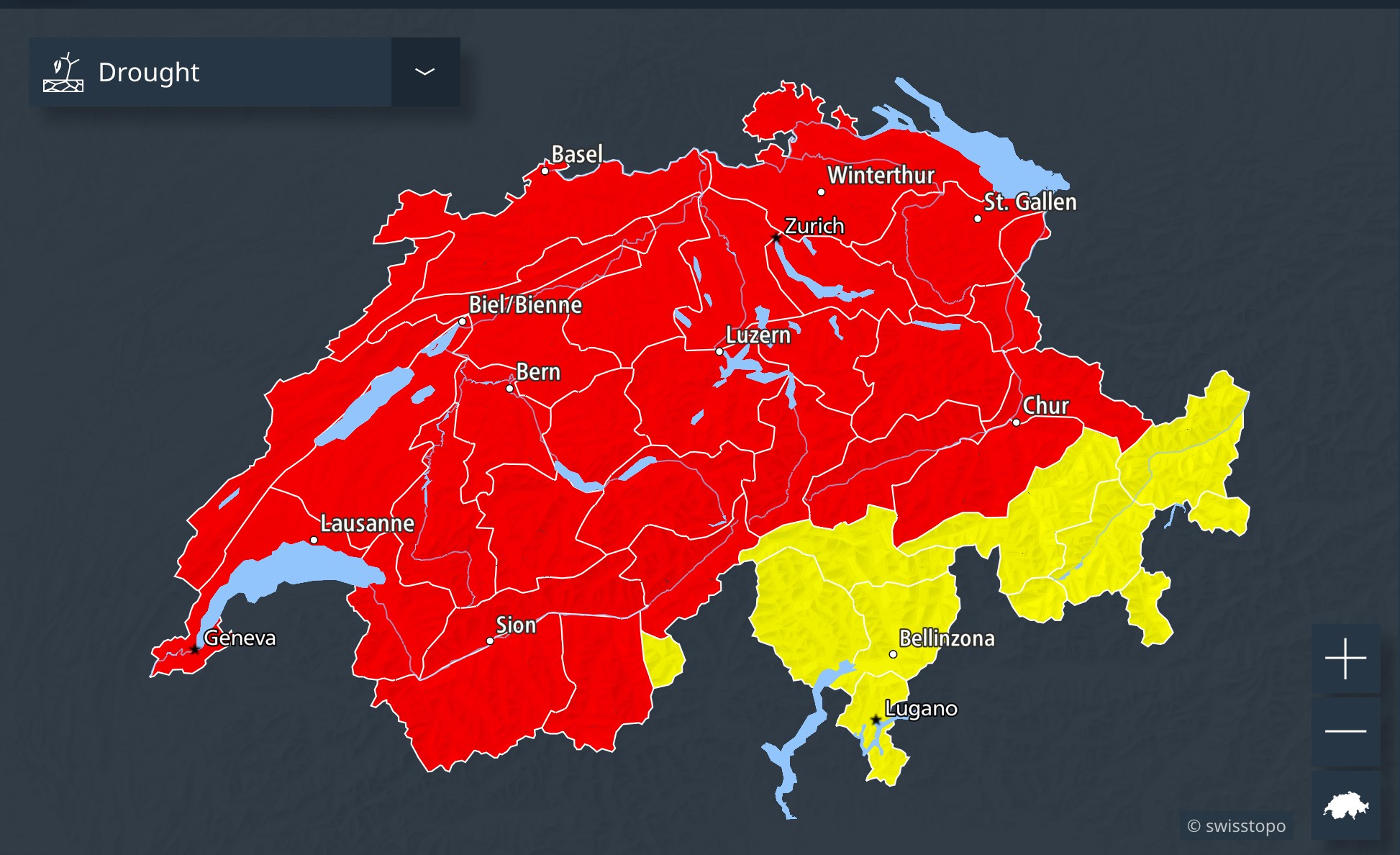
Image: Swiss government’s Natural Hazards Portal. https://www.natural-hazards.ch/#hazards-tab=drought
The red areas of the map – pretty much most of the country – indicate Level 4 “High Danger” of drought.
According to Swiss authorities this “high danger” means: “A significant increase in drought conditions is expected. Local or regional restrictions on water use are likely, e.g. shutting off fountains, hosepipe ban for watering gardens or washing cars. The risk of forest fires may be seriously elevated.”
How long will this dry spell last?
As no persistent, heavy rain is currently forecast, this situation will most likely remain for a while.
“Over the coming weeks, most water levels will remain very low or continue to decline,” the NDP reports. “The low-water situation will worsen. As for the Alpine glaciers, melting continues at a sustained pace.”
READ MORE: Melting Swiss glaciers face worst case scenario
What are the consequences of prolonged droughts?
They are large-scale, affecting nearly all sectors of society, ranging from reduced drinking water supplies to agricultural failures – which often are closely interrelated.
In 2015, for instance, army helicopters had to supply water to thirsty cows in western Switzerland, after a sustained period of extremely hot weather critically reduced the amount of water available to cows grazing in alpine pastures.
Beyond shortage of water, droughts also can, in extreme cases, affect energy production, ecosystems, and public health.
And wildfires are definitely more common during dry spells as well:
READ MORE: What you need to know about wildfire risks in Switzerland this summer
What should you do (and not do) in case of a prolonged drought?
Heed the warnings.
You probably receive (if you haven’t already) a letter from your municipality informing you about restrictions in place on watering your lawn.
You may also be advised to use water sparingly – not to let the tap water run for extended periods and to limit the time for your showers.
The drought warnings in particular make it possible to take precautions and react in a timely manner to prevent or minimise damage.
If you want to stay on top of the drought situation, the Federal Office for the Environment has lots of useful information on this subject.


