

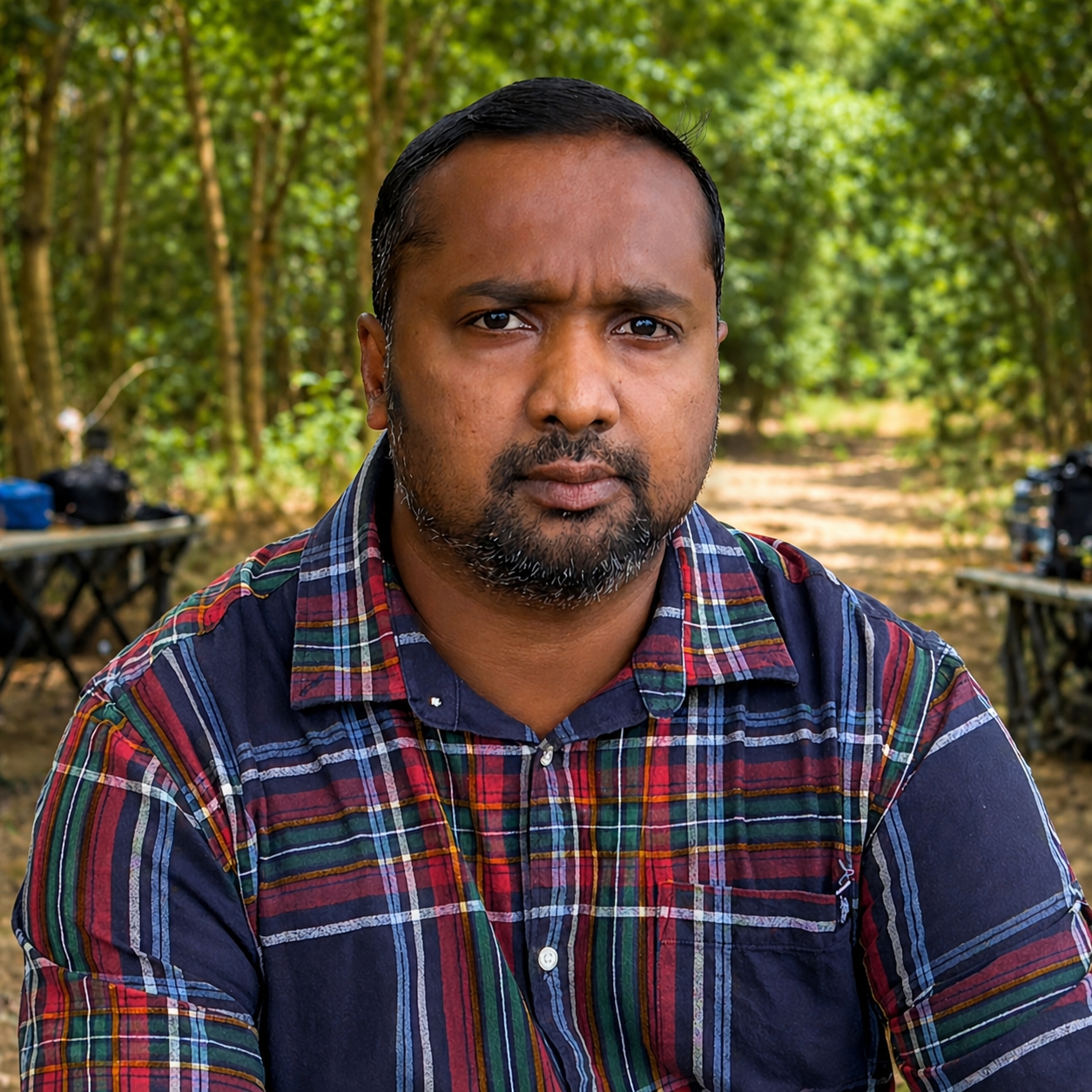
A new documentary by independent filmmaker Baazir Kaleelur Rahman is raising difficult questions about land rights, institutional discrimination, and the long shadow of Sri Lanka’s civil conflict.
Wattamadu: The Stolen Harvest, produced by Activists Without Borders, explores the struggles of Muslim farmers in eastern Sri Lanka who claim they have been denied access to more than 1,000 acres of paddy land they cultivated for generations after the area was reclassified as forest land.
But according to Baazir, the story is about far more than agriculture.
“For the people in this film, it’s about dignity, identity, and survival,” he said following a recent screening in Sri Lanka attended by affected farmers and local officials.
The documentary paints a picture of communities trapped in a prolonged struggle that did not end with the conclusion of Sri Lanka’s civil war. Many of the farmers featured survived violence, displacement, and economic hardship during the conflict years, only to find themselves facing a new kind of battle – one fought not with weapons, but through bureaucracy, permits, and state institutions.
“They endured war, displacement, and loss,” and activist says in the film. “But today they are fighting paperwork, permits, and policy.”
For some observers, the issues raised in the documentary lead to a deeper and more uncomfortable question: does institutional discrimination still exist in Sri Lanka today?
The farmers interviewed in the film suggest that it does. Many claim they have spent more than a decade seeking justice through official channels, with little meaningful political or institutional support. Some argue that administrative decisions surrounding land classification have disproportionately affected Muslim farming communities in the Eastern Province.
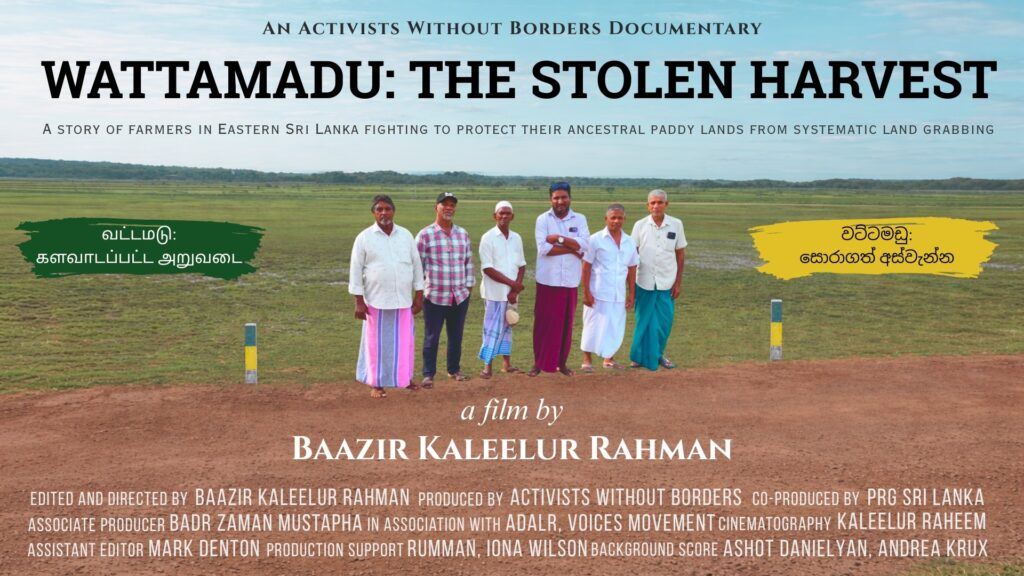
The documentary does not make direct legal accusations, nor does it present itself as a political manifesto. Instead, it gives space to the voices of ordinary farmers who feel excluded from decisions affecting their livelihoods and futures.
Several farmers featured in the film describe losing not only land, but also economic stability and social identity. Farming, they say, was not simply an occupation but a way of life passed through generations.
The reclassification of agricultural land as protected forest lies at the centre of the dispute. Authorities maintain that environmental protections and land management policies must be upheld, while farmers argue that the land had long been cultivated before the designation and should not have been included without proper consultation.
This tension between conservation, governance, and community rights lies at the heart of the film.
The documentary also reflects a broader concern shared by many in post-war Sri Lanka: whether all communities experience state institutions equally. While the country has made significant progress since the end of the conflict, debates around land ownership, minority rights, and regional inequality remain sensitive and unresolved.
Baazir previously explored similar themes in his earlier documentary, Killing the Travellers: Kurukkalmadam Massacre, which focused on violence and overlooked stories from conflict-affected areas. With Wattamadu: The Stolen Harvest, he shifts attention from wartime atrocities to the quieter, often less visible struggles that continue long after conflict ends.
The documentary suggests that for some communities, suffering did not disappear with peace. Instead, it evolved into a slower and more exhausting fight for recognition, access, and fairness.
Beyond the immediate dispute, the film raises wider national questions about reconciliation and governance. Can post-war recovery truly succeed if communities continue to feel unheard? How should the state balance environmental protection with historical land use and livelihoods? And when minority communities repeatedly feel marginalised, what impact does that have on trust in public institutions?
These are not easy questions, and the documentary does not claim to provide simple answers. What it does offer is a platform for voices that are often absent from mainstream national conversations.
At its core, Wattamadu: The Stolen Harvest is not only a story about land. It is a story about belonging, memory, and whether justice can remain out of reach long after a war has officially ended.
Watch the trailer: https://youtu.be/QGw9vT67PFg

