


The rise of political Islamism and the risk that ideological movements might use the tools of Western democracies to pursue goals contrary to liberal pluralism are once again at the centre of the debate. This follows the conference ‘Integration: Implications of the Presence of the Muslim Brotherhood in Europe’, organized at the Chamber of Deputies by the League’s Department for the Integration of Foreign Communities, chaired by former MP Souad Sbai. The institutional event took place in one of the Chamber’s halls, in a space dominated by a large and famous painting depicting the historic Battle of Lepanto.
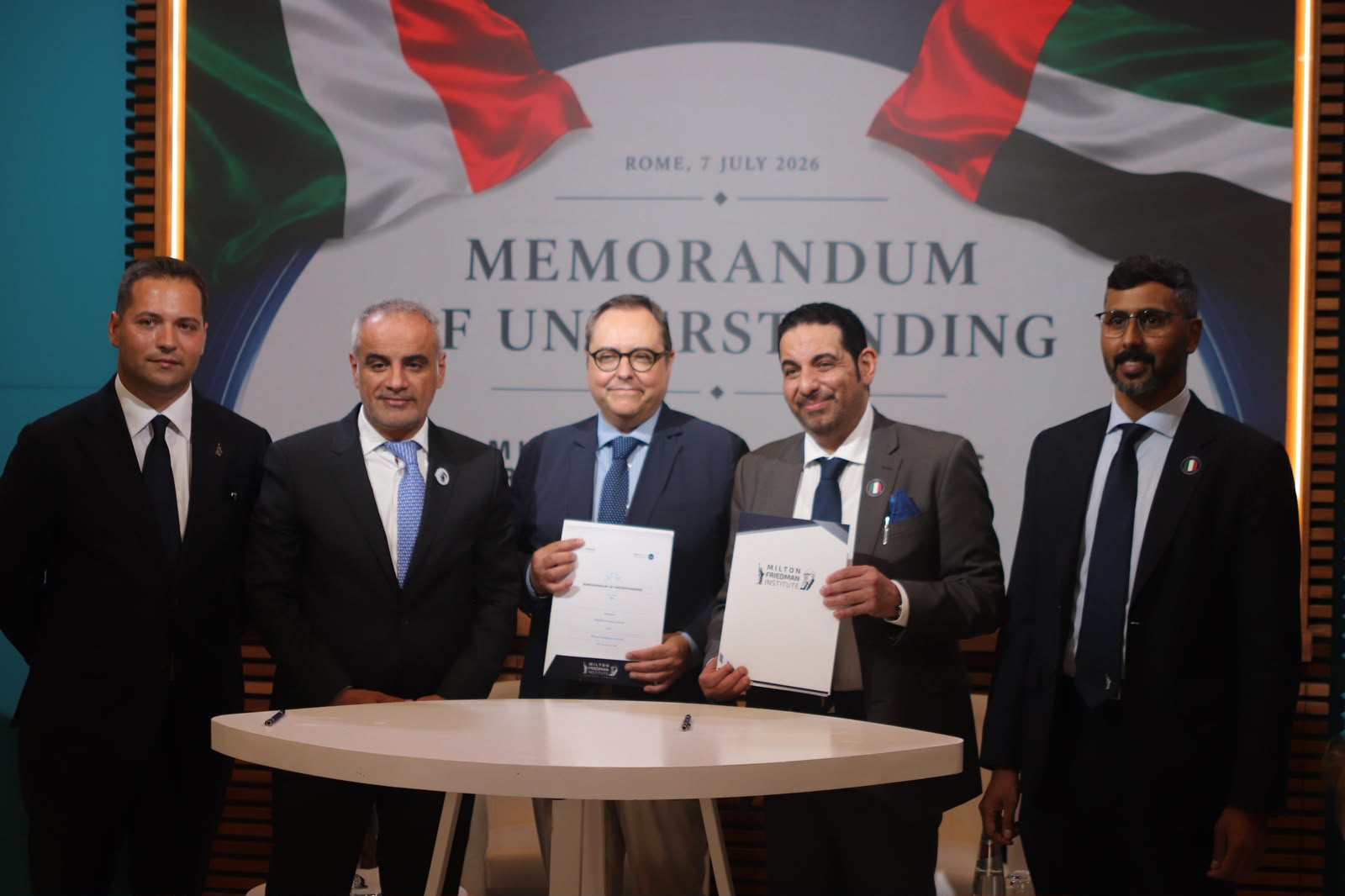
Moderated by Daniele Capezzone, director of the daily newspaper Il Tempo, the meeting brought together TRENDS Global Group, an Abu Dhabi-based institute led by Dr. Mohammed Abdullah al-Ali. The think tank has developed a global index designed to measure the weight, ideological influence, and strength of the Muslim Brotherhood, combining research and digital tools. “The challenge posed by Islamism to European societies is no longer confined to security,” al-Ali stated, “but has become an institutional and ideological challenge that operates through influence over educational, cultural structures, and civil society.” According to the CEO of TRENDS, the strategy relies on gradualism and the use of democratic freedoms to pursue projects incompatible with pluralism, equal citizenship, and the rule of law. TRENDS researchers presented analyses on the evolution of the Brotherhood, highlighting the role of associative networks, educational activities, and digital tools in spreading ideological content, with a particular focus on artificial intelligence.
In Italy, this challenge was taken up by the Milton Friedman Institute through a memorandum of understanding with TRENDS Global Group. Executive Director Alessandro Bertoldi spoke alongside Professor Alexandre Del Valle. Bertoldi emphasized how this collaboration brings analytical tools to Italy capable of supporting institutions and public debate in understanding political Islamism. Del Valle recalled the distinction between Islam and political Islamism, arguing that the Muslim Brotherhood represents a long-term strategy that utilizes democratic instruments and certain Western vulnerabilities to strengthen its influence. According to the academic, the accusation of “islamophobia” is sometimes weaponized to delegitimize debate on political Islamism.
The meeting was also attended by senior researchers Hamad al-Hosani and Badriya al-Riyami, as well as the director general of the Friedman Institute, Dario Peirone. Peirone, a professor at the University of Turin, highlighted the need for greater academic preparation on the phenomenon, noting that specific courses dedicated to Islamic extremism and the Muslim Brotherhood are still lacking in university legal curricula.
“Europe must confront a crisis in integration models,” declared former MP Souad Sbai. “We need rigor, data, and less ideology.” Finally, attention shifted to the digital realm. The speakers highlighted how social media and AI are central to ideological dissemination and consensus-building among young people, calling for investment in digital prevention and education. A debate that recalls Karl Popper’s “paradox of tolerance”: an open society must defend freedom, but it cannot allow tolerance to be used to destroy the democratic principles upon which it is founded.

