


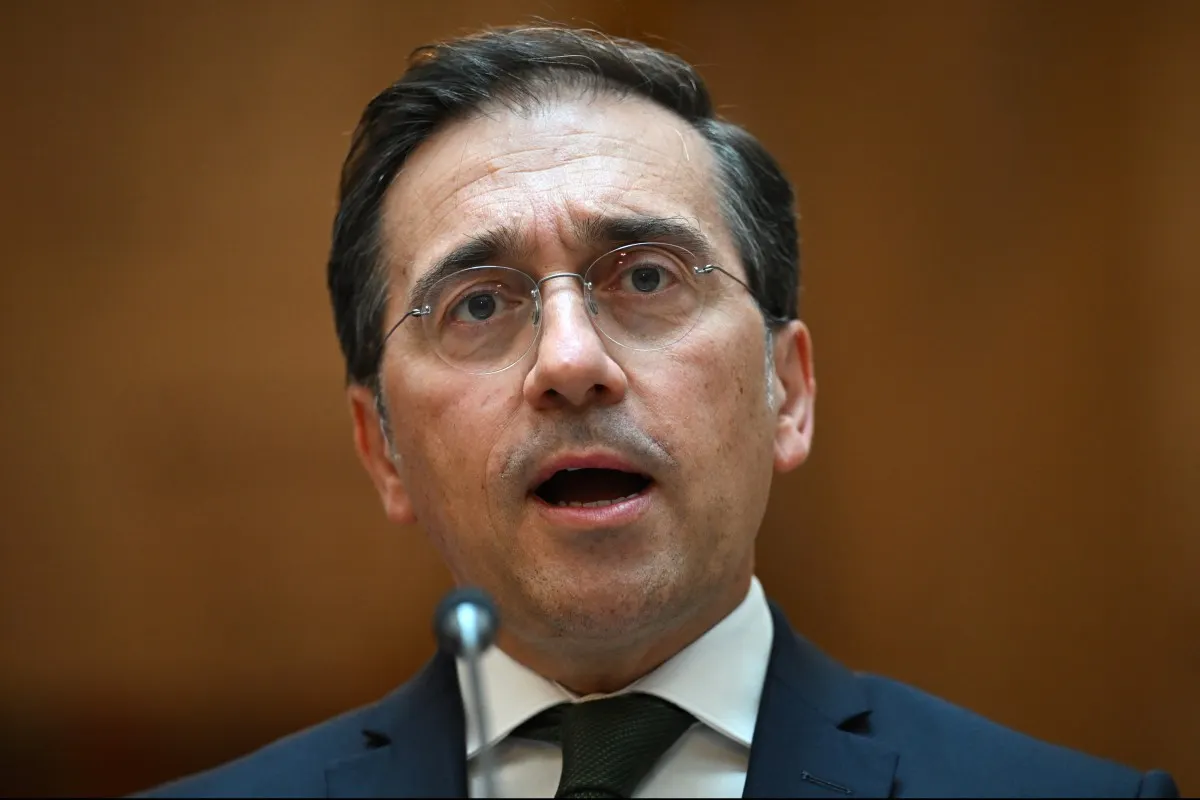
Spain’s Foreign Minister insisted Monday that his country’s sovereignty over Ceuta was “unquestionable”, after tens of thousands of migrants irregularly entered the north African territory from Morocco.
Madrid has avoided criticising Rabat over last week’s mass arrivals, which some commentators have interpreted as a means for Morocco to pressure Spain.
Morocco does not recognise Ceuta and Madrid’s other north African exclave, Melilla, as Spanish territory and has claimed sovereignty over them since its independence in 1956.
Answering a question during televised remarks on Monday, Spain’s Foreign Minister José Manuel Albares said: “That Ceuta and Melilla are an integral part of Spain’s territory is unquestionable, for the whole world”, emphasizing that they are “as Spanish as Valladolid or Santiago de Compostela”.
READ MORE: Why are Ceuta and Melilla Spanish?
Most of the estimated 60,000 people who last week rushed into Ceuta — most having swum by sea around the border barrier — have since returned to Morocco.
The Spanish central government’s delegate in Ceuta, Miguel Ángel Pérez, said Monday that 2,500 of them were estimated to still be in Ceuta.
Ceuta’s top official Juan Jesús Vivas put the figure at between 3,000 and 5,000.
READ ALSO: Spain’s Ceuta enclave returns to normal as migrants depart
AFP saw Spanish police and soldiers on Sunday patrolling and escorting small groups of migrants to the border to return to Morocco.
The charity Save the Children said in a statement on Monday that “about 1,000” of the remaining migrants from last week’s arrivals were minors who were “unprotected”.
It said Ceuta’s child protection system had capacity to look after just 100.
AFP on Saturday saw hundreds of children sheltering in a warehouse complex near the border, who said they had no food.
“There was no report alerting us to the size of the numbers that we had to respond to,” Spain’s Migration Minister Elma Saiz said on Monday in televised comments.
“Of course, this response would not have been possible without Morocco’s collaboration.”
Some analysts suggested Morocco might have allowed migrants to cross the border to put diplomatic pressure on Spain, which has recently improved ties with Rabat’s arch-enemy Algeria.
Spanish officials accused criminal gangs of spreading rumours that a recent Spanish Supreme Court ruling on immigration would allow migrants easier passage.
EU interior ministers scheduled a video call for Tuesday about the Ceuta migrant surge.


