


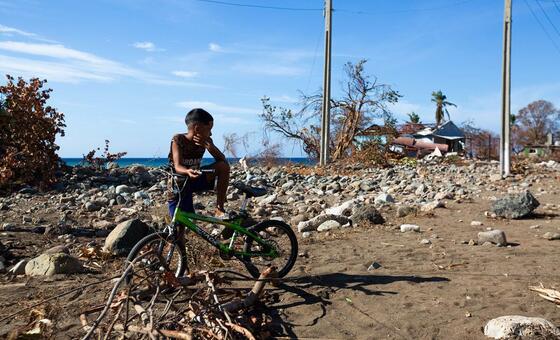
Launching the regional State of the Climate report on Monday covering last year, experts outlined how temperatures remain well above average, with rising sea levels and increased extreme weather events in Latin America and the Caribbean.
The report warns that climate shocks are increasingly disrupting food production, straining healthcare systems and threatening access to clean water across the region as extreme weather becomes more severe and more frequent.
Threat to life and health
In 2025, intense heatwaves pushed temperatures above 40°C across large parts of the region, including a record-breaking 52.7°C in Mexico. Brazil and Paraguay also recorded temperatures above 44°C.
The WMO warned that extreme heat is becoming a major public health threat, especially for vulnerable communities with limited access to healthcare, cooling and reliable electricity.
Many countries still do not routinely track heat-related deaths, but the report estimates around 13,000 people died annually from heat-related causes across 17 countries between 2012 and 2021.
Food insecurity deepens
Increasingly extreme rainfall patterns are worsening humanitarian conditions across the region, with communities facing cycles of devastating floods and prolonged drought.
In 2025, flooding affected more than 110,000 people in Peru and Ecuador, while floods in Mexico killed 83 people and caused widespread infrastructure damage and landslides.
At the same time, severe drought affected up to 85 per cent of Mexico, creating major water shortages for crops and reservoirs despite the country experiencing its wettest June on record.
Water shortages were also reported across the Caribbean, while drought conditions in southern South America increased agricultural losses and wildfire risks.
The WMO warned that worsening climate extremes are placing growing pressure on agricultural production and food processing (agro-food) systems, threatening livelihoods, food access and rural communities across the region.
Glacier melt threatens water supply
Rapid glacier retreat across the Andes is also raising alarm over future water security.
Andean glaciers provide freshwater for nearly 90 million people, supporting drinking water, agriculture, hydropower and industry.
However, glaciers across Colombia, Ecuador, Peru, Chile and Argentina are melting at accelerating rates, increasing the risk of both flooding and long-term water shortages.
“The signs of a changing climate are unmistakable across Latin America and the Caribbean,” said WMO Secretary-General Celeste Saulo, warning of accelerating glacier loss, rising sea levels, tropical cyclones, floods and drought.
“The State of the Climate in Latin America and the Caribbean 2025 is not only a scientific publication. It is a call to action. It calls on us to strengthen observations, invest in services, close early warning gaps, and ensure that climate information reaches those who need it most” she says.
Hurricanes and rising seas
The report also highlighted the growing danger posed by rapidly intensifying storms.
Hurricane Melissa became the first Category 5 hurricane on record to make landfall in Jamaica in October 2025, killing 45 people and causing economic losses equal to more than 41 per cent of the country’s GDP.
Meanwhile, rising sea levels and warming oceans are increasing risks for coastal communities, fisheries and marine ecosystems across the Caribbean and Atlantic coasts.
Sea levels in parts of the tropical Atlantic and Caribbean are rising faster than the global average.
WMO officials warned that without urgent investment in climate adaptation, disaster preparedness and early warning systems, humanitarian needs across the region will likely only get worse.

