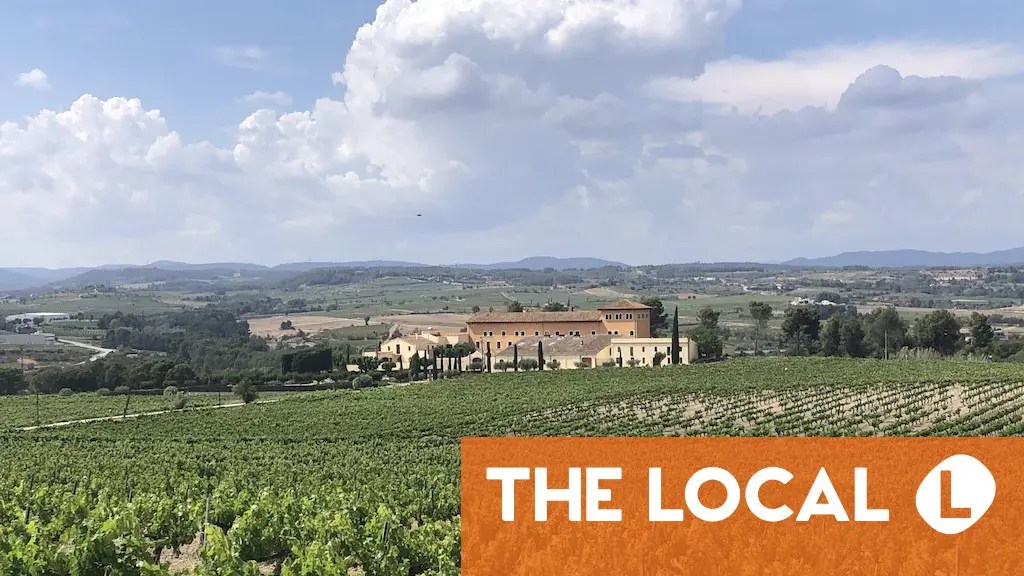
Cava is Spain’s answer to French Champagne – a sparkling wine that’s typically golden in colour and enjoyed on special occasions. Here’s what to know about it and how to visit the region it’s made in.
Cava is made in various provinces around the country, including Tarragona, Girona, Lleida, Zaragoza, Badajoz, Navarra, Valencia, La Rioja and Álava, but the majority of it is produced in the Penedès, an undulating area of Catalonia, around one hour southwest of Barcelona.
There, it’s made primarily from three native white grapes — Macabeo, Xarel·lo, and Parellada. These bubbles in the wine are the result of a second fermentation in the bottle, where carbon dioxide is generated.
Cava is left to age in the bottle for a minimum of nine months, while reserva varieties are left for 18 months and gran reserva for 30 months. It can be white or rosé and comes in varieties including Brut Nature, Extra Brut, and Brut, depending on the sugar content. Brut Nature has no added sugar, while Brut is sweeter.
The word cava comes from the name of the cellars where it’s aged.
READ ALSO: A bite-sized guide to Spain’s most special cheeses
Don’t miss our journalists’ daily news roundup from Spain
If you’re looking to stock up, where better to get a bottle from than the source itself, by visiting one of the region’s many wineries?
There may not be any grapes left on the vines anymore, but autumn is still one of the best times of year to visit the Penedès due to the changing colours of the vine leaves and surrounding forests with their ochre yellow, sienna and umber leaves.
There are almost 300 wineries scattered across the region and around 70 of these are visitable and can organise tours and tastings.
Some of the key cava towns in the region are Sant Sadurní d’Anoia, Subirats and Vilafranca del Penedès.
There are several ways to visit and tour the Penedès, including on foot, by bicycle, electric vehicle and even on horseback.
READ ALSO – ‘Cervezas’: The beers to order in different parts of Spain
Electric vehicle
By 2025, DO Penedès achieved its goal by becoming the world’s first 100 percent organic wine appellation. Founder of EVE BCN Pedro Rodríguez Codina wanted to create a tour company in keeping with that ethos by offering tours in fully electric vehicles.
Codina conducts all his tours personally and offers private wine tours to carefully selected family-owned wineries, including to one producer – Marc Esteve – who is just a one-man band, doing all the jobs of making and producing sparkling wines himself. He can offer visits to one, two or three wineries including a special brunch overlooking Montserrat mountain.
By bike
Traversing the Penedès by bike is one of the best ways to see the region, cycling in between the vineyards themselves out in the open air – it’s all bike paths, no need to be on the roads so you don’t need to worry about combining roads and alcohol.
There are many different companies that offer bike rental or bike tours. Bikemotions offers both, as well as electric bikes that can help you up and down the hillsides. They offer both guided tours as well as self-guided, providing you with a map you can follow from your phone. The company can also book a slot for you at a winery to include as part of your tour, or you can book your own.
On horseback
If riding through the vineyards on two wheels catches your attention then you’re sure to love the idea of exploring it by four hooves too.
Gramona offers 30-minute or one-hour rides through their finest wine estates, while Penedès Turisme itself also organise horse riding routes, along with wine tasting at the Miquel Jané winery.

Llopart is one of the wineries you can visit in the Penedès. Photo: Dan Convey
READ ALSO: The best vegan and vegetarian Spanish dishes
Classic tours
There are many different companies offering classic tours to the Penedès by bus or minibus with a guide. Many of them also include visits to Montserrat and its ancient monastery, which isn’t too far away.
One of the best of these, offering small group tours is Devour, which organises a Montserrat and cava winery day tour. It also includes a 4×4 vineyard ride and a farm-to-table lunch, as well as a tour of the winery to learn all about how cava is made.
Self-guided
It’s easy to visit certain wineries in the Penedès by public transport. Rodalies line 4 from Barcelona stops at Sant Sadurní d’Anoia, Lavern-Subirats and Vilafranca del Penedès among others. From these stations there are several wineries you can walk to, particularly within the town of Sant Sadurní d’Anoia, Catalonia’s cava capital. Two of the most famous you can walk to straight from the train station are Freixenet and Codorníu.
Freixenet is one of the region’s largest producers, sold all over the world, while Codorníu is said to be the oldest winery in Spain, dating back to 1551. Codorníu was also the birthplace of cava, where in 1872, Josep Raventós produced Spain’s first sparkling wine. The Modernist complex it’s housed in today was designed by the famous Modernista architect Josep Puig i Cadafalch, making it an architectural tour, as well as one for the taste buds. Don’t forget to reserve for both ahead of time.