


From littering fines to Swiss National Day celebrations and digital naturalisation applications — these are the changes you can expect in Switzerland in August 2026.
August 1st: Swiss National Day
As every year, the Swiss will celebrate their National Day on August 1st, marking 735 years since Switzerland as we know it was created.
The date marks an important and defining moment in Switzerland’s history: August 1st 1291, when cantons of Uri, Schwyz and Nidwalden pledged autonomy from foreign powers — the promise that has been holding true, and celebrated, ever since.
This year, however, due to prolonged drought, traditional fireworks and bonfires may not be authorised. Your municipality will inform residents of any restrictions in place.
READ MORE: Why does Switzerland celebrate national day on August 1st?
August 1st: Digitalised naturalisation
From this day, the Federal Council is digitalising the processes for obtaining Swiss citizenship.
“In the future, communication between the responsible cantonal authorities and the State Secretariat for Migration (SEM) can take place digitally instead of by mail,” the government said in a press release.
With this digitisation project, the Federal Council aims not only to optimise communication but also the submission of naturalisation applications via a new interface of the Central Migration Information System (ZEMIS).
The new system will initially be tested in a few cantons during the pilot phase, with the remaining cantons to be connected to the system after the trial period is over.
August 1st: Switzerland introduces a national fine for littering
Fines for littering already exist in Switzerland but they differ from one municipality to another.
Typically, they go from 100 francs upwards, based on the extent of littering.
Now, for the first time, the Federal Council is about to introduce a nationwide fee, meant to “standardise nationally the fines for littering and the illegal disposal of large quantities of urban waste.”
The new penalty – up to 250 francs, depending on the “the type and quantity of waste” – will go into effect on August 1st.
The Federal Council also reiterated that “waste should be limited to the bare minimum and, when this is impossible, recycling should be used.”
READ MORE: Swiss government to impose new 250-franc fines for littering
August 1st: Telecom price hikes
Customers of Sunrise, as well as its subsidiaries Lebara and Yallo, will have to pay up to 2 francs more for their mobile plans and home Internet from August 1, 2026.
These price hikes affect both new and existing customers.
August 1st: Short-time work compensation
The Federal Council is extending the maximum duration for receiving short-time work compensation, set at 24 months.
“From August 1, 2026, companies can continue to receive KAE for their employees for a maximum total of 24 months, provided the relevant eligibility requirements are met,” the Federal Council said, adding that “the regulation will now apply until January 31, 2027.”
This decision is justified by the “still challenging economic environment.”
READ MORE: ‘Short-time work benefits’: How the Swiss plan to ease impact of US tariffs
Summer holidays are over, it’s ‘back to school’ time
Depending on the canton of residence and school district, public schools are resuming between the second week and end of August.
As holidaymakers return home, traffic will be more chaotic, possibly causing delays and other disruptions.
If you are driving, be ready for long queues at entrances to frequently used transit points and tunnels, such as the Gotthard, where lines may exceed 10 km.
The Federal Roads Office as well as motoring organisation TCS advise drivers to avoid certain motorways during heavy-travel periods.
These are usually the most congested roads in Switzerland:
- The A3/A1 Basel-Zurich axis
- The A3/A13 Zurich-Chur-San Bernardino-Bellinzona-Chiasso axis, particularly near Chur and the San Bernardino tunnel
- The A9 Lausanne-Montreux-Martigny-Brigue mainly near Lausanne and Montreux
- The Martigny – Grand-St-Bernard tunnel axis
- Bern and surroundings (A1/A12/A6 interchange)
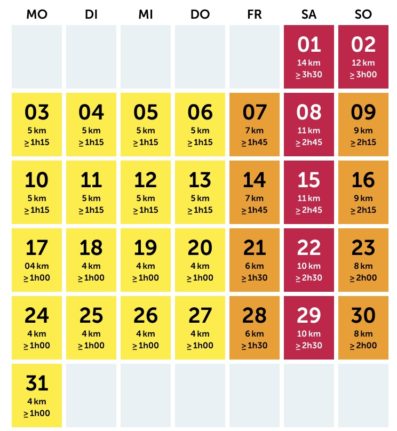
Concerning the Gotthard tunnel, which is notorious for long traffic jams, the TCS has this chart which shows which days are best to travel in August.
(Yellow is for moderate traffic; orange for heavy; and red for the heaviest. The chart also indicates how long – in km – queues are expected to be and how long the actual wait would be).
TCS


