


“They told us that we would no longer be able to farm, fish, or hunt, and that they would take care of everything. People were very confused”. José Antonio Queteguari, a pastor and elder member of the Tacana Nation in Pando, in the Bolivian Amazon, has seen outsiders come for the forest before: first for rubber, then for Brazil nuts. Now, they come for carbon credits.
More than a third of the population here is Indigenous. International law (1) requires their free, prior and informed consent for projects on their land. Yet, entrepreneurs started trying to trade carbon credits even before Bolivian law allowed it.
That changed in 2024, when the Constitutional Court struck down the ban on commercialising nature. Supreme Decree No. 5264 on climate finance and the international carbon market followed. The EU appears to have played a part in that shift.
What are carbon credits?
A carbon credit represents a reduction of 1 metric ton in greenhouse gas emissions to compensate for 1 metric ton of emissions made somewhere else. A credit is a virtual certificate that represents the reduction, avoidance or removal of that amount from the atmosphere. It can be bought, sold or traded before it is “retired,” meaning it cannot be traded again, assuring that only the buyer can claim emissions cuts associated with that credit.
In the EU, it is run under the European Union Emissions Trading System (EU ETS), the world’s first and largest international carbon market. The 2026 EU Commission’s proposed review of the EU ETS) would ease restrictions on industry and open the door to buying carbon credits from outside Europe.
Critics warn that the carbon market, meant to fund environmental projects and cut emissions, often worsens inequalities. Problems include unfair contracts that remove community control, land grabs, displacement, limited access to traditional lands, conflicts with food production, and false promises of jobs, income and infrastructure.
We travelled to the Bolivian Amazon and asked Indigenous communities what they knew about carbon markets. José Antonio knows very little. But he knows they must stay vigilant, against what he calls constant attempts “to retake their territory”. He was at the first meeting where his community was offered a deal to generate and sell carbon credits.
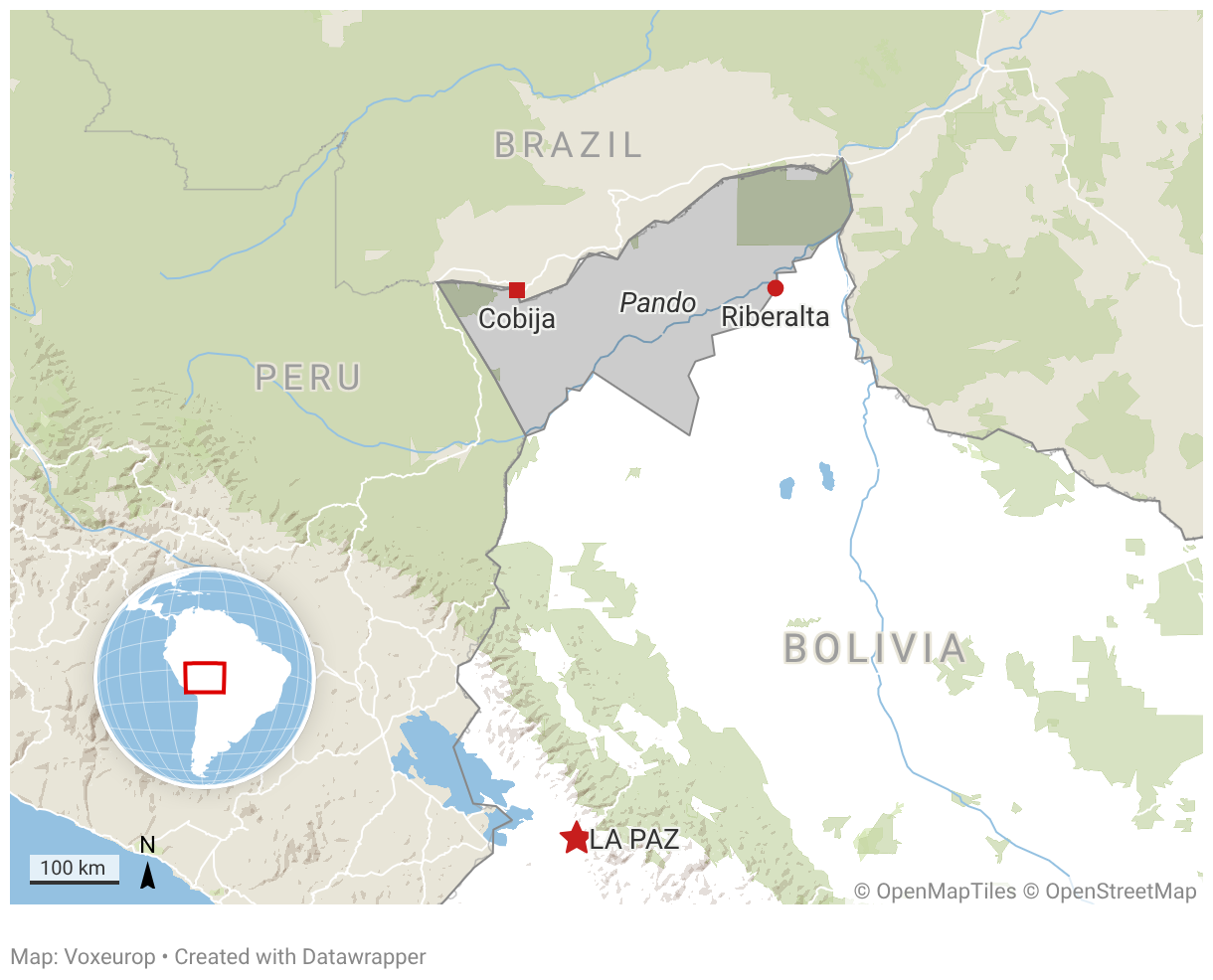
In 2023, a delegation from the nearby town of Riberalta came into in the dense, pristine forest to propose a 30-year contract to the leaders of Multiethnic Indigenous Territory II (TIM II), home to three peoples – the Tacana, the Ese Ejja, and the Cavineño.
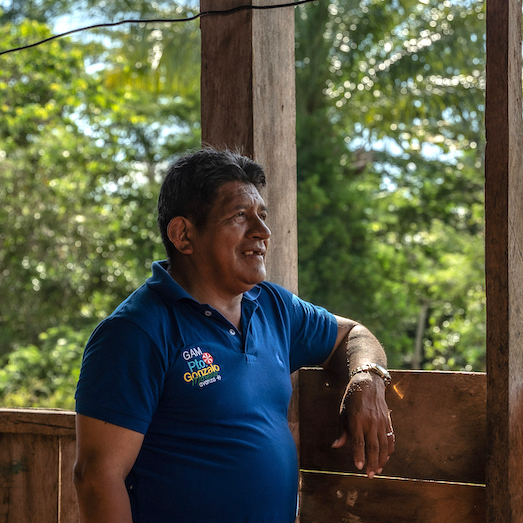
It wasn’t really the first offer – and it probably won’t be the last: the carbon credit market is expanding globally, and carbon credit issuances rose 8% between 2024 and 2025, and EU policy increasingly leans on Article 6 of the Paris Agreement on climate change, which allows countries to trade emissions reductions, to expandi carbon market mechanisms, in the Global South.
In the case of TIM II, the agreements covered roughly 440,000 hectares, plus an area of about the same size, awaiting recognition as Indigenous land. Some indigenous leaders signed, others refused. The proposal came from the Federico Hecker Foundation, named after the founder of an influential family of landowners and agribusiness owners of Swiss origin. The family company, Hylea, produces and exports Brazil nuts, some of which are sold by European retailers. The Heckers hold considerable political influence: Aimé Hecker, chairman of the foundation and CEO of Hylea, sits in the national parliament; his father, Peter, is a former state senator.
For José Antonio, the old patrones, the bosses of the rubber era, also mean being cheated on prices. His grandparents came from Tumupasa and Ixiamasto tap rubber. “We would sell a kilo of lard and they gave us something in exchange, without telling us how much it cost: a kilo of rubber, or two boxes of Brazil nuts,” he says.
In TIM II, the Brazil nut harvest is most families’ main income. “With the Brazil nuts we buy everything: motorcycles, televisions, rice cookers. And they store food for the whole year, waiting for the next harvest,” says Lucio Ayala Siripi, a Cavineño and president of TIM II. The climate crisis has already arrived: streams are drying up and harvests failing. “You plant the rice and it comes out empty, with no grain,” he says.
María fears a carbon contract could take that away too. “We don’t know if they would let us gather the Brazil nuts, which we live from and eat. If we can’t fish in our own lakes, and they can, if they start renting it out or running tourism business, once it’s rented we no longer have any say.”
The project now appears to have stalled. But the 2023 agreement between the Hecker Foundation and CIDOB – the Confederation of the Peoples of the East, the Chaco, and the Amazon of Bolivia, reveals a broader plan: TIM II was to be a pilot initiative, later extended to all 34 Indigenous peoples represented by CIDOB. The Foundation says that “the project never moved into the implementation phase and did not generate carbon credits or revenue from those activities for the Foundation”. Aimé Hecker assures that the communities’ wish not to go ahead with the project has been respected.
Carbon colonialism
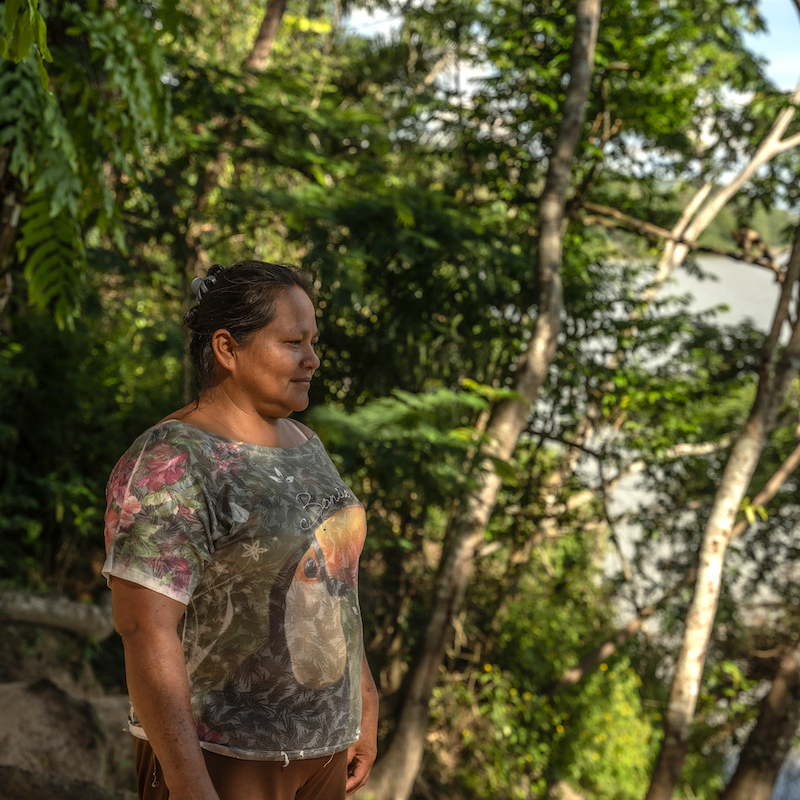
“They wanted the whole territory. But some people recognised them as the Heckers – one of the landowners we had fought to win back our land – and now, through carbon credits, they were trying to take it back,” says María Saravia Paredes, a member of the Tacana.
“Carbon credits are a continuation of the colonial approach toward indigenous peoples,” argues Fiore Longo, an anthropologist and researcher at Survival International, which campaigns for the rights of indigenous peoples. “Since 2009, protecting natural areas has meant taking action to mitigate climate change through nature-based solutions. And this is when natural areas can become additional sources of wealth. There was an explosion of this type of project, benefiting governments, conservation organisations and big finance.”
Bolivia’s Solón Foundation which tracks those projects goes further: “Carbon market projects are moving forward in a deceptive and dangerous manner in Bolivia, by signing agreements and documents that not all members of indigenous territories are aware of, and that are based on false promises that violate the rights of indigenous peoples and Mother Earth,” it stated. Such projects very rarely sell their credits, it adds, and when they do, it is in small quantities and at very low prices. “For many, carbon credits are a way to avoid fulfilling the obligation to reduce greenhouse gas emissions.”
Javier Monjes Santa Cruz, an Ese Ejja from Portachuelo Bajo, heard offers of several carbon companies. What stayed with him is who set the price: “They came with proposals. Why do they have to set the price? Why can’t we, as owners of the territory?”. Shared among all the families, he says, the money they were offered was almost nothing.
On the European side, demand for such credits may soon grow. The European Climate Law, amended to set a 2040 target, allows the EU to use “a limited quantity of high-quality international credits” towards that target from 2036. The EU Commission’s proposed review of the EU Emissions Trading System (EU ETS), published in July 2026, would ease restrictions on industry and open the door to buying carbon credits from outside Europe.
Over the past few decades, the EU has funded Bolivia heavily across many sectors, through bilateral programmes and a range of funds – some of which are non-public. Voxeurop examined them through a Freedom of Information Act (FOIA) request.
The EU-Sweden team
On the environment, the Commission states: “The EU is currently the largest donor in the sector.” This amounts to €300 million over 20 years, €24 million in collaboration with Sweden for the Climate Change Adaptation programme, a further €104 million in grant funding towards the partnership in 2021-27.
“An EU-funded international technical assistance team has been working since November 2024 with the [Bolivian] Ministry of Planning and the Ministry of Environment”, the Commission explains. It operates through Team Europe, the EU and member states’ joint approach to development aid, with “France, Germany, Sweden, Italy, and Spain through their local offices, while Belgium, the Netherlands, and Ireland participate remotely.” Activities are also implemented in partnership“with Switzerland and several European development and financial institutions”.
‘We will no longer allow any institution, cooperation agency or foundation to come in. First they have to consult us. Because they already lied to us. They deceived us‘ – Sanjinez Mamio Callau
The EU Commission says it “has not financed any carbon credit projects in Bolivia to date”, and has signed no specific agreements on them. Yet Annex II to a 2023 agreement between the EU and Sweden states that Supreme Decree No. 5264, which opened up Bolivia to the carbon market, was adopted “with significant support from the EU-Sweden initiative”.
In its response to our FOI request, the Commission clarifies that “Team Europe, together with other international cooperation partners and NGOs, supports Bolivia in establishing an institutional framework for climate finance more broadly and in strengthening the capacity of public officials to understand and assess these emerging financing opportunities for the country”.
The Commission added that Team Europe also helped Bolivia develop the “green finance and carbon credits strategies it presented at COP30”, the UN climate conference held in Belém, Brazil, in November 2025, and prepare its updated plan under the Paris Agreement (NDC 3.0), submitted to the United Nations in September 2025 and linked to the development of the carbon credit market. The Swedish Embassy in La Paz has confirmed its support.
The EU’s logo appeared among the sponsors of the Bolivia Carbon Forum , the country’s main carbon market conference, held in Santa Cruz de la Sierra on 5 March 2025. “The event was co-funded by the European Union, the EU-Sweden Platform and its partners”, the EU delegation said in the promotional post published on its official Instagram account, “UE en Bolivia”.
The LEAF coalition
Bolivia’s official delegation at COP30 included no Indigenous representatives. In TIM II, Lucio Ayala heard about it on the news. “It makes me angry, because it has always been like this: our rights violated in different ways,” he says. Not even under Evo Morales, the country’s first Indigenous president, were the lowland peoples consulted, he adds: “Laws came out overnight, without consultation.”
Swedish authorities give differing accounts: Sweden’s Ministry of Climate and Enterprise says: “Sweden is not carrying out any carbon market projects in Bolivia” and “has not collaborated with Bolivia to achieve the constitutional law that has opened up the Latin American country to the carbon credit market”. The Swedish government considers international carbon credits “useful to increase global climate mitigation ambition”, it adds.
Sweden’s ambassador to La Paz, Johanna Teague, puts it differently: “The Embassy has played a key role in supporting Bolivia’s Government in strengthening the necessary conditions to enhance access to international climate‑finance mechanisms (including its application to the LEAF Coalition)”.
The LEAF Coalition was launched in 2021 by Norway, the United States and the United Kingdom; South Korea later joined. Companies such as Amazon, Nestlé, Volkswagen, Burberry, E.on, Bayer and Zurich, and others, have joined. Emergent, the non-profit that coordinates it, says that “the coalition exists to mobilise finance [to date, over $1 billion raised] to fund jurisdictional REDD+ programmes, which are run by national or subnational governments to protect forests within their own borders, and generate results-based finance via the sale of high-integrity carbon credits. It does not manage carbon projects”. (2)
Bolivia has submitted a proposal to supply credits to the coalition. Emergent confirms, but “but there is no formal agreement in place. This is only the first stage in the process”. According to the proposal, the indigenous territories involved are in Pando, where the TIM II communities live, and in Charagua Iyambae Protected Area, whose autonomous indigenous government – the first in Bolivia – helped draft it.
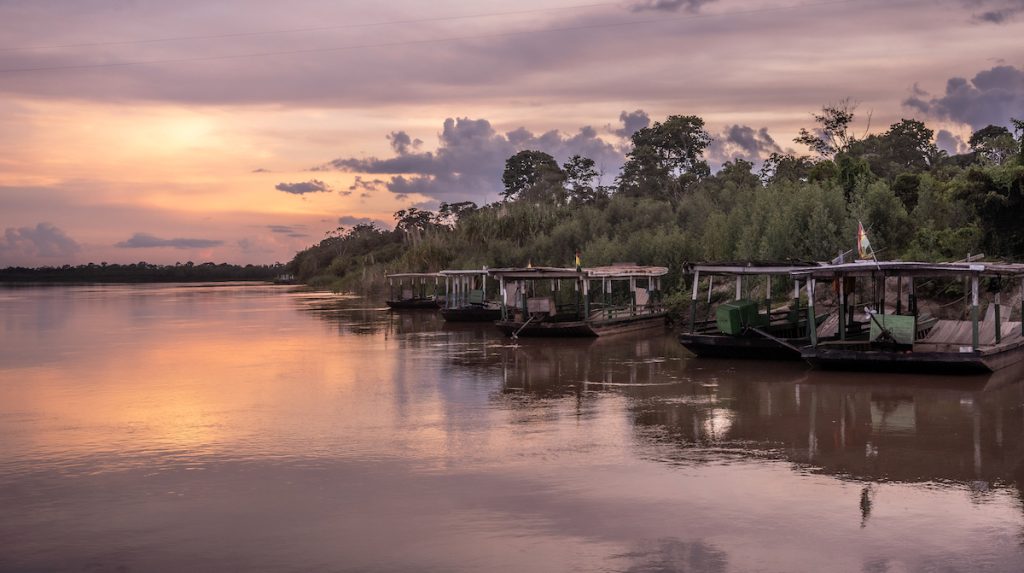
In its 2022 proposal, Bolivia estimated it could supply more than 8 million carbon credits to the international market between 2023 and 2027. “The final volume of credits will only be known following full validation and verification against Architecture for REDD+ Transactions (ART)’s rigorous TREES standard,” says Emergent.
“We’ve investigated many carbon offset projects in detail worldwide, and, in terms of their claimed benefit for the climate, they’re all essentially fraudulent,” says Simon Counsell, a Survival International consultant and former Director of the Rainforest Foundation UK. “Indigenous peoples are being tricked into signing up to these projects without understanding the consequences or the loss of their rights to land and livelihoods they can entail”.
Scientists, too, have their doubts. A 2024 study published in Nature found that less than 16% of the carbon credits examined represented real emission reductions.
Even so, the EU plans to cut emissions by 90% by 2040 compared with 1990 levels, partly through international carbon credits. Since Bolivia changed its policy, its Amazon could play a growing role in meeting that target.
In Pando, some of those territories have already answered. At the last assembly of Pando’s the five Indigenous peoples, in the Tacana community of Loreto in March 2025, Sanjinez Mamio Callau, grand captain of the Ese Ejja nation, announced that his people were closing their doors. “We will no longer allow any institution, cooperation agency or foundation to come in. First they have to consult us,” he told the leaders. “Because they already lied to us. They deceived us”.
María Saravia Paredes insists the land is not for sale. Indigenous territories, she says, “are inalienable, imprescriptible and cannot be seized. Our brothers and sisters have struggled. Let them tell us the truth, not paint us a landscape when we know it’s all dark”.
Footnotes
1) ILO Convention No. 169 and the UN Declaration on the Rights of Indigenous Peoples
2) REDD+ (Reducing Emissions from Deforestation and Forest Degradation) is a global climate change mitigation framework created under the United Nations Framework Convention on Climate Change (UNFCCC).
Do you like our work?
Help multilingual European journalism to thrive, without ads or paywalls. Your one-off or regular support will keep our newsroom independent. Thank you!


