

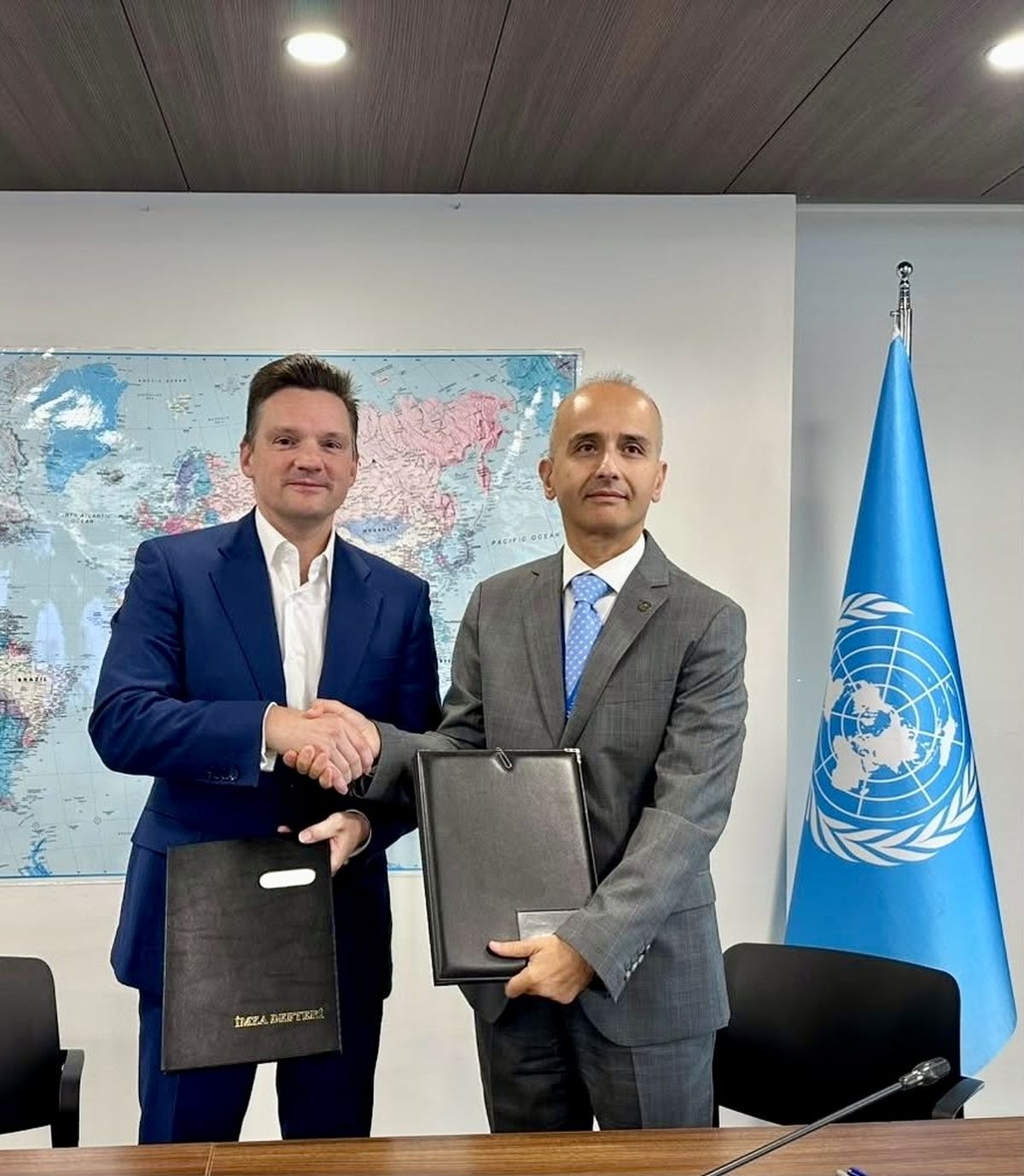
BAKU, Azerbaijan, October 1. The Eurasian
Development Bank (EDB) and UN-Habitat have signed a memorandum of
understanding to jointly develop urban development projects in
Eastern Europe and Central Asia during today’s online meeting.
According to EDB, the agreement covers cooperation across the
full project cycle, from identifying ideas to preparing and
implementing urban development initiatives. It will combine the
EDB’s project and financing expertise with UN-Habitat’s experience
in housing and sustainable urban development.
The memorandum was signed during a meeting between the EDB and
UN-Habitat attended by EDB Chairman of the Management Board Nikolai
Podguzov. UN-Habitat Executive Director Anacláudia Rossbach
participated online.
The initial cooperation will focus on four areas: technical
assistance, including the preparation and strengthening of urban
projects; capacity building for national and local authorities and
utility organizations; digitalization, including urban digital
infrastructure, data and artificial intelligence; and analytics,
including joint research and knowledge sharing.
“We consider urban development an important priority,
particularly in Central Asia. The bank already has experience with
digital solutions for urban infrastructure. In Dushanbe, we are
creating an electronic city map that helps the city administration
manage utilities, property and urban processes. Cooperation with
UN-Habitat will allow us to take a more systematic approach to
preparing urban development projects and draw on the UN’s global
expertise,” Podguzov said.
Rossbach said the global housing crisis, affecting up to 3.4
billion people, presented a major development challenge.
“No single institution or country can solve it alone. We need
multilevel cooperation and engagement across all areas,” she
said.
She added that cooperation with the EDB would help turn shared
commitments into concrete action to provide adequate housing and
develop inclusive, safe and sustainable cities and communities.
UN-Habitat will contribute expertise in urban planning,
affordable housing, urban governance, climate resilience and basic
urban services. The EDB will provide its financial, institutional
and regional expertise to support development initiatives.
The sides will jointly develop urban projects and explore
potential financing and investment mechanisms, linking the
priorities of cities and countries with technical expertise,
project preparation and potential financing.
The EDB already has experience in urban development projects. In
Dushanbe, the bank’s Digital Initiatives Fund is financing the
creation of an electronic city map platform, a unified system for
managing urban infrastructure. The project is being implemented
jointly with Smart City, a state enterprise under the Dushanbe city
administration.
The EDB also cooperates with other UN agencies. Together with
the UN Economic and Social Commission for Asia and the Pacific
(ESCAP), the bank has implemented a project to exchange experience
among energy-sector specialists from Central Asian countries.
In Kazakhstan, the EDB and the UN Development Programme are
implementing a $5.3 million irrigation development project. In
Tajikistan, the bank is working with the UN World Food Programme on
projects related to wheat flour fortification.
