


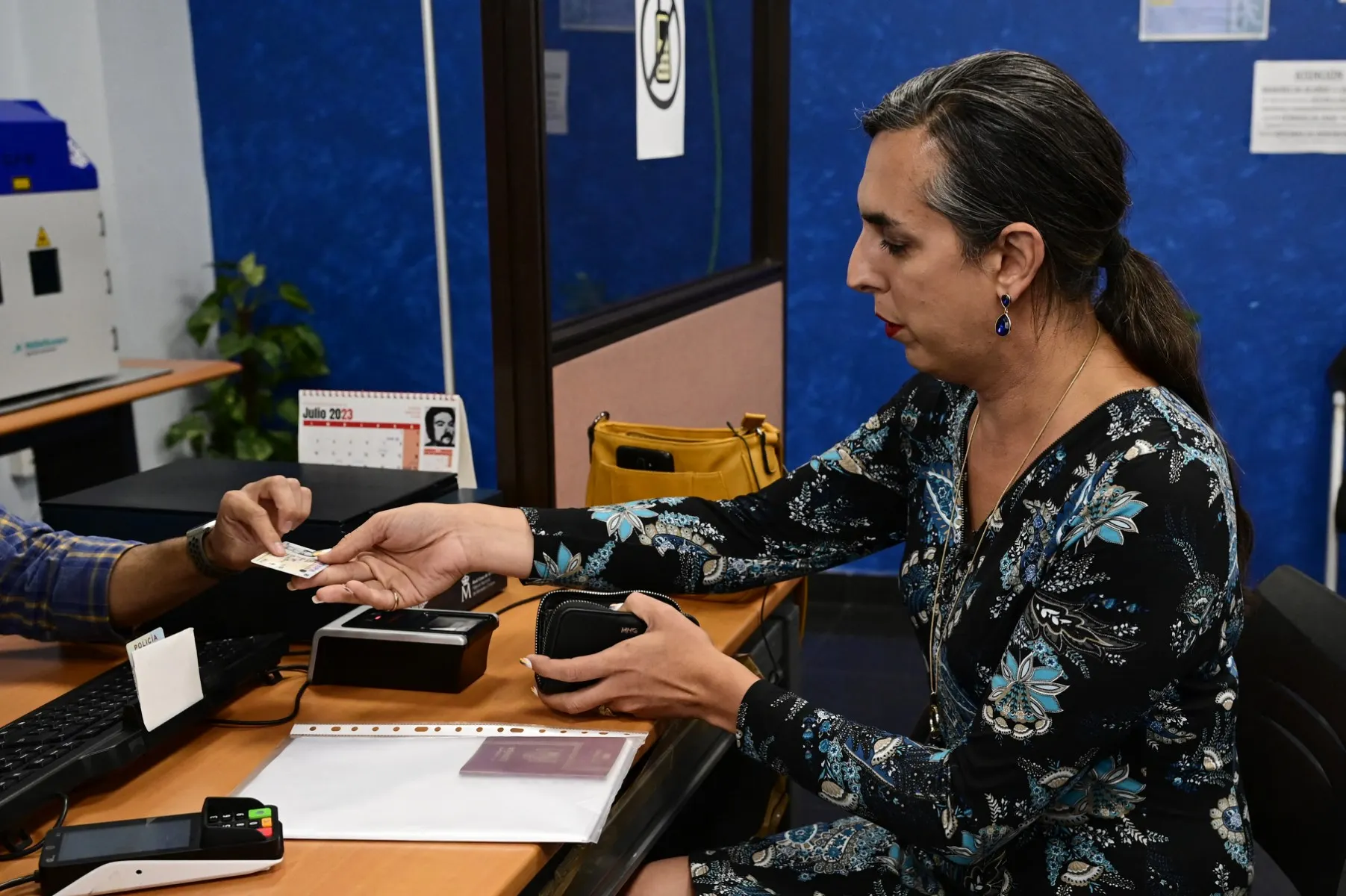
Spanish citizens are issued with a ID card called the Documento Nacional de Identidad or DNI. Here are 10 fascinating facts to know about them, from where the first ones were issued to who had number 1.
The DNI is Spain’s National Identity Document, issued to all Spanish nationals by the Ministry of the Interior, and is used for both identification purposes and to carry out a large number of administrative procedures.
1) Zaragoza was the first city in Spain to issue DNIs
The capital of the region of Aragón was the first city in Spain to issue DNIs. The next city of that was Valencia and from there to the rest of the cities, eventually reaching 59 offices distributed across the country.
Don’t miss our journalists’ daily news roundup from Spain
READ ALSO: Everything you need to know about Spain’s DNI card for Spanish nationals
2) Francisco Franco had number 1
The dictator Francisco Franco decided to reserve number 1 for himself, and his wife Carmen Polo y Martínez-Valdéz and daughter Carmen had numbers 2 and 3. But, the very first number to be issued back in 1951 was 19,103,001, which was given to Eva García Ayala. She and her husband owned a photo shop in Valencia where the first ID photos were taken.
3) The first people to be given DNIs were prisoners
Once the initial pilot projects moved from testing into the official public rollout and the system expanded across Spain, the government prioritised giving ID numbers to prisoners and those on probation in the 1950s. They were followed by men who frequently changed addresses due to their professions. Finally, men residing in cities with more than 100,000 inhabitants received them. Then they were gradually rolled out to the rest of the population.
4) Women were the last to be given them
Although a woman was the first to be issued one under the pilot scheme, the rest of the women were given their DNIs much later, after the men. In the early phases, women were only required to get a DNI early if they fell into specific high-surveillance or independent categories such as prisoners or those who were single and travelled independently.
READ ALSO: When to use each passport if you’re a dual national with Spanish citizenship
5) 30 percent of DNIs registered in 1987 had errors
In 1987, around 30 percent of the ID numbers listed in the tax databases were incorrect because until 1991 the numbers were distributed manually.
6) The letters on the cards are a result of a mathematical calculation
The DNI consists of eight numbers and a letter. This letter is obtained by dividing the DNI number by 23. The letter is assigned according to the character that corresponds to a list of letters that has the letter T in the first position with a value of 0.
7) A number has never been repeated
Each Spanish national receives a personal ID number, and no two people have the same combination of digits and letters.
The Central Documentation Service of the General Directorate of the Police (DGP) is responsible for providing each DNI office with a batch of numbers which are then assigned to individuals. As of yet there have been no repetitions because there are 99,999,999 possibilities offered by the eight numbers, which have not yet been used up.
8) The royal family has numbers 10 to 99
In 1961, King Juan Carlos and his wife Queen Sofia received numbers 10 and 11 respectively, and all numbers up to 99 were reserved for the Royal Family.
The Infanta Elena received the number 12 and Infanta Cristina number 14. Number 13 was missed out for a superstitious reasons and then current King Felipe VI was given number 15. His daughters, Princess Leonor and Infanta Sofía have ID cards with the numbers 16 and 17.
9) More than six million DNIs are issued every year
More than 6 million national identity cards are issued each year. They mandatory for all Spanish nationals from the age of 14, although some people can choose to apply for them for younger children. Foreigners who naturalise as Spanish citizens can apply for a DNI.
10) The last digit on the bottom of the ID is a control number
There’s a common belief that the last digit on the second line at the bottom of the front of the ID cards indicates the number of people who share the same name. This isn’t true, however, it is simply generated by an algorithm used to verify the holder’s identity and data.


