


After global markets went into a tailspin over Donald Trump’s punitive customs duties, he abruptly changed his mind. Did Switzerland play a role in this turnabout?
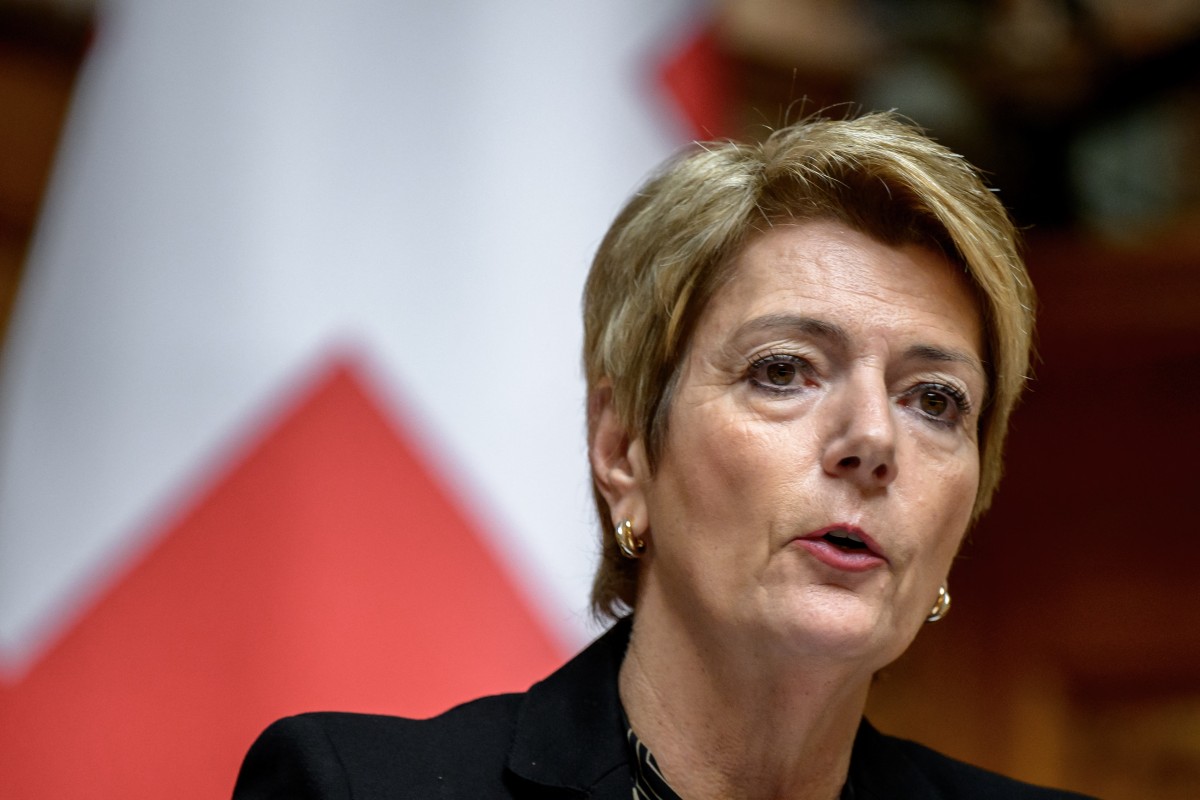
In her social media post on April 9th, Swiss president Karin Keller-Sutter simply said that she spoke to her US counterpart on the phone about “bilateral trade and ways to address US ambitions.”
“We agreed to continue talks in the interest of both our countries. Looking forward to working out solutions in the very near future,” she said on social media platform X.
However, as the US media reported, Keller-Sutter may have actually played a key role in Trump’s decision to hold off on enforcing the tariffs for 90 days, and impose much lower, 10-percent customs duties on most countries in the meantime.
Did the Swiss president ‘push’ Donald Trump to relent?
According to an article in the Washington Post (WSJ), Keller-Sutter might have done just that.
As the newspaper reported, “on Wednesday morning, Trump spoke on the phone with Swiss President Karin Keller-Sutter, whose nation’s Rolexes and chocolates were hit with a 31 percent tariff overnight and who pushed him to relent on a measure that was bashing her economy.”
Advertisement
How exactly did she manage that?
As the WSJ put it, “over the course of her 25-minute call, she underlined the role that Swiss businesses play in generating US jobs and noted that her country last year abolished tariffs on imports of US industrial goods.”
She could have mentioned, for instance, that, with 307 billion USD (257 billion francs) in investments, the United States is Switzerland’s most important destination for foreign direct investment —more than Germany, France, Italy and the UK combined.
Furthermore, Swiss companies directly support half-a-million US jobs; they are especially active in manufacturing, and significantly outspend affiliates from other countries in research and development.
Advertisement
Time to prepare
In commenting on the successful outcome of the telephone conversation, Economy Minister Guy Parmelin noted that the temporary reprieve will give Switzerland time to plan ahead.
“We have 90 days to understand what the US wants,” he said.


