


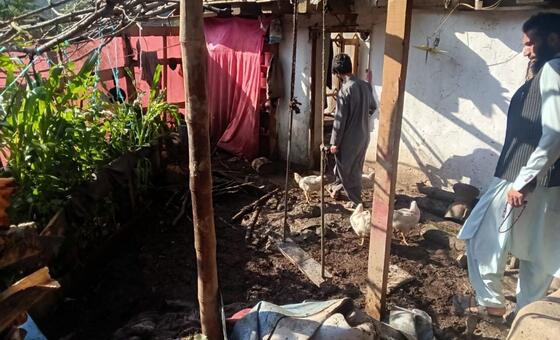
The flooding, triggered by heavy rainfall on 20 July, also claimed the lives of three Afghan refugees at a returnee transit camp near the Torkham border crossing with Pakistan, while nine others were injured, according to the UN relief coordination office, OCHA.
The worst devastation was reported in Parun City, the capital of Nuristan province, where a sudden flash flood struck at about 3pm local time, overwhelming residential neighbourhoods and commercial areas.
Preliminary assessments indicate that at least 22 houses were destroyed and another 45 severely damaged. Four bridges, six sections of road, irrigation canals and flood protection walls also sustained extensive damage, disrupting access to affected communities.
Saving lives
In an update from Kabul, Olga Cherevko from UN aid coordination office, OCHA, told UN News that the extreme weather event had damaged homes, roads, bridges, water systems, irrigation infrastructure and livelihoods.
“The immediate priority right now is to save lives and reach people who may still be missing or injured. But as the waters recede, the needs will extend well beyond the initial emergency response,” she said.
“Families whose homes have been destroyed or damaged will need shelter and essential household items, while damage to water and irrigation systems risks affecting access to safe drinking water and livelihoods.”
Search and rescue ongoing
The flooding disrupted access to safe drinking water for around 1,000 families after the local water supply network was damaged. Approximately 10 hectares of agricultural land were also affected, adding to concerns over livelihoods in one of Afghanistan’s most remote regions.
The disaster also affected aid operations, with offices, warehouses, vehicles and assets of non-governmental organizations (NGOs) reportedly damaged. One NGO staff member is said to be missing.
Search-and-rescue operations remained under way as of Tuesday, while mobile health teams, medical supplies and emergency food assistance were being deployed. There are fears, however, that casualty figures could rise as more information becomes available.
The UN Children’s Fund (UNICEF) and its partners are setting up a field clinic in Parun to provide trauma care and emergency medical services to people affected by the flooding.
Damage beyond Nuristan
Beyond Nuristan, flash flooding temporarily disrupted movement through the Torkham border crossing, a critical transit route between Afghanistan and Pakistan.
Floodwaters also damaged shops, livelihood-related installations and the protection wall of a refugee repatriation compound, where humanitarian partners support returning Afghan refugees.
In neighbouring Laghman Province, flooding primarily damaged agricultural land and irrigation systems. No damage to homes had been reported there at the time of the latest assessment.
Urgent needs
According to OCHA, the most urgent needs include emergency shelter, food assistance, safe drinking water, hygiene supplies, healthcare, psychosocial support and household essentials for families who have lost homes and livelihoods.
Three inter-agency assessment teams are due to begin detailed needs assessments as responders work to establish the full scale of the disaster and identify the communities requiring immediate assistance.
The response, however, is being complicated by difficult terrain, damaged roads and limited access to remote mountain communities.
Humanitarian partners are also monitoring forecasts of further rainfall, warning that unstable weather could trigger additional flooding in the coming days while hampering rescue operations and delaying relief deliveries.


