


The framework – agreed during the UN International Maritime Organization (IMO) Marine Environment Protection Committee – aims for net-zero emissions from the sector by 2050 and will be formally adopted in October before coming into force in 2027.
They will apply to large ocean-going vessels over 5,000 gross tonnage, which collectively account for 85 per cent of carbon dioxide emissions from the marine shipping fleet.
IMO Secretary-General Arsenio Dominguez hailed the breakthrough, emphasising the collaborative spirit that led to the deal.
“The approval of draft amendments to MARPOL Annex VI mandating the IMO net-zero framework represents another significant step in our collective efforts to combat climate change, to modernize shipping and demonstrates that IMO delivers on its commitments.”
MARPOL Annex VI refers to provisions in the International Convention for the Prevention of Pollution from Ships, specifically addressing air pollution.
It already includes mandatory energy efficiency requirements for ships and has 108 Parties covering roughly 97 per cent of the world’s merchant shipping fleet by tonnage.
Intense negotiations
Negotiations – which culminated on Friday in London – were particularly challenging.
According to media reports, around a dozen countries – including the United States – were opposed to the framework. The proposal was ultimately put to a vote and passed.
A turning point for the shipping industry
The framework introduces a dual approach: a global fuel standard that will progressively lower the annual greenhouse gas fuel intensity of marine fuels, and a greenhouse gas pricing mechanism requiring high-emitting ships to pay for their excess pollution.
Under the new system, ships that exceed emissions limits will need to acquire remedial units to offset their excess pollution. Meanwhile, vessels operating with zero or near-zero emissions will be eligible for financial rewards, creating a market-driven push toward cleaner maritime transport.
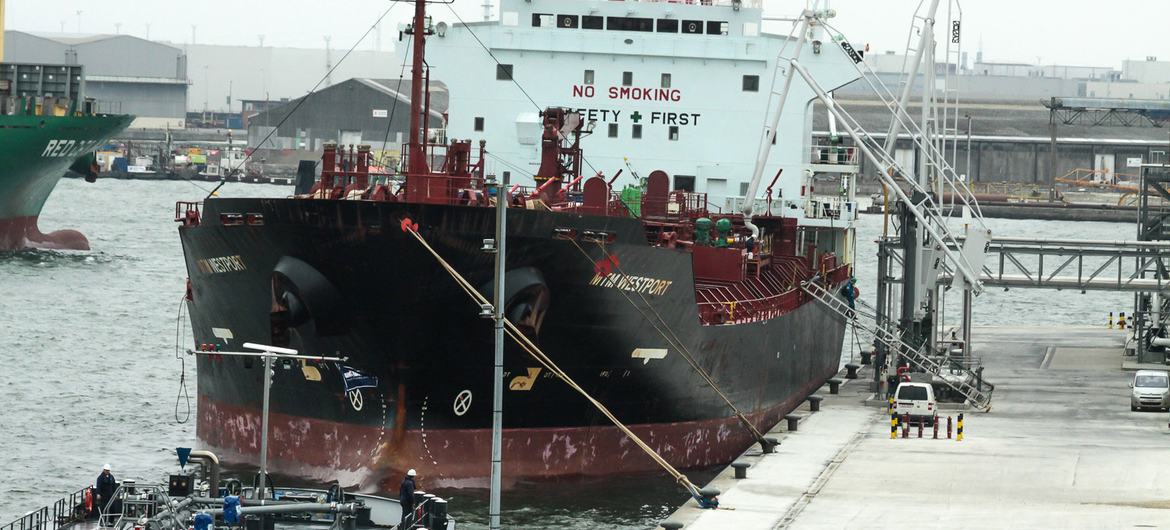
A cargo ship moored at a port in Europe.
Supporting vulnerable countries
A key element of the new framework is the IMO Net-Zero Fund, which will collect revenues from the carbon pricing mechanism.
These funds will support innovation, research, infrastructure and transition initiatives in developing countries.
It will also be used to mitigate negative impacts on vulnerable nations, such as small island developing States (SIDS) and least developed countries (LDCs), which bear the brunt of both climate change and economic pressures in the shipping sector.
Next steps: Adoption and implementation
The draft regulations will undergo formal adoption in October 2025.
If ratified during the IMO session, as expected, the measures will enter into force in 2027, giving the industry time to adapt to new requirements and invest in alternative fuels and technologies.
The International Maritime Organization
The International Maritime Organization (IMO) is the UN specialized agency responsible for the safety and security of global shipping and the prevention of marine and atmospheric pollution by ships.
Established in 1948 and headquartered in London, it develops international treaties, such as the International Convention for the Safety of Life at Sea (SOLAS) or the International Convention for the Prevention of Pollution from Ships (MARPOL).


