


Since 2019, electricity demand has grown more than twice as fast as overall energy use, driven by electric vehicles, heat pumps, air conditioning, industrial electrification, data centres and AI.
Keystone
Electrification will be a key issue at the COP31 climate summit in Antalya, Turkey. One proposal calls on countries to increase electricity’s share of final energy consumption from about 20% today to 35% by 2035. What does that require of the world and of Switzerland?

Electrifying fossil-fuel-powered transport, heating and industry could be one of the most effective ways to cut greenhouse gas emissions and strengthen energy security, say supporters of the proposal. It is up for discussion at the COP31 United Nations Climate Change Conference in TurkeyExternal link, which runs from November 9-20.
But achieving the proposed electrification target will require a rapid expansion of renewable energy and major investment in power grids and other infrastructure. Critics argue it will deliver climate benefits only if rising electricity demand is met with clean power and deployed fairly. We look at the proposal and what is at stake.
What is the electrification pledge?
Electricity already powers homes, offices and many industries, but fossil fuels dominate transport, heating and much of manufacturing. The COP31 pledgeExternal link – called “35 by 35” – aims to accelerate the shift to electric vehicles and public transport, heat pumps and industrial electrification.
Based on analysis by the International Energy Agency (IEA) and the International Renewable Energy Agency (IRENA), the plan is designed to help implement the Paris Agreement and reduce emissions.
The initiative builds on commitments made at previous UN climate summits. At COP28, states agreed to work towards tripling renewable energy capacity and transitioning away from fossil fuels. COP29 focused on energy storage, grid modernisation and climate finance. The COP31 presidency says electrification is the next logical step, translating earlier pledges into changes in how energy is consumed.
The proposal comes amid growing concerns over climate change and energy security. Record temperatures, extreme weather events and ongoing disruptions in the Strait of Hormuz this year have heightened worries about emissions and dependence on imported oil and gas.
COP31 president-designate Murat Kurum saysExternal link the pledge reflects the latest evidence on what is needed to lower emissions. The disruption in Hormuz also underlines the need for renewables and electrification, which he calls the “surest and cleanest” way to protect citizens from volatile energy prices.
What are the potential benefits?
The climate benefits could be significant. Transport, buildings and industry account for around 45% of direct global greenhouse gas emissions. Replacing fossil fuels technologies with electric alternatives could cut emissions from these sectors by 40% by 2035, according to the IEA.
Greater electrification, particularly through wider adoption of electric vehicles, could also reduce global oil demand by 18 million barrels a day. The IEA estimates this could lower energy import bills for fuel by about $400 billion compared with 2025 levels.
What are the main criticisms?
Despite broad support, the proposal has raised concerns among environmental groups and energy experts.
The main criticism is that the pledge focuses on electricity consumption rather than how electricity is generated. Campaigners say emissions cuts will be limited unless additional demand is met with only clean energy. Around one-third of global electricity still comes from coal, raising concerns that some countries could increase electricity use while continuing to rely heavily on fossil fuels.
In an open letterExternal link to COP31 leaders, a coalition of more than 90 campaign groups welcomed the target but called for safeguards to ensure implementation is equitable and based on renewable energy.
Renewables accounted for 31.7% of global electricity generation in 2024. To meet the 35% electrification target while keeping power supplies largely renewable, that share would need to rise to about 78% by 2035.
Infrastructure poses a key challenge. Electricity networks in many countries are already under strain. Thousands of renewable-energy projects are waiting for grid connections, while storage capacity must expand rapidly to accommodate more wind and solar power.
IRENA warnsExternal link that electricity networks are “structurally unprepared” for electrification on this scale. Meeting the 35% target would require annual investments in grids, storage and related infrastructure to double from about $500 billion in 2025 to $1 trillion per year through 2035.
Access to critical minerals is another concern. Batteries, power grids and renewable-energy systems need large amounts of copper and other key resources. The NGO Global Witness warnsExternal link that shortages and supply bottlenecks could slow progress unless governments improve long-term planning and international coordination.
Affordability is also crucial. The transition will succeed only if households and businesses see electric technologies as an attractive alternative to fossil fuels. According to the IEA, governments may need financing measures to keep electricity prices competitive.
More
More
Why climate change and wars are reviving interest in nuclear energy
Is the target likely to be adopted?
Despite these concerns, the initiative appears to enjoy broad political support. “Momentum is steadily building as support for an electrification target rises and we set ourselves up for a successful COP31,” Kurum said. The proposal is reportedly backed by the EU, UK and Canada, as well as the Brazilian COP30External link and Ethiopian COP32 presidencies.
Swiss policymakers consider an electrification rate of 35% by 2035 to be a realistic objective.
“Switzerland supports efforts to ensure that COP decisions promote electrification,” Robin Poell, spokesperson for the Federal Office for the Environment, told Swissinfo, adding that the initiative and any potential Swiss support are still under consideration.
COP31External link in Antalya, Turkey, runs from November 9-20. Its agenda covers ten priority themes, including clean energy transition and electrification, zero waste and methane reduction, climate-resilient cities, green industrialisation, youth and education, food security, oceans and seas, health systems, biodiversity and land-use synergies, and implementation of national climate plans. Other targets include cutting energy-use intensity in buildings by at least 25% and increasing the global use of circular materials in manufacturing and production to at least 15% by 2035.
There are also plans to launch a Green Industrialisation Facilitation Mechanism for the least-developed countries (LDC-GIF), aimed at connecting the industrialisation needs and project opportunities identified by least-developed countries with existing technology, technical expertise and financing.
COP31 has also proposed or announced several new initiatives covering green freight corridors, industrial decarbonisation, AI and clean technologies, circularity, energy-efficient buildings, oceans, food security and climate-resilient health systems.
The pledge will remain voluntary, however. Countries will be free to decide whether to join. France has said it would prefer the target to become a formal binding COP decision, which would require consensus among all parties.
At COP30 in Brazil, the hosts failed to secure agreement on phasing out fossil fuels because of opposition from producer and consumer nations such as Saudi Arabia, Russia and India. Electricity is seen as less divisive, potentially giving the proposal a better chance of success.
What does it mean for Switzerland?
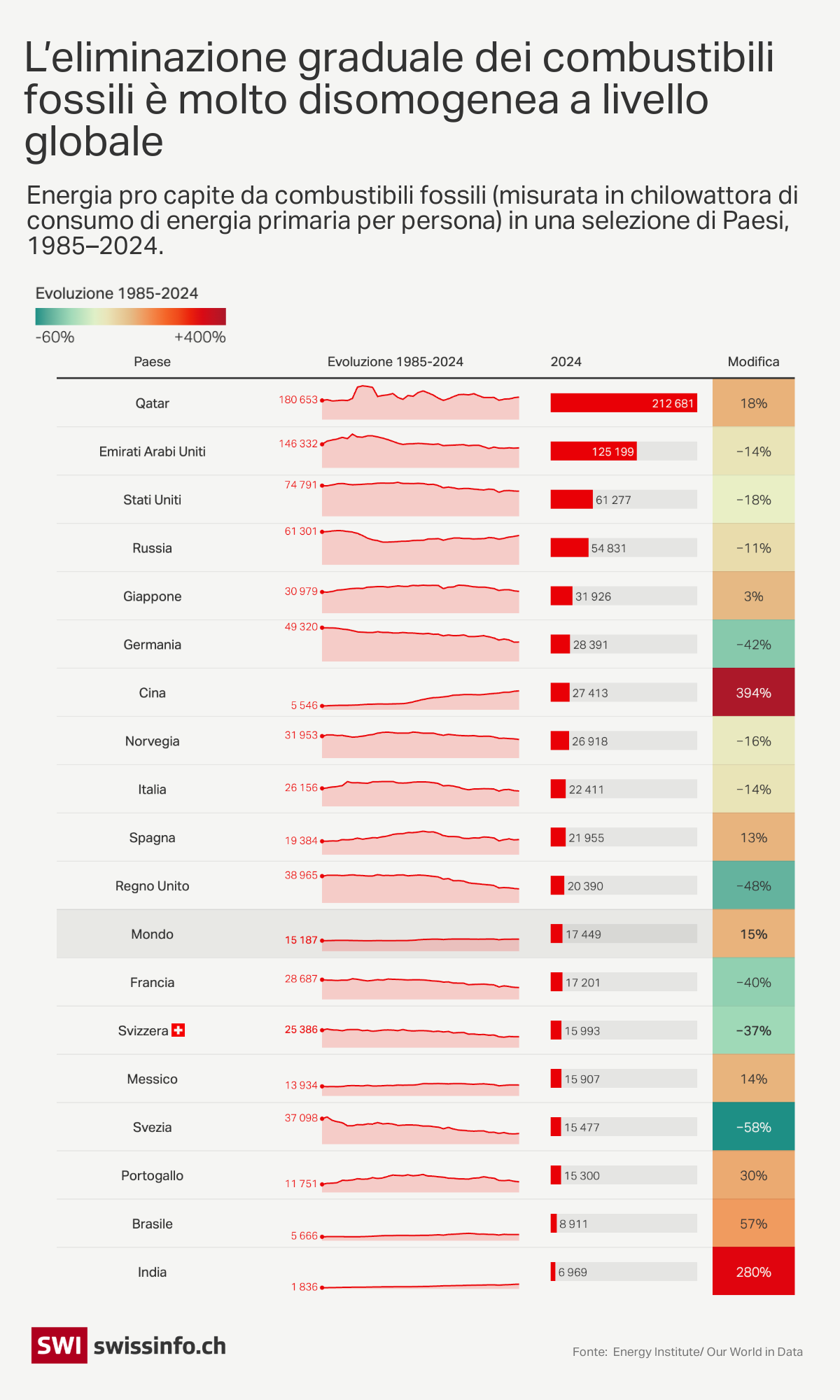
Switzerland is already more electrified than many countries. Electricity accounts for about 27% of final energy consumptionExternal link. But meeting the country’s 2050 net-zero goal will require transport, heating and parts of industry to shift further away from fossil fuels and towards electricity.
The transition is expected to significantly increase power demand. ResearchersExternal link estimate annual electricity consumption could rise from around 56 terawatt-hours (TWh) today to 75 TWh by mid-century. Switzerland may also need to replace the 23 TWh currently generated by nuclear power plants. Meeting 60% of future demand from renewables would require solar capacity to quadruple and for wind capacity to increase roughly 80-fold.
Expanding renewable energy production, strengthening the electricity grid and ensuring reliable supplies during winter are therefore increasingly urgent priorities. The debate has gained urgency amid questions over the future of nuclear power and a proposed electricity agreement with the European Union.
While Switzerland has no specific electrification target, its Energy Act and the CO₂ Act set goals for expanding the production of renewable energy and cutting energy use and greenhouse gas emissions. Under its agreement with the EU, Switzerland aims to raise the share of renewables in final energy consumption to 48.4% by 2030. Reaching that milestone will depend in part on greater electrification, especially in transport and buildings.
Edited by Gabe Bullard/Veronica De Vore
More
More


