


A fragile ceasefire between the United States and Iran has done little to restore confidence in the vital maritime corridor, where renewed tensions – including a newly announced US blockade on ships using Iranian ports – are keeping vessels idle and supply chains strained.
The Strait of Hormuz, a narrow but critical waterway, carries a significant share of the world’s energy and agricultural inputs. Disruptions since the outbreak of hostilities on 28 February are already constraining flows of oil, gas and fertilizer for newly planted staples, with ripple effects reaching far beyond the Middle East.
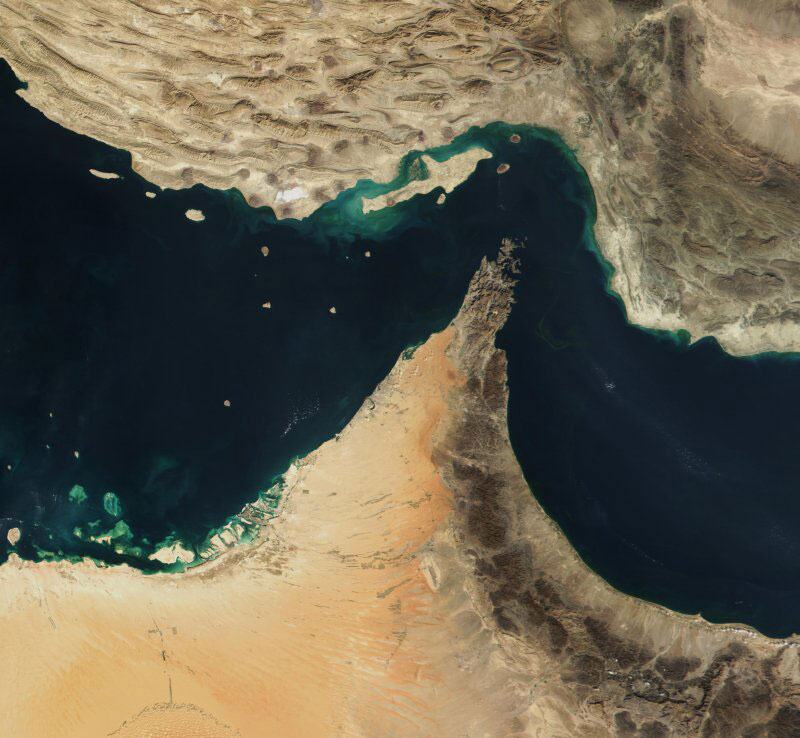
The Strait of Hormuz is a narrow but vital shipping route linking the Persian Gulf to the Gulf of Oman and the wider Arabian Sea. It lies between Iran to the north and Oman and UAE to the south.
“We have 30-35 per cent of the crude oil, which is not moving, 20 per cent of natural gas…and between 20 to 30 per cent of other fertilizers that are not moving out,” said Máximo Torero, Chief Economist of the Food and Agriculture Organization (FAO).
“That’s the magnitude of the potential impact,” he warned.
Supply bottleneck despite ceasefire
While the ceasefire briefly raised expectations that shipping could resume, uncertainty remains high. Talks between the US and Iran, mediated by Pakistan this weekend, failed to yield any breakthrough.
Many vessels remain stranded in the Gulf, with new shipments yet to enter the corridor. Shipowners and insurers are reluctant to risk costly assets and crews amid ongoing insecurity. Even if tensions ease, it could take days or weeks for traffic to normalise.
That delay is critical, warns David Laborde, Director of Agrifood Economics Division at FAO.
Much of the cargo that left the Gulf before the crisis has already reached its destination — meaning the world is now entering a phase where supplies could begin to tighten.
“We are going to see the real stop in supply” in the days ahead, he said.
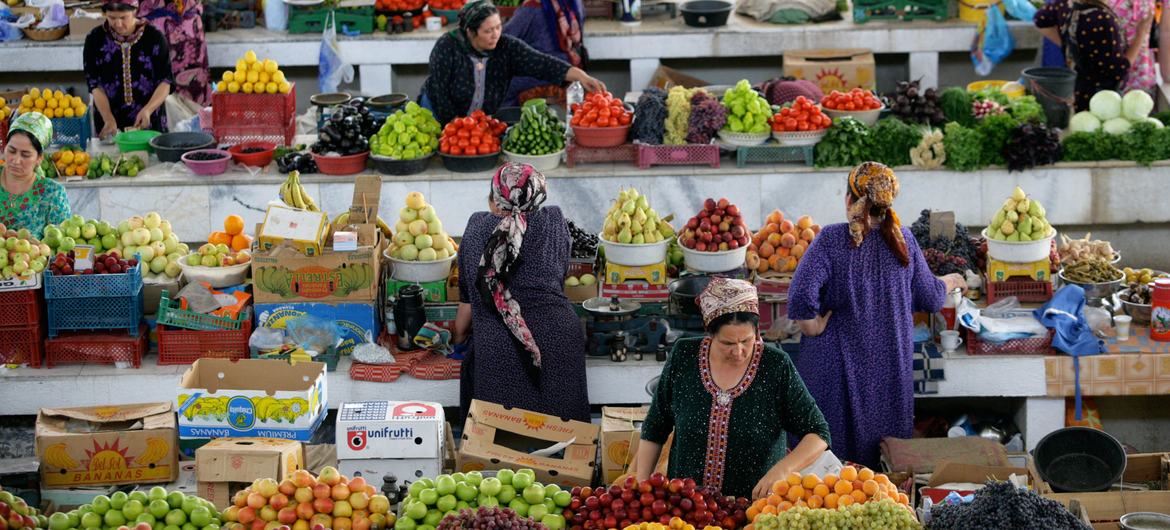
Global food markets remain stable for now, supported by existing stocks, even as supply disruptions raise concerns for the months ahead.
A delayed crisis – for now
Despite sharp increases in input costs, global food prices have not yet surged – a point FAO economists stress should not be mistaken for a sign of underlying stability.
The FAO’s Food Price Index for March showed only modest increases, reflecting strong global stocks and good harvests last year.
“We have enough supplies…and good stocks which allow the agri-food system…to be resilient to this shock,” Mr. Torero said.
But that buffer may be short-lived. As planting decisions are made in the coming weeks, farmers facing higher costs and limited access to fertilizers may reduce input use or shift crops – lowering yields in the next season.
“If we don’t have the inputs in the time that is needed…that implies that producers will have to produce with less inputs,” he said. “And therefore, they could have lower yields.”
That, in turn, could drive up food prices later in the year and into the next.
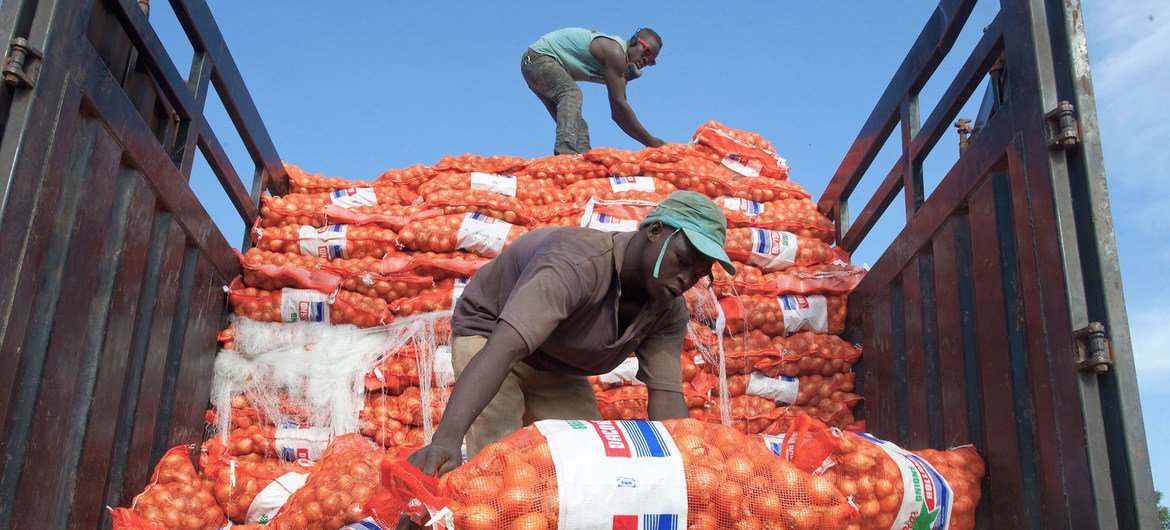
Transport and logistics operations face pressure from rising fuel costs linked to global supply disruptions. (file photo)
A chain of interdependence
The risks extend across the entire food value chain. Energy underpins everything from farm machinery to transport, while fertilizers – particularly nitrogen-based products linked to natural gas – are critical for crop yields.
The impact is global: from the US and Canada to Australia, farmers depend on stable access to energy and inputs to maintain production, while import-dependent countries – including many in Africa, such as Kenya – face heightened exposure to price shocks and supply disruptions.
Higher oil prices are also increasing incentives to divert crops such as maize, sugar and oilseeds toward biofuel production, tightening the balance between food and fuel.
“If we have rising demand because biofuels start to consume more…and lower supply because we have less input…food prices will go up,” Mr. Laborde warned.
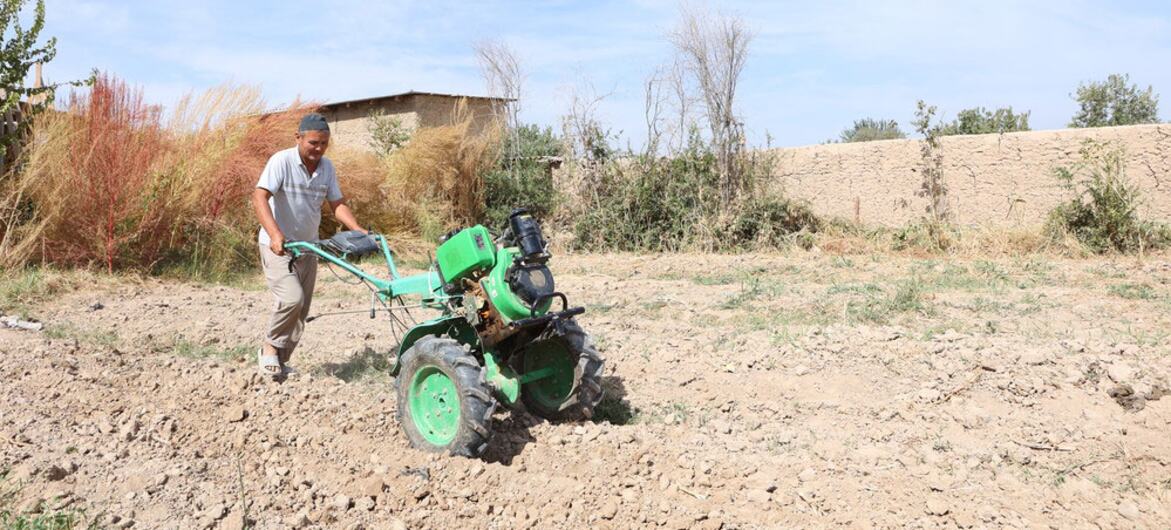
Farmers face rising costs and uncertainty as higher fuel and fertilizer prices threaten crop yields and future harvests. (file photo)
Risks of a ‘perfect storm’
FAO economists warn the situation could deteriorate further if additional pressures emerge – including export restrictions or climate shocks such as the El Niño weather pattern.
In past crises, countries have restricted exports to protect domestic markets, exacerbating global shortages.
“We need to avoid export restrictions…especially now for fertilizers and energy,” Mr. Torero said, warning that without coordination, vulnerable countries could be priced out of essential supplies.
A global risk with local consequences
Although the crisis is centred in the Middle East, its effects are spreading rapidly. Countries in Asia and the Global South are particularly exposed due to their reliance on imported energy and fertilizers and their position in the crop calendar.
“This will start to move from east to west…but also from the south to the north,” Mr. Torero said.
The consequences are both economic and human. Higher food prices hit poorer households hardest, while rising inflation could force governments to tighten monetary policy, slowing growth and increasing debt burdens.
Farmers are also under mounting pressure. Rising input costs and uncertainty are squeezing margins and raising the risk of longer-term disruptions to production.
“When you push them too much, you may bring them into bankruptcy,” Mr. Laborde said. “And then it means there will be a supply problem…for a longer period.”
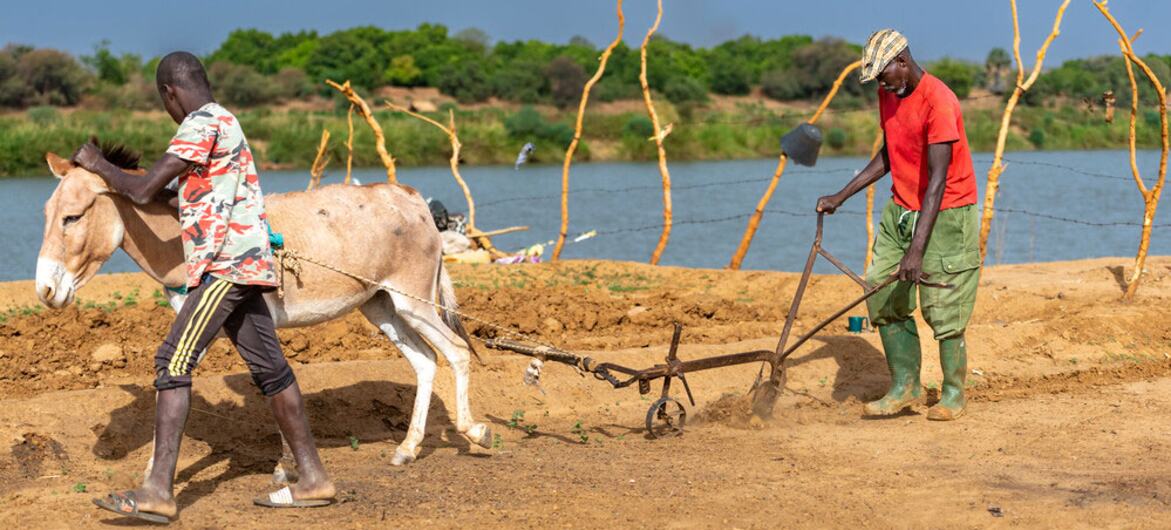
Communities in developing countries are particularly vulnerable to rising food prices and supply disruptions. (file photo)
Alarm bells ringing
Across parts of Asia, early signs of disruption are already emerging.
In South Asia, rising fuel and fertilizer costs are beginning to filter into food prices and farm decisions, with import-dependent economies under mounting pressure.
In Nepal, where millions of households rely on remittances from Gulf countries, disruptions to mobility and rising transport costs are already being felt – raising concerns that what begins as an external shock could quickly translate into hardship at home.
A narrow window to act
FAO is urging governments and international financial institutions to act quickly.
Short-term priorities include avoiding trade restrictions, supporting vulnerable households through social protection, and ensuring liquidity for farmers, including through credit lines and import financing.
Longer term, the crisis underscores the need to diversify energy sources, strengthen infrastructure and reduce reliance on chokepoints like the Strait of Hormuz.
For now, FAO stresses that a full-blown food crisis is not inevitable – but the window to prevent one is rapidly closing.
“The clock is the key…Let’s avoid a perfect storm – be aware of the risks, put the right policies in place and pursue the diplomatic solutions needed to avert a food crisis we do not need,” Mr. Torero urged.


