


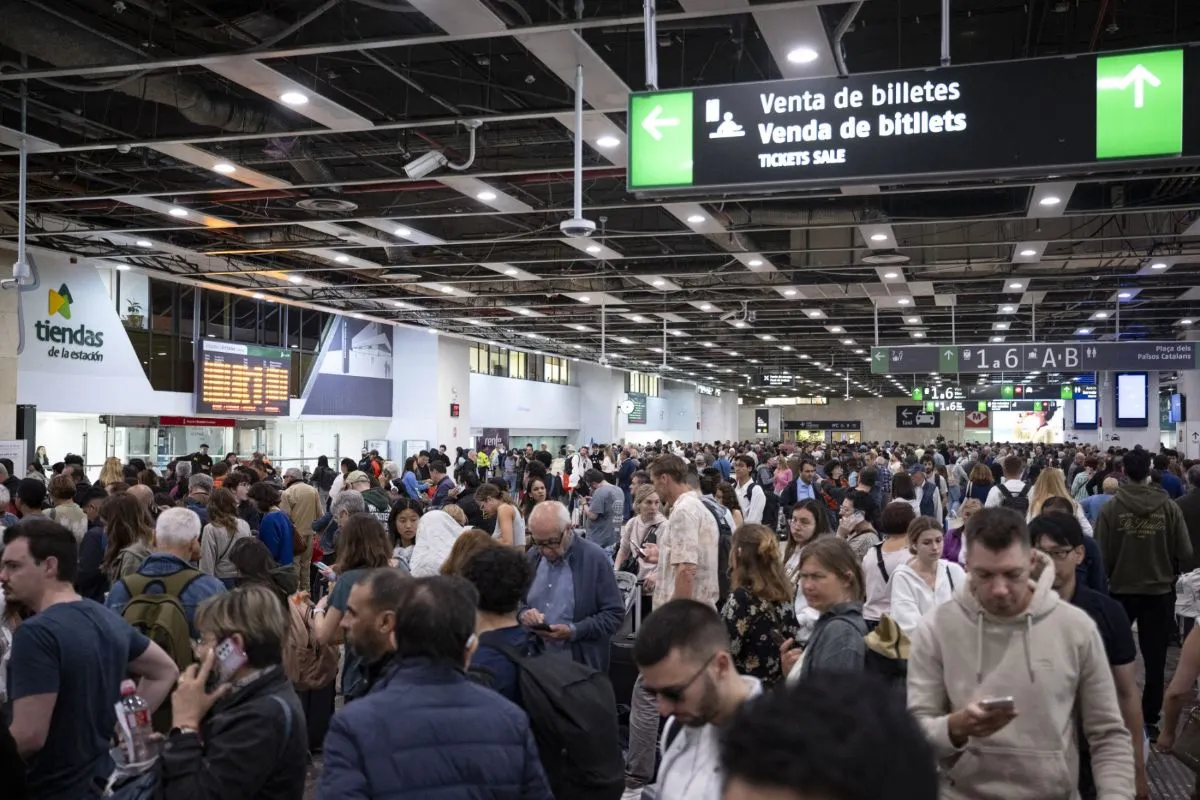
Catalonia continues to have no commuter train services on Thursday January 22nd, even though authorities decided that it was safe for operations to resume two days after twin train crashes in the region.
The Rodalies commuter rail service remains cancelled across Catalonia this Thursday, despite the Catalan government’s announcement that service would resume two days after twin derailments in the northeastern region, and the major train collision on Sunday in Córdoba.
Train drivers, demanding increased safety measures, have refused to return to work, or if they have shown up, they haven’t boarded the trains.
The disruption affects approximately 400,000 passengers daily.
Advertisement
This is aside from the three-day strike that unions representing rail workers have called from February 9th to 11th.
“There have to be changes; it’s not normal,” a member of Spanish train union SEMAF said.
“We can consider it a tragic event with that tragic outcome, but it’s not normal for accidents to occur within 48 hours.”
SEMAF labelled the constant deterioration of the railway system as “unacceptable” and called for a general strike to “guarantee the safety and reliability of the network.”
READ ALSO: Spain’s train drivers call strike to protest railway decay after triple crash
Until the Rodalies suspension ends, authorities have decided to waive the toll at the Garraf station on the C-32 motorway running between Castelldefels and El Vendrell.
Catalan newspaper El Periódico reported long queues and waits of more than 50 minutes to catch a bus out of Barcelona on Wednesday. Transport chaos has continued on Thursday, according to the local press.
Authorities are now recommending that people work from home, but this isn’t possible for all workers in the region of eight million inhabitants.
A meeting of the Catalan Operational Coordination Centre (CECAT) on Wednesday concluded that Rodalies services could resume safely on Thursday, two days after two separate derailment incidents and three after the devastating crash in Córdoba.
Advertisement
“We will not give the order to resume services until we are certain it is safe,” explained Catalan Minister of Territory and spokesperson, Silvia Paneque.
The more serious of the two accidents occurred in the Barcelona town of Gelida, where a train on Rodalies Line 4 collided with a retaining wall that collapsed onto the tracks , causing the train to derail.
One of the train conductors died, and 37 people were injured, five of them seriously.
READ MORE: Another train crash in Spain kills one person in Barcelona
The deceased is a 28-year-old trainee from Seville who was travelling in the cab with the main driver and other trainees.
The other derailment occurred between the Maçanet Massanes and Tordera stations (Girona) due to rocks on the tracks, affecting one of the trains travelling on the R1 line, which lost an axle upon impact.
According to sources from Spain’s rail infrastructure manager Adif, ten passengers were on board at the time, and no injuries were reported.
Catalonia also experienced very heavy rainfall on Tuesday due to Storm Harry, with one person missing in Girona.
Catalan president Salvador Illa, currently hospitalised at Vall d’Hebron Hospital in Barcelona with a rare infection (osteomyelitis), stated that he is following the Gelida accident “closely.”
There have been three major train derailments in Spain since Sunday January 18th.
The death toll from a collision between two high-speed trains near Córdoba rose to 43 on Wednesday after another body was found in the wreckage. This train crash was the most deadly in Spain in 13 years.


