

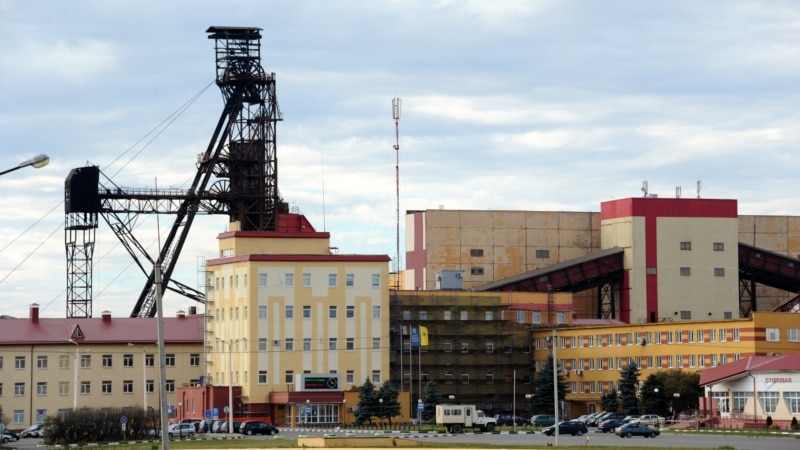
US President Donald Trump has said a “massive deal” is being discussed with Belarus, under which it would provide cheaper potash supplies than Canada. But questions since Trump’s announcement have swirled over whether the Eastern European nation can replace the world’s largest potash producer to meet US needs.
The United States imported 79 percent of its potash, a key element of fertilizer manufacture, from Canada between 2021 and 2024, according to figures published by the US Geological Survey (USGS) in February this year.
During this period, potash from Belarus was under US sanctions, which were lifted on March 19. Prior to the measures, Belarus provided about 5 percent of US potash needs.
Next Stop: New Orleans
There is theoretical capacity for Belarus to significantly step up exports to the United States.
As one of the world’s largest exporters, it produces enough to cover US import requirements.
Belarus produced some 6 million metric tons of potash in 2025, according to the USGS, making it the world’s fourth-largest producer behind China (6.3 million), Russia (10 million), and Canada (15 million).
But doing so would entail Minsk rerouting current potash trade, some 27 percent of which goes to China. Other key buyers include Brazil and India.
“The problem is that Belarus does not have free capacity to supply the United States with this product. They will definitely not quarrel with China, the main buyer,” Nikolay Kulbaka, an economist and contributing author at the New Eurasian Strategies Center, told RFE/RL’s Belarus Service.
Indeed, his comments echo those made by the country’s longstanding authoritarian leader, Aleksandr Lukashenko.
“Even if we wanted to supply it to other markets, Western markets, we simply do not have these volumes, everything is contracted,” he said on September 21.
Various types of potash-based fertilizers have been Belarus’ top exported commodity with estimates that they brought in over $1 billion in 2024. The country accounts for around 15 percent of the global share of fertilizer production.
In other words, Lukashenko has found buyers despite years of US and EU sanctions. Still, export volumes and income have declined compared to the era before the sanctions, which were introduced following a brutal crackdown on pro-democracy demonstrations in Belarus in 2020.
So, some supplies to the United States will take place — and are already en route.
“The first Belarus cargo of fertilizer to the US in four years, a 30,000 metric tons cargo…is expected to arrive at New Orleans next month. It would mark the first potash trade between the two countries since US sanctions on Belarusian potash were lifted,” the Argus commodity market intelligence company said on September 21.
“Re-establishing US-Belarus potash trade would diversify US potash supply and reduce reliance on Canada, but Belarus cannot fully replace Canadian volumes,” it added.
The Price Is Right?
Then there is the question of price.
Canada has a big geographical advantage, with supplies making a relatively short journey south of the border. Transporting potash from Belarus is a much longer and more complicated journey.
Even though the United States has lifted sanctions on Belarusian potash, the European Union has not. EU-member Lithuania has said it sees no reason to allow potash to transit through its major port of Klaipeda.
In May, RFE/RL reported that Washington had lobbied Lithuania, along with Poland and Ukraine, to allow potash to be transported through their territories. John Coale, the US envoy who has negotiated a series of releases of political prisoners in exchange for easing of sanctions, declined to comment.
Belarus would have to send its potash instead via rail and port facilities in Russia. This is a potential bottleneck, not only because Russia produces even more potash than Belarus and will prioritize its own exports.
“The [export] capacity will not be increased significantly, because they are now trying to transport both grain and coal through these ports. That is, it will not be possible to seriously expand the possibilities of exporting fertilizers there,” said Kulbaka.
Fertilizer analyst Josh Linville of StoneX, a US financial services company, said he did not believe it would make economic sense to ship potash in large quantities to the United States given the distance involved and the relative low value of the commodity.
“We have not struggled to find potash,” he told Reuters on September 21. “We have more than enough to go around.”
Independent economic analyst Andrei Makhovsky pointed to a technical issue relating to the kind of potash offered by Belaruskali, the largest manufacturer of potash fertilizers in Belarus.
“There is white potash and pink potash. White requires more processing, Belaruskali mainly produces pink potash fertilizers. And the American market mainly consumes white potash,” he told RFE/RL.
