

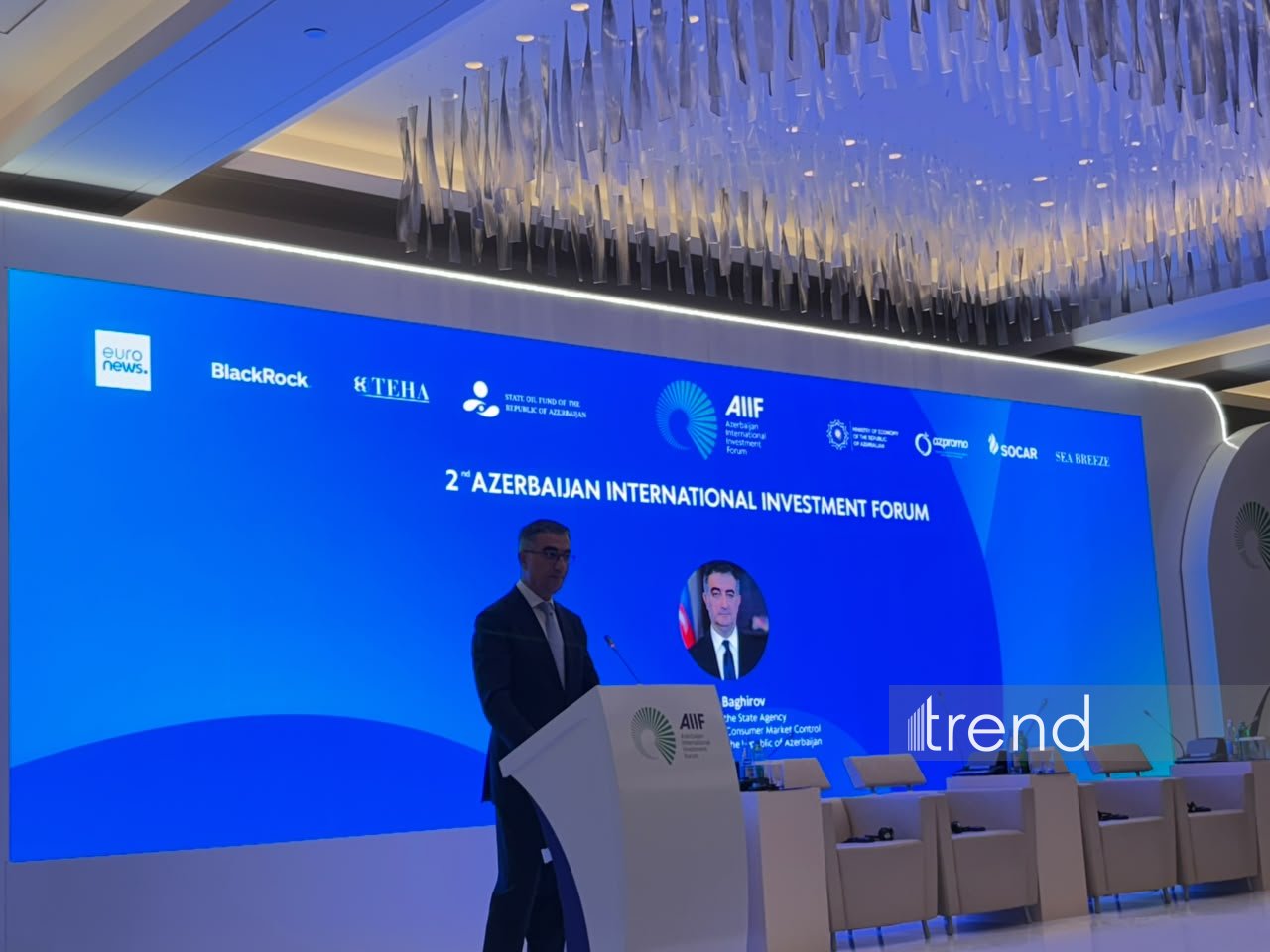
BAKU, Azerbaijan, September 25. Azerbaijan’s
public procurement system can help lay the foundation for new
businesses and drive local industry, Elnur Bagirov, chairman of the
State Service for Antimonopoly and Consumer Market Control, said at
the 2nd Azerbaijan International Investment Forum today in Baku,
Trend’s correspondent reports
from the even.
He noted that physical platforms need to be supported by a
strong institutional framework for an investor to make a
competitive and long-term decision when entering any market,
including Azerbaijan.
“Within this framework, a competitive and transparent public
procurement system can be one of the most effective tools for
implementing new projects by providing initial demand and a
reliable market route.
“Azerbaijan’s new law on public procurement is a clear example
of such a modern institution. Adopted in July 2023 and entering
into force in January 2024, the law brings the national system
closer to international best practices by strengthening
competition, transparency, equal treatment and efficiency.
“Most importantly, the law also completed the transition to
electronic procurement. Through the unified e-Tender portal,
procurement planning, notices and documents, bid submissions,
communication, results and procurement records are managed within a
single digital environment. For investors, this means greater
visibility of market opportunities, fewer administrative barriers
and a more transparent and predictable route to public
procurement,” he added.
The second Azerbaijan International Investment Forum is being
held in Baku.
The two-day forum is organized by Azerbaijan’s Ministry of
Economy and its subordinate Azerbaijan Export and Investment
Promotion Agency (AZPROMO), in strategic partnership with European
House – Ambrosetti.
Plenary and panel sessions at the event will address strategic
issues including the Middle Corridor, energy and the green
transition, artificial intelligence and digital transformation,
infrastructure, industry and free economic zones, critical raw
materials, agribusiness, financial cooperation, small and
medium-sized business development, tourism, real estate and
investment in human capital.
