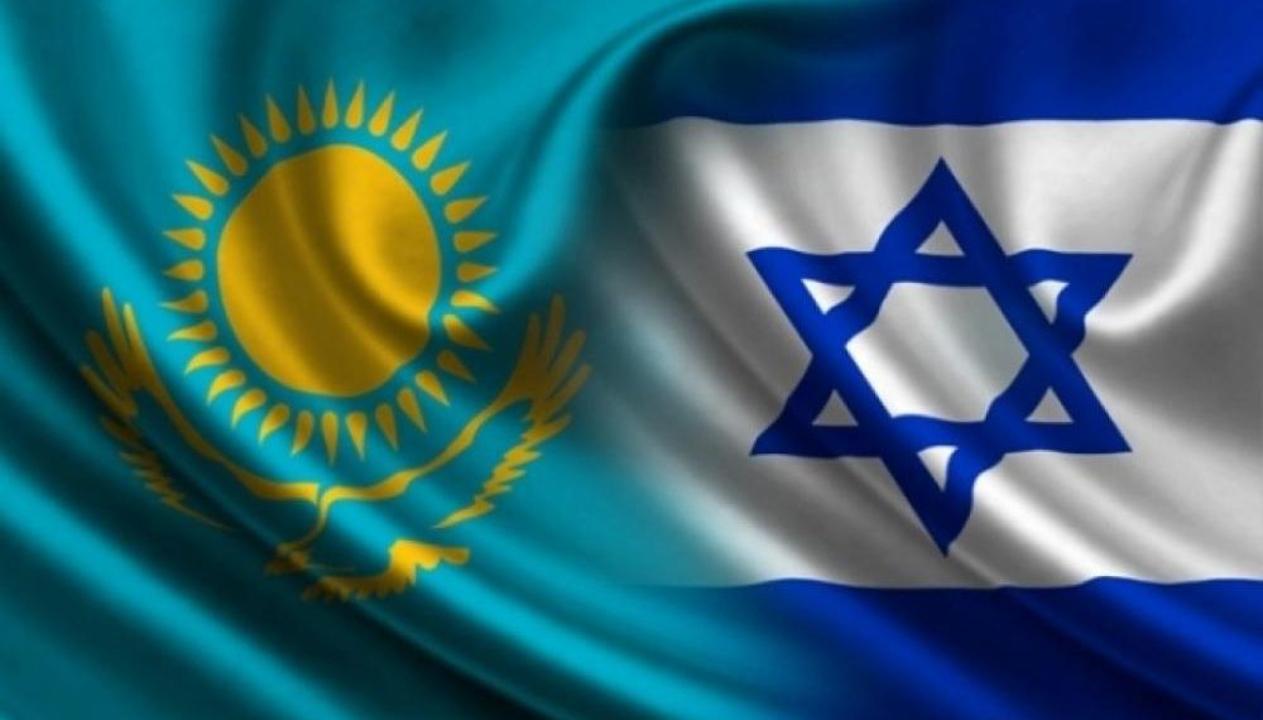
BAKU, Azerbaijan, April 27. Relations between
Kazakhstan and Israel are reaching a heightened level of diplomatic
and economic engagement in 2026. According to a government
directive, the President of Israel, Isaac Herzog, is scheduled to
pay an official visit to Astana on April 27–28.
This visit represents a continuation of intensified bilateral
dialogue that began in the previous year with the visit of Speaker
of the Knesset Amir Ohana and was further reinforced in January
2026 during the visit of Israeli Foreign Minister Gideon Sa’ar. The
latter visit was particularly significant, marking the first visit
of an Israeli foreign minister to Kazakhstan in 16 years. During
the January meetings, the parties conducted the 12th round of
political consultations and held a business forum in both B2B and
B2G formats, establishing a foundation for prospective joint
initiatives.
A key political development in recent years was the announcement
by President Kassym-Jomart Tokayev in November 2025 of Kazakhstan’s
intention to join the Abraham Accords. Kazakhstan also became one
of the 19 founding members of the Board of Peace, and Tokayev
expressed readiness to contribute to the reconstruction of the Gaza
Strip. In an interview with Trend, Israeli Ambassador Yoav
Bistritsky noted that Kazakhstan’s participation in the Abraham
Accords would enable both countries to elevate cooperation and
expand into new areas, including cybersecurity, digital
technologies, and artificial intelligence. Furthermore,
participation in the accords creates opportunities for
strategically significant regional initiatives, particularly in
water resource management and food security.
The economic dimension of bilateral relations remains primarily
anchored in the energy sector. According to data from the
Observatory of Economic Complexity for 2024, crude oil accounted
for the majority of Kazakhstan’s exports to Israel, representing
more than $122 million out of a total of $169 million.
Israel may emerge as a key technology partner for Kazakhstan in
addressing water scarcity challenges. A memorandum of cooperation
between the relevant ministries, signed in November 2025,
establishes a framework for Israeli companies to implement drip
irrigation systems and wastewater treatment technologies, which are
expected, over the long term, to improve agricultural conditions in
Kazakhstan’s arid regions.
Cooperation in high-technology sectors is of particular
significance in 2026, which has been designated the Year of
Digitalization and Artificial Intelligence in Kazakhstan. Israel
has expressed interest in expanding the presence of its IT
companies in the Kazakh market, including through cooperation with
the newly established Ministry of Artificial Intelligence.
A practical step toward strengthening bilateral ties will be the
launch of regular direct flights by SCAT Airlines on the
Shymkent–Tel Aviv route starting in June 2026. In the context of a
memorandum of intent to conclude an intergovernmental agreement on
visa exemption for holders of national passports, the introduction
of direct air connectivity is expected to further stimulate tourism
exchange and business activity between the two countries.
Overall, the forthcoming visit of President Isaac Herzog to
Kazakhstan may constitute an important step in advancing bilateral
relations. Amid intensified political dialogue and expanding
cooperation in technology and water management, the emphasis is
expected to shift toward the business community, which will play a
central role in translating these agreements into tangible economic
projects.