


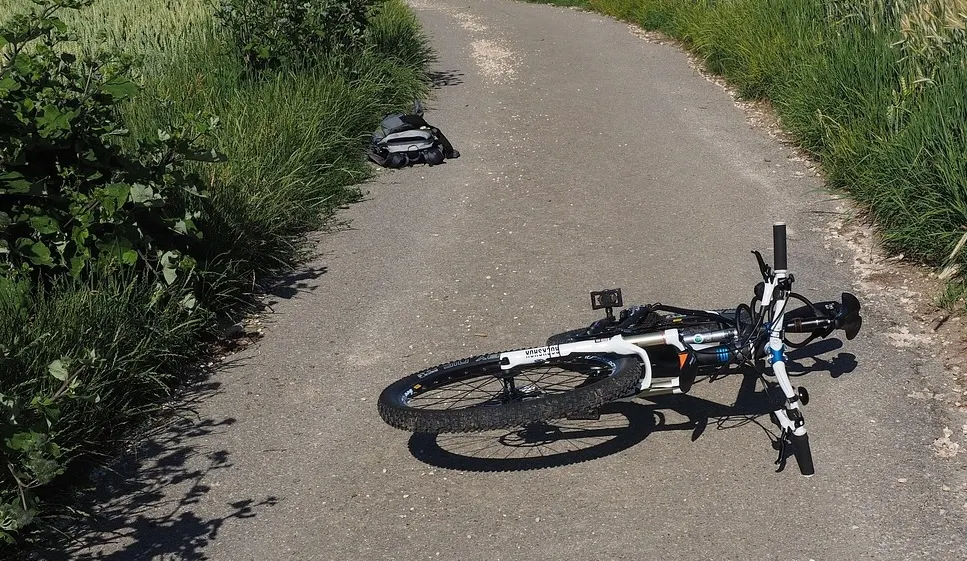
Switzerland has the worst record in Europe for road fatalities; new study confirms that climate change is particularly drastic in Switzerland; and more news in our Wednesday roundup.
In terms of traffic fatalities, Switzerland has the worst record in Europe
Over the past five years, the number of fatal road accidents in Switzerland has risen by 34 percent, while rhe European average fell by 12 percent during the same timeframe.
This is what emerges from new data published by the Accident Prevention Bureau (BFU) on Tuesday.
“No other European country has experienced such a dramatic increase during this period,” the BFU said, adding that “to date, Switzerland has not managed to reverse this trend and halt the rise in fatal accidents.”
Lawmakers are partly to blame for these tragedies, the BFU noted.
“Road safety is suffering from parliamentary decisions. For example, following the lowering of the minimum age for riding a motorcycle, the number of serious accidents among motorcyclists under 18 has more than doubled,” it said. Another example: the rejection of making bicycle helmets mandatory for children.”
Climate change is particularly drastic in Switzerland
Switzerland is one of the regions particularly affected by global warming, according to the new 2025 climate scenarios presented jointly by MeteoSchweiz meteorological institute and ETH Zurich on Tuesday.
Warming in Switzerland is already at around +2.9 degrees compared to pre-industrial times, while globally around +1.3 degrees is being measured.
“The new climate scenarios give us a more concrete picture of climate change in Switzerland over the next few decades. They help us to assess developments and plan suitable measures – to protect our environment, our cities and our agriculture,” said Home Affairs minister Elisabeth Baume-Schneider at the presentation of the study results.
READ ALSO: Why is Switzerland warming faster than most countries in the world?
Advertisement
Some border crossings between Geneva and France could close at night
Geneva has 60 border crossings and the cantonal parliament approved a motion seeking to close small ones to motorised traffic overnight.
However, MPs remain concerned that the closure of some borders will cause the increase in traffic at other crossing points.
Pierre Maudet, head of Geneva’s Department of Health and Mobility, has therefore said that French and Swiss border municipalities will be working together to find solution to prevent ‘traffic switch’ from one crossing to another.
Advertisement
How big are ‘typical’ rental apartments in Switzerland?
The most common apartment size in Switzerland is 4 to 4.5 rooms – “large enough for families, but still affordable,” according to a new survey carried out by Comparis consumer platform.
Some 40 percent of Swiss residents live in flats with a living area of 71 to 110 square metres, including approximately 20 percent with an area of 71 to 90 square metres, and 20 percent with an area of 91 to 110 square metres.
About 12 percent of those surveyed live in apartments larger than 150 square metres.
If you have any questions about life in Switzerland, ideas for articles or news tips for The Local, please get in touch with us at news@thelocal.ch


