


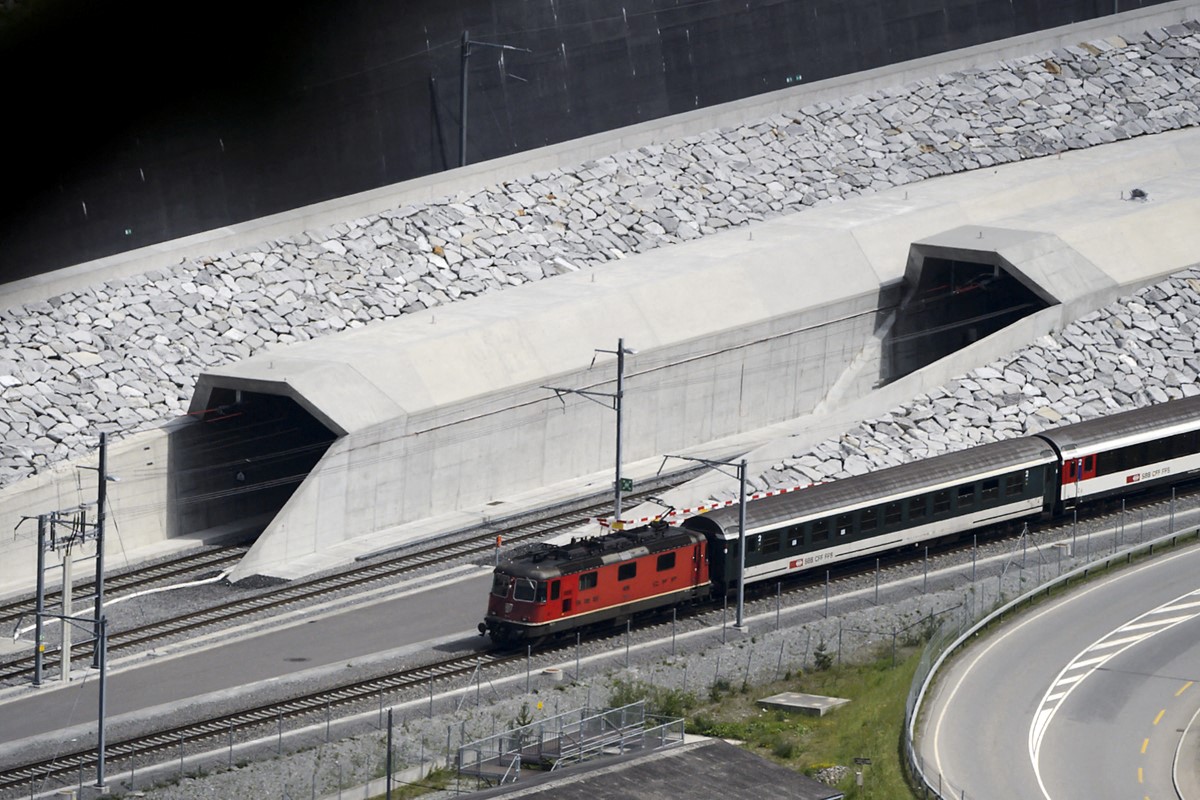
SBB to operate more south-bound trains on Easter weekend
Ticino is traditionally one of the most popular travel destinations over the Easter holidays. To accommodate the expected increase in passengers, the national rail company SBB is significantly expanding its service on the Gotthard axis.
Between Thursday April 17th and Easter Monday April 21st, a total of 20 special trains will run between German-speaking Switzerland and Ticino.
International connections, such as EuroCity trains to Italy, will also benefit from increased capacity: a total of around 64,000 additional seats will be available over the holidays.
They will include two additional TILO-RE80 trains, which will operate from Lugano to Milano Centrale on Good Friday. These trains will travel via Mendrisio in Ticino, with stops in Varese, Gallarate, and Rho Fiera on the Italian side.
READ ALSO: Why is Ticino Switzerland’s favourite Easter destination?
Fewer people in Switzerland were in debt in 2024
Slightly more private individuals in Switzerland had a debt in 2024 than in the previous year. However, due to the population growth, the actual ratio fell slightly — from 5.6 to 5.5 percent
This is the finding of the Swiss credit agency CRIF released on Monday.
Geographically, Neuchâtel had the highest rate of indebted individuals — 9.2 percent of the canton’s population
Next was Geneva (8.7 percent), followed by Basel-City (7.6) percent, Solothurn (7.1), and Vaud (6.8).
Meanwhile, Appenzell Innerrhoden had the lowest debtor rate in Switzerland at just 1.4%.
The central Swiss cantons of Uri, Obwalden, Zug and Nidwalden also had a below-average number of debtors, CRIF reported.
READ ALSO: How foreigners in Switzerland can get help if they are in debt
Advertisement
A new law comes into effect in Switzerland today:
Mandatory reporting of cyber attacks on critical infrastructure
In view of the increasing threat of cyber incidents, Switzerland is introducing a reporting obligation for cyber attacks on critical infrastructure, such as energy and drinking water suppliers, transport companies, hospitals, as well as cantonal and communal administrations.
From today, these incidents must be reported to the National Cyber Security Centre (NCSC) within 24 hours of discovery of these threats or actual attacks.
And in Geneva: Deadline for ban on plastic utensils in public places
The canton’s ban on disposable tableware on public property went into effect in April 2024.
However, authorities granted an additional ‘transition’ period of 12 months before the ban goes into effect — which means April 1st of this year.
It extends to plastic straws, cutlery, crockery and cups, as well as any other items made of single-use plastic.
The reason for the move is that single-use tableware generates waste, and its disposal requires that additional human and financial resources be allocated to cleanups, the canton said.
If you have any questions about life in Switzerland, ideas for articles or news tips for The Local, please get in touch with us at news@thelocal.ch


