


SBB to prioritise mainline trains, Switzerland has higher purchasing power than neighbours Germany and Austria and more news in our Monday roundup.
Switzerland’s residents have higher purchasing power than their neighbours
Most goods and services are more expensive in Switzerland than in Germany and Austria, so it may come as a surprise that the per-capita purchasing power of the Swiss population is quite a bit higher than in other German-speaking countries.
This is what emerges from the Purchasing Power 2025 survey carried out by the market research company GfK, which examined the disposable income of residents of DACH countries — a German acronym for Germany, Austria, and Switzerland.
It shows that, on average, Switzerland’s per-capita purchasing power is 49,724 francs (53,011 euros) — a significantly higher amount than in Austria (29,852 euros — 28,000 francs) and Germany (29, 566 euros —27,732 francs).
Additionally, Switzerland recorded the strongest growth in purchasing power compared to the previous year: the population’s net disposable income for the will increase by 2.3 percent in 2025, while the rate of increase in Austria and Germany will be 2 percent.
Refugees will attend Swiss universities to combat labour shortages
The government wants refugees “who have the necessary potential” to be able to benefit from higher education in Switzerland, the Federal Council announced on Friday.
The State Secretariat for Migration (SEM) is therefore launching projects in several parts of the country “to enable qualified refugees to access higher education institutions over the next four years.”
“The program is aimed at refugees from all linguistic regions of Switzerland and concerns all types of higher education institutions—university, specialised, or teacher education,” SEM said.
It will benefit not only the refugees but also the country’s economy, as the program “aims to counteract Switzerland’s shortage of skilled labour by promoting its domestic workforce potential,” according to the government.
A budget of 1.5 million francs has been earmarked for this project over the next three years, which aims to counteract Switzerland’s shortage of skilled labour by promoting the country’s domestic workforce potential.
Advertisement
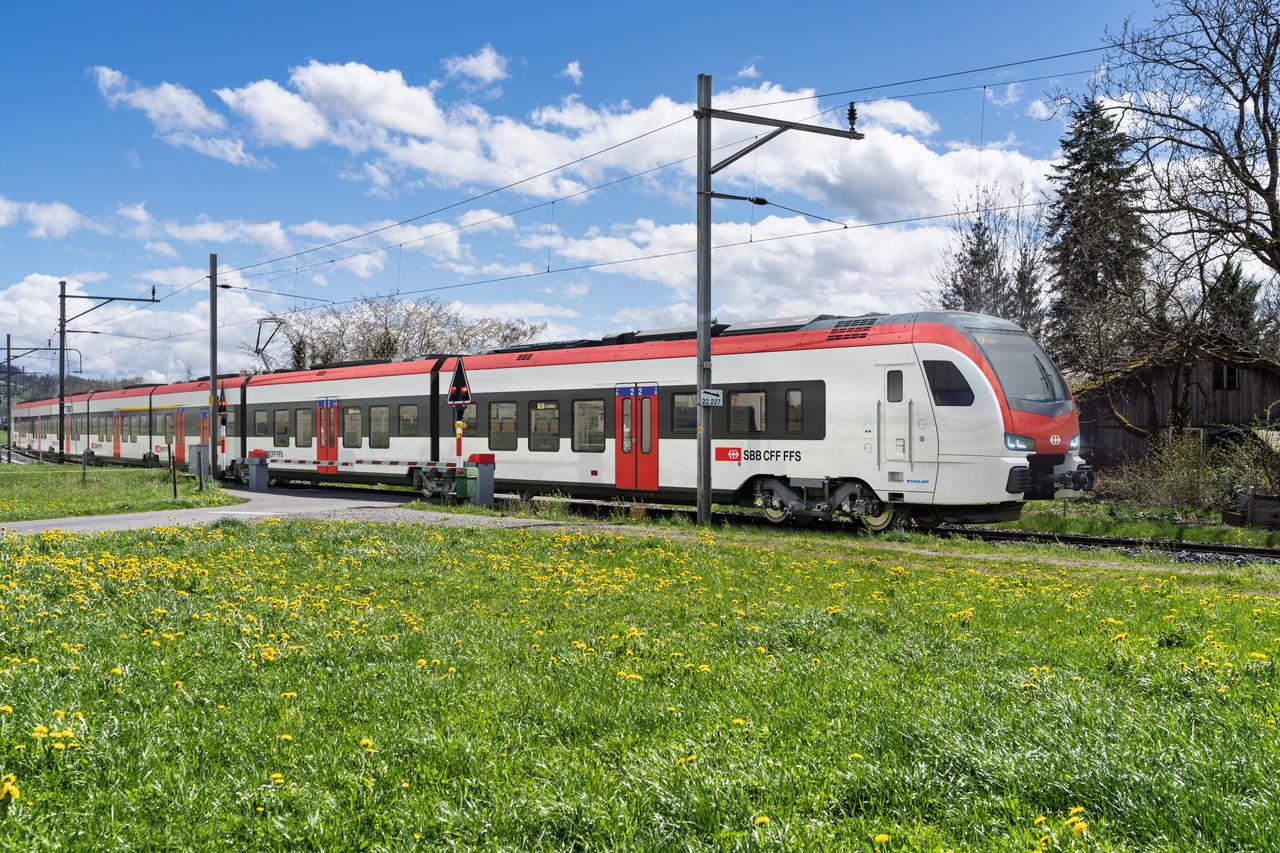
SBB focuses on main lines while redesigning regional traffic
The national railway company SBB wants to reorganise its network to improve train speed and flow of rail traffic.
The idea is to prioritise major lines by reducing service to smaller stations, while still offering a means of transportation within a 15-minute radius.
The reason for this approach, according to Monika Ribar, chairperson of the SBB Board of Directors, is that the network, as it is now, has reached its limits.
“The slowest train determines the speed of the entire system, she pointed out in an interview with public broadcaster RTS ,” In other words, regional trains, due to their frequent stops, slow down all rail traffic.”
To address this, the SBB is considering a long-term strategy aimed at reducing stops at certain small stations, but offering alternatives such as buses on these stretches to ensure transport between residential areas and main stations.
READ ALSO: Why are Swiss trains the slowest in Europe?
If you have any questions about life in Switzerland, ideas for articles or news tips for The Local, please get in touch with us at news@thelocal.ch


