


The 7.7 magnitude earthquake which struck shortly before 1 PM local time on 28 March, was the strongest in recent memory.
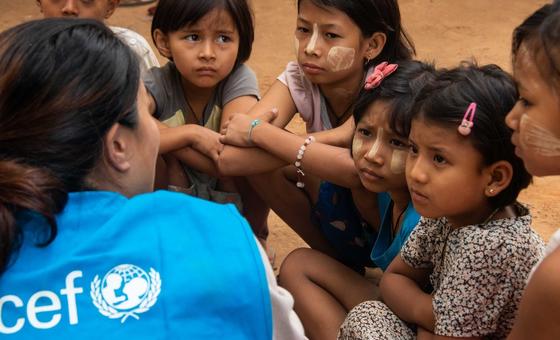
As aftershocks continue, UN agencies are warning of a looming health emergency, with children sleeping in the open, exposed to extreme heat, unsanitary conditions and the constant fear of another disaster.
According to the latest figures, over 3,500 people have died, nearly 5,000 have been injured and more than 200 remain missing.
The UN relief chief, speaking from Myanmar where he is overseeing the aid effort, underscored the Organization’s commitment to help communities in need.
“The United Nations is here – we are going to stay here and we will deliver for them. But we need the world to get behind us, but more importantly, to back this community as they rebuild their lives,” said Tom Fletcher, UN Emergency Relief Coordinator, as he visited neighbourhoods levelled by the disaster in the capital Nay Pyi Taw on Saturday.
He highlighted the need for the international community to step up support, stressing that the most vulnerable have been the most affected.
“One thing that I have been struck by here is that you would think earthquakes hit everyone equally, but they hit the poorest hardest because they do not have the resources to respond, to move house, to live elsewhere, to start to rebuild.”
Education in ruins
The earthquake has dealt a severe blow to Myanmar’s already fragile education system.
According to government reports, at least 1,824 schools have been damaged or destroyed, leaving hundreds of thousands of children without access to education.
With schools reduced to rubble, there is growing concern that many children, especially those in poorer communities, will fall behind in their studies – or never return to school at all.
No quick and easy fixes
There are “no quick and easy fixes,” the UN Children’s Fund (UNICEF) warns.
“Many children have lost their parents, their friends and they need a place where they can get psychosocial support and begin to feel a sense of normalcy,” Eliana Drakopoulos, Chief of Communications at UNICEF Myanmar, told UN News.
“As hard as that is to imagine…we have to respond to the immediate emergency, but we also have to be here for the long haul to help people recover from this massive tragedy.”
Eliana Drakopoulos, Chief of Communications at UNICEF Myanmar, updates on the situation in the affected areas
Health risks
The destruction of homes, hospitals and sanitation facilities, combined with heavy rains over the weekend have raised fears of disease outbreaks.
According to the UN World Health Organization (WHO)-led Health Cluster, more than 65 healthcare facilities have been damaged, further complicating the situation. The lack of medical supplies is putting the lives of injured and sick children at even greater risk.
Beyond the physical dangers, children are also dealing with the psychological trauma of the disaster. Many are afraid to sleep indoors, fearing that another earthquake will strike.
Heightened challenges for persons with disabilities
The earthquake’s devastation has disproportionately impacted persons with disabilities who face increased vulnerability due to physical injuries, displacement and disruption of essential services.
According to a UN initial rapid assessment conducted with 15 organizations of persons with disabilities and special schools in Mandalay and Sagaing, 11 of them reported direct impacts. The disaster has also led to a rise in newly acquired disabilities, further straining limited resources.
Preliminary reports indicate families of persons with disabilities have suffered severe hardships, including the collapse of homes, destruction of critical infrastructure such as sanitation facilities and loss of livelihoods.
“I am even afraid to use the toilet, fearing that another earthquake might strike while I am inside,” said one woman living with disability.
“I constantly worry – what if another earthquake happens while I’m inside a damaged house? The fear and anxiety never go away.”


