


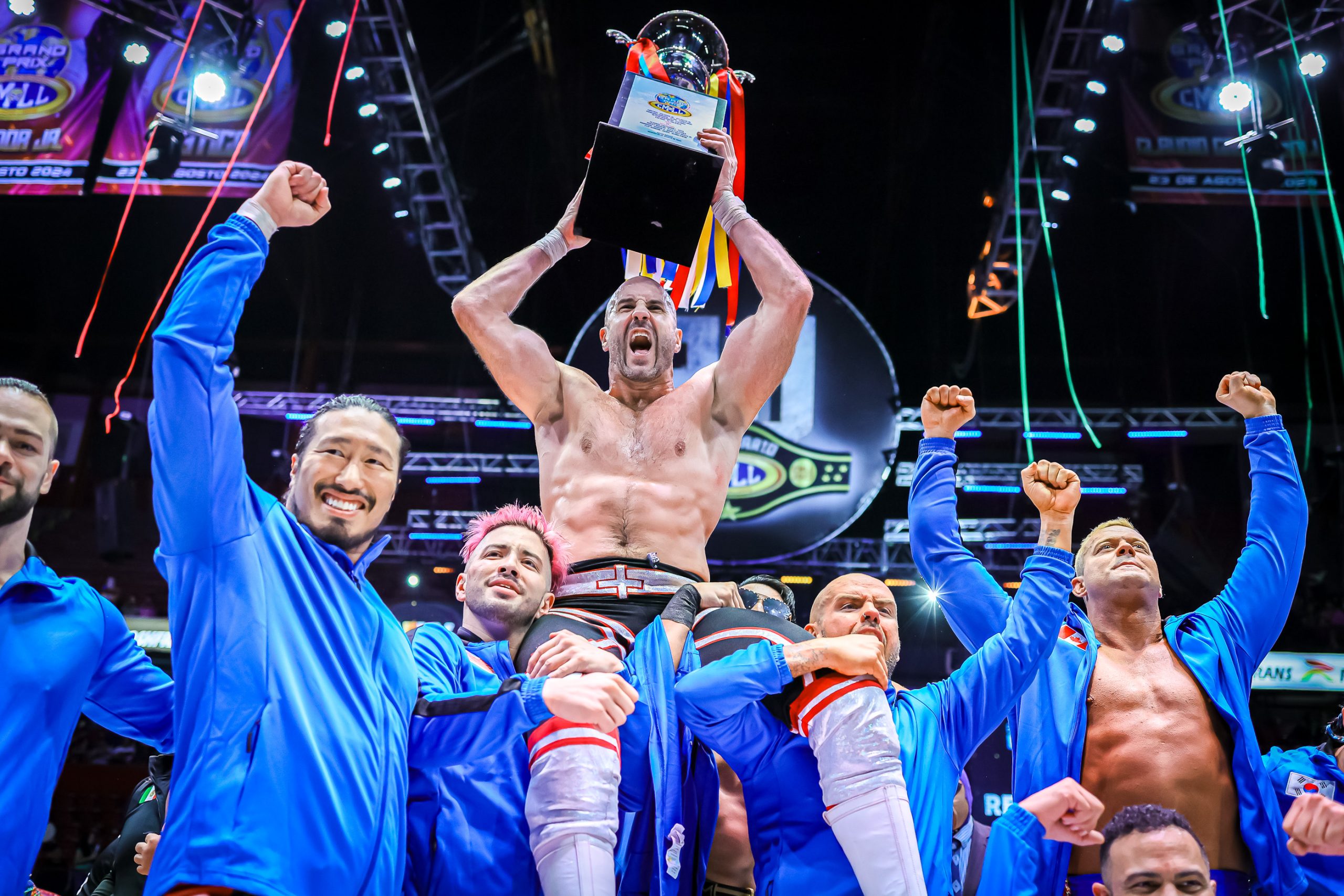
Taking Mexico by storm: Cesaro celebrates the CMLL Grand Prix 2024.
Consejo Mundial de Lucha Libre
Lucerne native Claudio Castagnoli has made his name internationally in a sport that gets little attention in Switzerland: wrestling. With a wrestling persona as a wealthy Swiss banker, he won some of the most prestigious titles in the US and tells Swissinfo how he fell in love with the scene in Mexico.
Professional wrestling and Switzerland are not the most intuitive of pairings. The North American version, as made famous by World Wrestling Entertainment (WWE), has never been particularly popular in Switzerland, and unlike France, Germany or the United Kingdom, it lacks a deep tradition of independent “promotions”, the companies that organise and produce the shows.

Early career with the Swiss Money Holding, a professional wrestling tag team originally formed by Castagnoli (left) and fellow Swiss wrestler Ares in Europe during the early 2000s.
Personal archive
But anyone who has been following wrestling for the last couple decades probably knows the name of a colossal Lucerne native: Claudio Castagnoli (or Cesaro).
He is a multi-time champion in tag matches (involving two-wrestler teams) in the 2000s indies, the independent promotions that mushroomed at the beginning of the century, revolutionising the sport. He is a trios (three-wrestler teams) champion in All Elite Wrestling (AEW), WWE United States Champion, and world champion in Ring of Honor (ROH), Pro-Wrestling Guerrilla (PWG), Westside Xtreme Wrestling, and Mexico’s Consejo Mundial de Lucha Libre.
Castagnoli’s career is storied, but it wasn’t easy getting there while holding a Swiss passport.
A stairway to wrestling
Always an active kid, Castagnoli started playing tennis as a six-year-old, before switching to football, where he had a very successful run as the main striker for his local squad, and developed his initial fandom for FC Luzern.

Castagnoli excelled in several sports before falling in love with wrestling.
Personal archive
As Claudio continued to grow, signs of his prominent stature and athletic prowess became more and more noticeable, and with this came a newfound passion for basketball, which he followed religiously through broadcast news teletexts the morning after the US primetime NBA games. He was selected for regional teams, but never embarked seriously on this path, as the allure of pro-wrestling had already made its way into his life by his late teens.
“I was a fan like everybody else, and I saw a guy from Switzerland who actually wrestled: Siegmeister Rapo,” Castagnoli, 45, says. “He wrestled in Germany and a little bit in the US. I saw he trained somewhere in Zurich, just in a gym on mats. So I went there, tried it out, liked it, and started travelling with him to Germany. I started doing more and more, and with another guy from Switzerland we formed the tag team Swiss Money Holding. It was just two rich Swiss bankers travelling to Germany as wrestlers. In those days, the more over-the-top the character the better. So we took something stereotypical like a Swiss banker and had a blast being obnoxious and provocative.”
Enter the dragon
European success puts wrestlers in a predicament: the world’s top promotions are in the US, Japan and Mexico. Castagnoli decided to try the US first, breaking out as the wrestling world was undergoing a transition. WWE had absorbed its biggest rival, creating a monopoly that inadvertently pushed fans towards the independent boom of the mid-2000s.
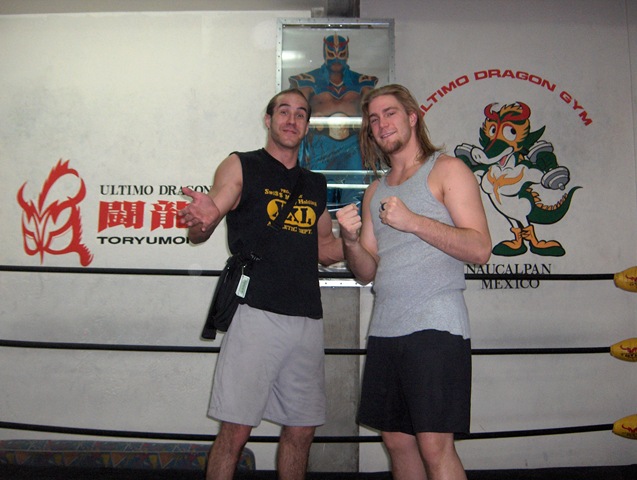
Training in Mexico, 2006.
Personal archive
Cult promotions such as ROH and PWG gained traction with their presentation, and blogs and peer-to-peer networks allowed a new generation of Western wrestlers and fans access to the Japanese and Mexican styles.
“Back in the old days we traded video cassettes,” Castagnoli says. “I discovered other American wrestling like Extreme Championship Wrestling, Japanese stuff, and then later lucha libre [Mexican professional wrestling]. I fell in love with it. I learnt fairly early on that every promotion has different rules, preferences and audiences. The better you are at adjusting your style, the better reactions you get. The US is different from Germany; Mexico is different from Japan.”
After an illustrious run in Chikara and ROH, Castagnoli began getting more prominent bookings in singles competition, where he got to showcase his superhuman strength – which would earn him the nickname of Swiss Superman. He also established feuds with cult favourites such as Eddie Kingston and Nigel McGuinness and developed a villainous persona that went on to exalt his “very European background, superior intellect and sense of fashion”.
“It was crazy looking back at the talent in ROH at that time,” he says. “We were all just trying to prove a point. Testing yourself against people better than you from different backgrounds helps you figure out how to improve. Back in the day with ROH, PWG, NOAH, New Japan, All Japan… you had to fight to get in. To get better, you have to get the reps,” he says, referring to ring performances.
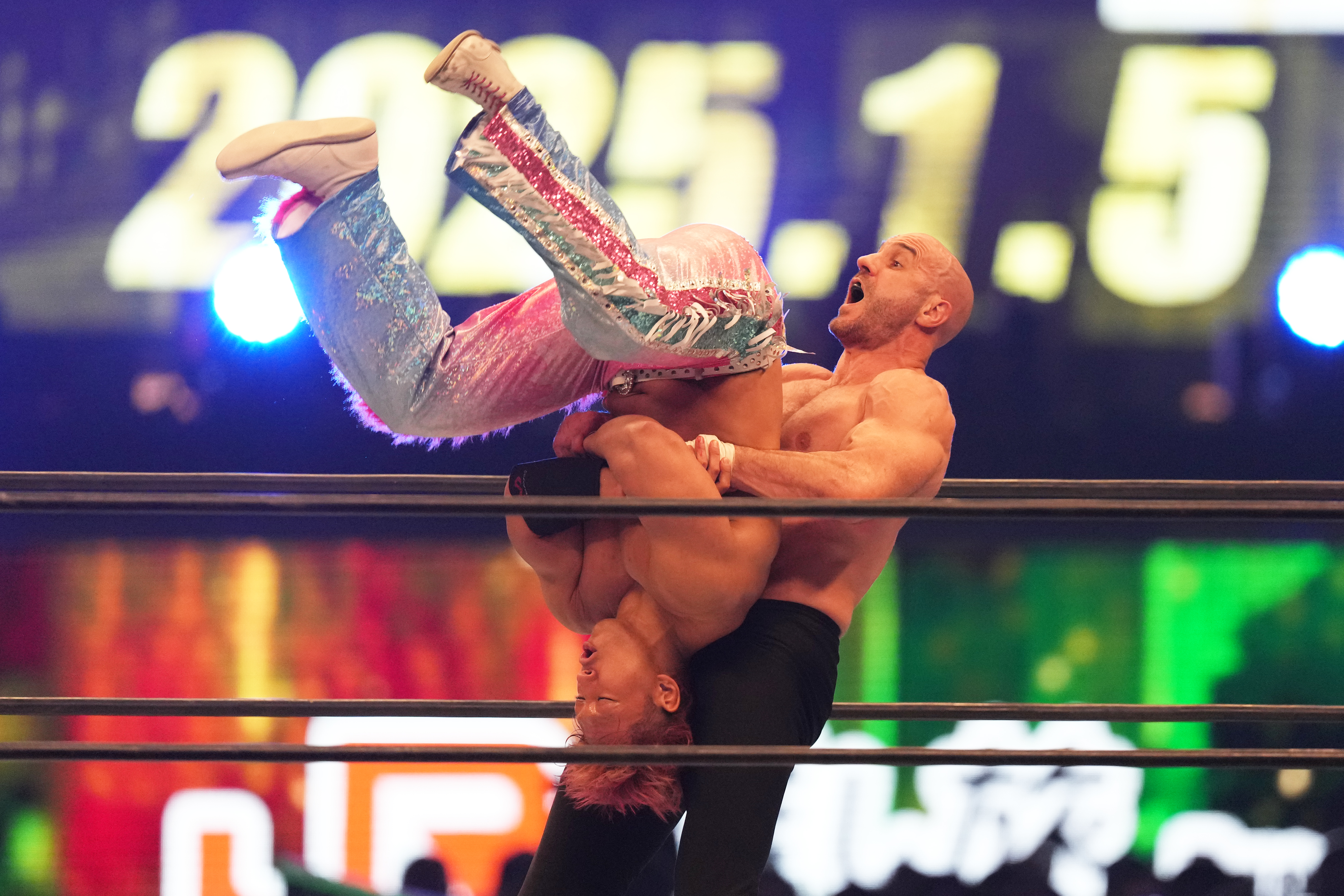
Castagnoli and Shota Umino compete during the New Japan Pro-Wrestling – Wrestle Dynasty at Tokyo Dome on January 05, 2025.
Etsuo Hara / Getty Images
Cesaro rises
Despite some unfruitful try-outs in the mid-2000s, Castagnoli finally became a full-time roster member of WWE in 2012 and stayed with the company for a decade under the ring name Cesaro. There, he became a staple of the promotion’s tag division and had critically acclaimed matches with stars such as Sami Zayn, John Cena and Sheamus; his hard-hitting European style made him a fan favourite, respected by peers and legends alike (Stone Cold Steve Austin was a fan).
However, WWE’s senior executives never committed to placing him constantly on the “upper cards” – the most prestigious positions on its roster – fearing his “wrestler’s wrestler” style wouldn’t fit their entertainment-focused product.

Stirring up the crowds: Castagnoli at the 27 August 2023 All Elite Wrestling pay-per-view “All In.”
McPhail, CC0
When AEW, a new promotion built on showcasing independent talent and styles rarely seen on US television, came calling, Castagnoli made an intuitive move, integrating himself into one of their most prominent factions, the Death Riders. Then, AEW broke stigmas further by partnering with Japan’s New Japan Pro-Wrestling (NJPW) and Mexico’s CMLL.
“For a long time, people saw one thing and thought ‘that is it’,” Castagnoli says. “Now they have a chance to see more [forms of wrestling]. That’s the beauty of it. Everybody has their own way, and if you mix it, you get something great. [In AEW] Blue Panther can come on American television and wrestle his style. Japanese or Mexican wrestlers can come on television and speak how they would speak, and it connects differently than if you tell them how to do it. If they can just do it their way, it works.”
Mad scientists and monsters
AEW’s partnerships also gave Castagnoli a moment of personal closure. His relationship to lucha libre ran deeper than ambition. At Chikara, his mentor, Skayde, had taught him the fundamentals of the lucha style, and before that, he loved the infamous B-movies where Blue Demon, Mil Máscaras and Santo battled mad scientists and monsters.
In the mid-2000s, before his breakout at ROH, Castagnoli spent a month in Mexico City trying to get under the bright lights of Arena Mexico, the home of CMLL. It didn’t work out. Twenty years later, Castagnoli not only got to headline the Friday night events at the mythical venue in Colonia Doctores but did so as their World Heavyweight Champion, and as the first dual contract for an AEW-signed talent in Mexico.
External Content
“It was a great honour and a cool full-circle moment,” he says. “Arena Mexico is ‘La Catedral’, and you feel it. There’s no place in the world like it. You feel what it means to the people. You feel what it means to walk down those steps and step into that ring because so many legends have done it before you. In Mexico City, you walk around and there’s lucha merchandise everywhere. That level of cultural impact is amazing – and I got to be a part of it.”
Castagnoli held the CMLL World Heavyweight Championship for 112 days, ultimately losing it to Hechicero at one of Mexico’s biggest lucha events: Homenaje A Dos Leyendas. Defeat didn’t diminish the achievement: his reign was affectionately remembered by Mexican fans and media. The Swiss Superman continues to wrestle weekly on AEW and CMLL.
“Years ago, I never thought this was gonna happen,” he says. “I wanted to be a professional wrestler, that was the goal. It was never about being a champion. Now I just try to be as good as I can and see what happens. I got to wrestle at the Tokyo Dome, and then at La Catedral. I won the World Heavyweight Championship and became the first guy with a double contract. It was humbling. I’m still trying to put in the work, still trying to wrestle as good as I can, and it keeps showing me that I still need to be at the top of my game. I’m also just trying to have fun and show the world how cool, fun, and interesting professional wrestling can be.”
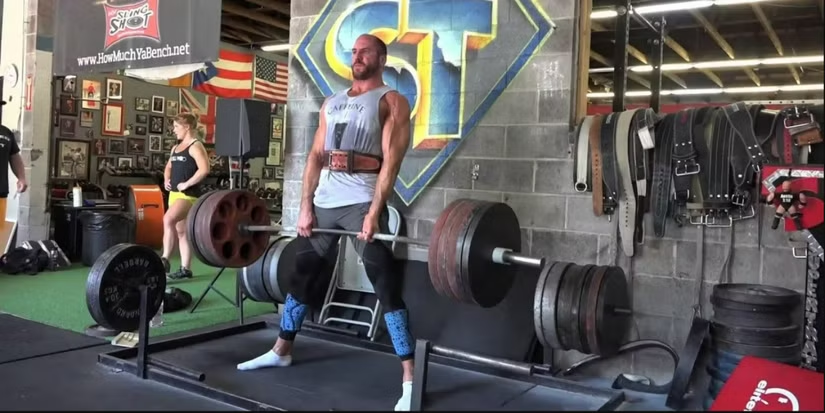
A long way from the gym mats in Zurich: working out in the US.
Personal archive
Edited by Catherine Hickley & Eduardo Simantob. Sub-edited by ts.


