


The strikes hit residential buildings, pre-schools and shops. Humanitarians are providing first aid, psychosocial support, repair materials and other emergency assistance.
The attacks come after the UN head of political and peacebuilding affairs, Rosemary Di Carlo, told the Security Council on Monday that the violence in Ukraine is “worse than ever” .
Concern over nuclear power plant
The Zaporizhzhya Nuclear Power Plant (ZNPP) in southern Ukraine lost the connection to the 750kv Dniprovska line today, leaving it dependent on its sole back-up line for external power.
ZNPP has been in Russian hands since 4 March 2022 and has since continued to be damaged by shelling.
The head of the International Atomic Energy Agency (IAEA), Rafael Grossi, said that its team is monitoring the situation and have also initiated discussions with both sides on establishing a local ceasefire to enable repairs of the damaged power line.
Refugees return to DRC as border reopens
More than 33,000 Congolese refugees have returned from Burundi to eastern Democratic Republic of the Congo (DRC) since the reopening of the border on 23 February.
Most returnees are crossing near Uvira in the South Kivu province of DRC after fleeing to Burundi in December 2025 when fighting between Government forces and the M23 armed group forced thousands to flee the area.
“Many returned to find their homes destroyed and belongings looted, leaving them in deep despair and unable to resume normal life without substantial support,” the head of UN refugee agency, UNHCR, in the DRC, Ali Mahamat, said on Tuesday.
Lack of funding as thousands remain in Burundi
Around 30 per cent of returnees had been living in Burundi’s Busuma refugee site, where funding shortfalls are leading to overcrowding and limited water, sanitation, medicine and shelter, which is accelerating refugee returns.
Nearly 4,500 people remain in transit centres awaiting relocation to Busuma. As of 23 March, Burundi continues to host about 109,000 Congolese refugees, including around 67,000 in Busuma.
With UNHCR’s operation in the DRC only 34 per cent funded and its response for Congolese refugees in Burundi just 20 per cent funded, the agency is calling for urgent international support to ensure that returns take place in conditions of safety, dignity and sustainability.
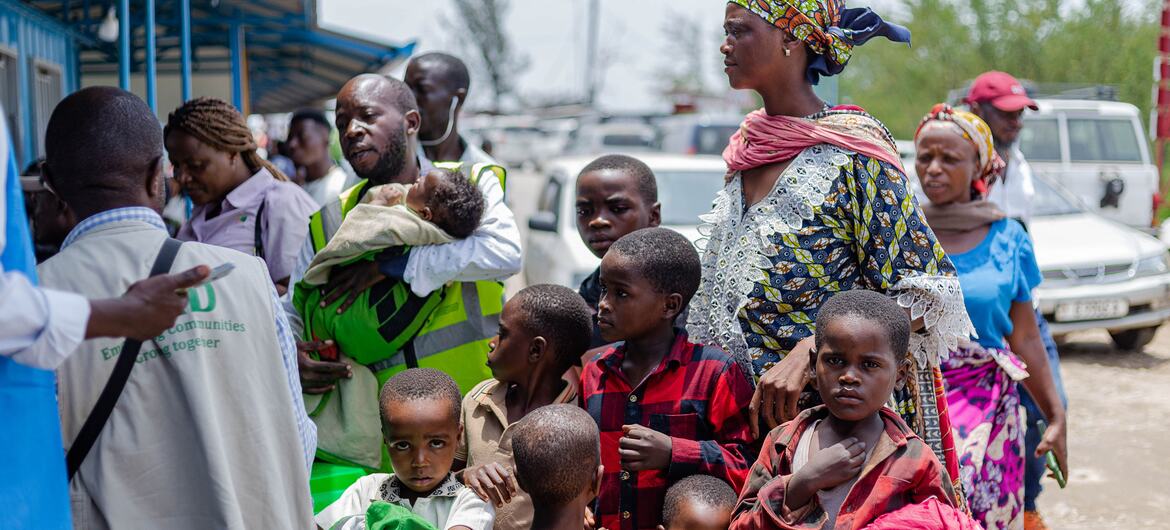
Thousands of Congolese refugees are making their way home from Burundi.
Drought relief in Central America
The UN agency responsible for coordinating humanitarian relief, OCHA, has allocated $10.5 million to help people ahead of a severe drought across the so-called ‘Dry Corridor’ along the coast of El Salvador, Guatemala and Honduras.
Roughly 90 per cent of Central America’s population live in the ‘Dry Corridor’, and according to the UN World Food Programme (WFP) an estimated 2.7 million people there are in urgent need of food assistance as of early 2026.
UN Emergency Relief Coordinator Tom Fletcher allocated the amount from the Central Emergency Response Fund (CERF) to support communities that include many subsistence farmers who face failing crops, rising food insecurity and growing pressure on their livelihoods.
Thousands to receive cash relief
This new funding will allow OCHA and its humanitarian partners to act early to reduce humanitarian needs, protect jobs and help families stay ahead of any shock.
Some 150,000 people across the three countries will receive cash to purchase food, seeds resistant to drought and livestock feed, as well as health support and water and sanitation services.

