


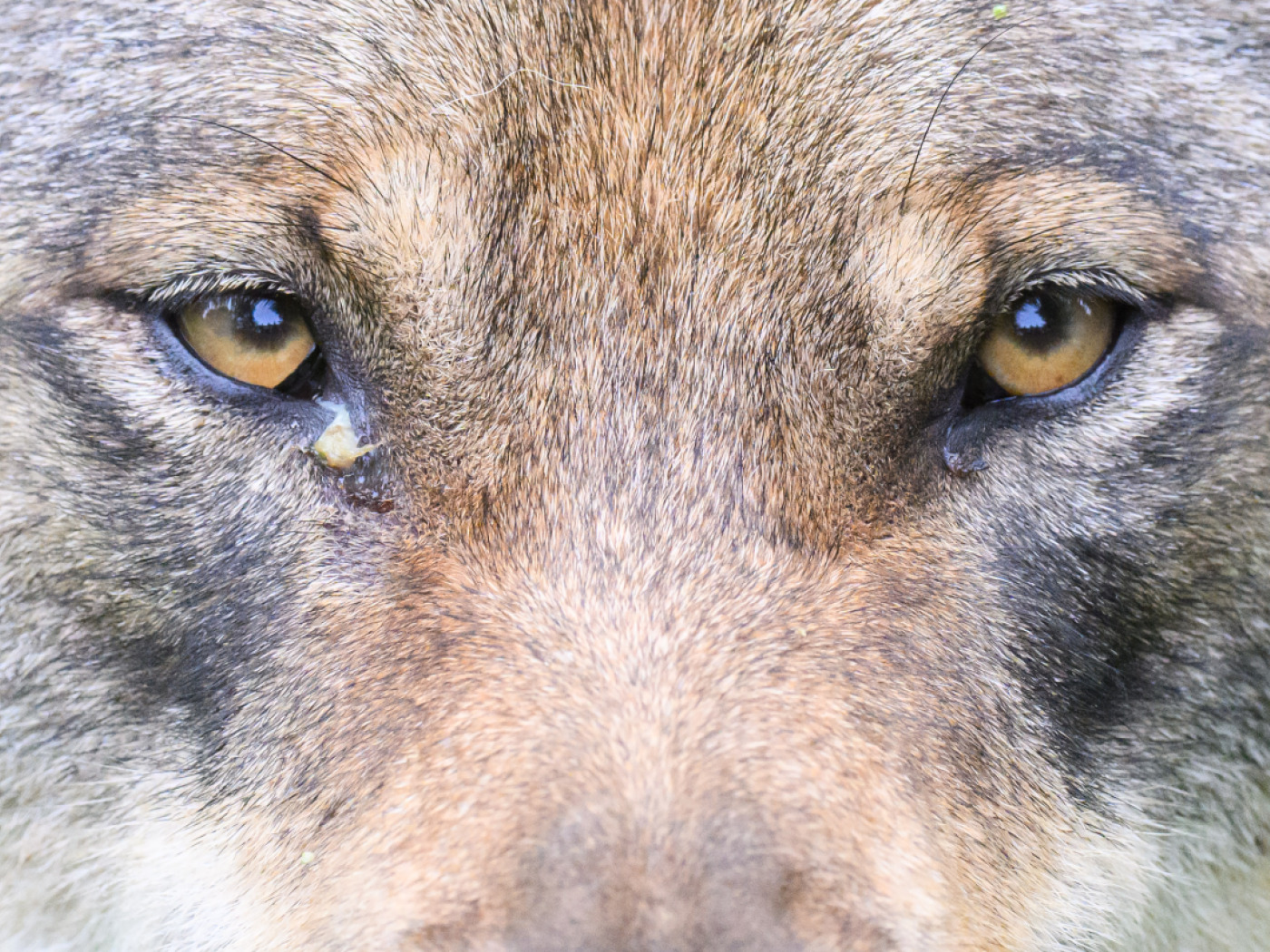
Decline in farm animals preyed upon by wolves by 2025
Keystone-SDA
Wolf attacks on farm animals in Switzerland are declining this year. Ticino is the only canton bucking the trend. This was reported on Thursday in a statement by Pro Natura, WWF Switzerland, the Swiss Wolf Group and BirdLife Switzerland.
+ Get the most important news from Switzerland in your inbox
At the end of October this year, which is the end of the Alpine pasture period, there were 832 animals killed, 37 fewer than in the same period a year ago. On the other hand, the number of herds increased slightly, from 38 in 2024 by the Kora Foundation to 42 in 2025.
In Ticino, the number of incidents rose from 115 to 195, but this also includes cases in which “wolf intervention can be ruled out”, which makes this figure not comparable with that of other cantons. Other influencing factors are the increase in predators in the territory and a high percentage (50%) of unprotected livestock in “places that are considered to be protectable”, the statement says. However, the number of attacks is clearly down when compared with the number in 2022 (260). In the Rhaetian land, on the other hand, the number of killings fell from 195 to 189.
The four environmental associations associate these numbers with the effectiveness of herd protection measures. “The figures,” they write, “show that by reinforcing flock protection and regulating the wolf population in accordance with the law, sustainable coexistence between predators and pastoralists is possible”. A call is also made to re-evaluate the effective role of preventive animal regulation in the context of stabilising the number of assaults.
According to the president of the Swiss Sheep Farming Federation (FSAO), Lukas Berger, when questioned on the subject by Keystone-ATS news agency, because of the different methods of detection “these numbers should be treated with great caution”. This summer, numerous animal losses have occurred for which it is assumed that wolves were involved, but without being able to prove it, they have not been included in the statistics.
Many of the farmers involved are said to be psychologically exhausted, due to the high number of livestock lost, and physically exhausted, due to the demanding protection measures to be implemented. According to the FSAO, the wolf should have no place in Switzerland, but since it has established itself there anyway, it agrees with the environmental associations’ argument that a combination of herd protection and canid culling is necessary.
The third phase of wolf regulation is currently underway, in which it is possible to kill off specimens that have not yet preyed on livestock. Berger wonders, however, whether ‘this is sufficient’ or whether even more drastic measures are needed. For example, the Graubünden branch of the right-wing Swiss People’s party is calling for the wolf hunting period to be extended and for hunters to be more involved.
Translated from French by DeepL/jdp
We select the most relevant news for an international audience and use automatic translation tools to translate them into English. A journalist then reviews the translation for clarity and accuracy before publication.
Providing you with automatically translated news gives us the time to write more in-depth articles. The news stories we select have been written and carefully fact-checked by an external editorial team from news agencies such as Bloomberg or Keystone.
If you have any questions about how we work, write to us at english@swissinfo.ch


