


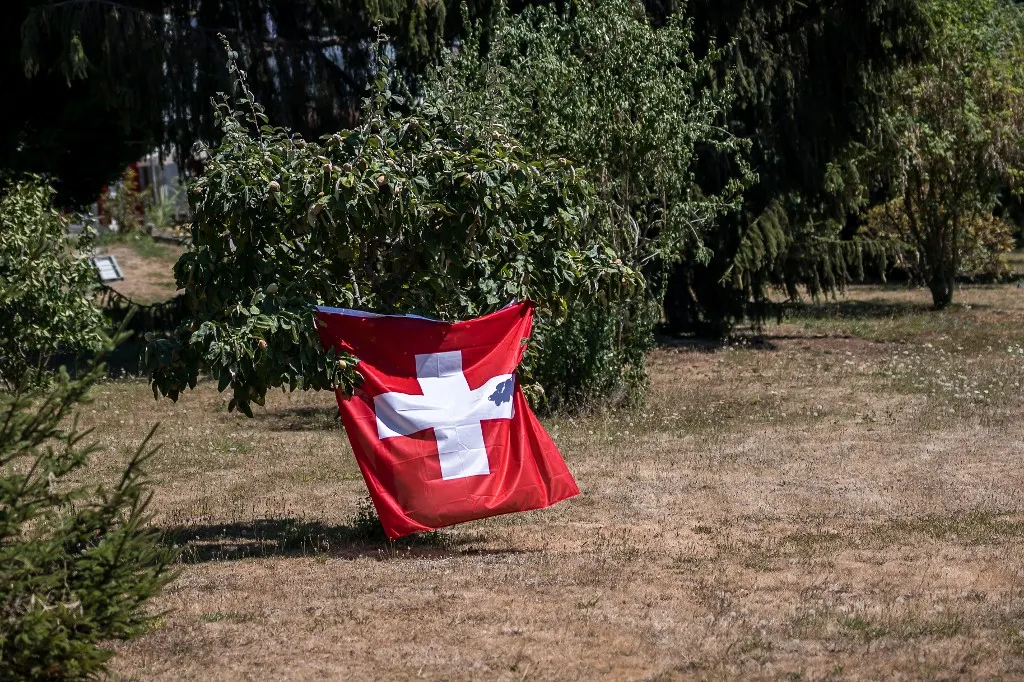
In a new study, the vast majority of respondents — 69 percent — described themselves as ‘Swiss’, with only 4 percent identifying as ‘European.’ So why is that?
The study in question, carried out by YouGov market research institute, did not specify why such a high proportion of respondents feel exclusively Swiss or, for that matter, what exactly being ‘Swiss’ means to them.
Is it only a matter of a passport, or does it have a deeper meaning, such as, for instance, a sense of patriotism, pride, national identity, or other deep-seated values?
These findings may seem surprising but perhaps we shouldn’t be.
Surprising, because nearly 40 percent of Switzerland’s population (3 million people) have a migration background, additionally, 1.5 million EU citizens currently live in Switzerland.
And not all that surprising, given all we know about Swiss mentality and attitudes toward themselves and others.
Let’s look at what could explain this ‘Swiss first’ attitude:
Strong sense of independence
The concept of sovereignty is deeply entrenched in the Swiss psyche.
This is one of the reasons that has kept the country from joining the European Union — a step many thought would lead to the loss of both political independence and sense of identity.
As political scientist Daniel Warner explained it, “Switzerland has a very strong sense of independence; joining the EU would impinge on its autonomy.”
Unique political system
The Swiss style of grass-roots democracy means that the citizens, and not the government or parliament, have the final say — through frequent national, cantonal, and municipal referendums — on how the country is ran.
READ ALSO: How do Switzerland’s referendums actually work?
In their minds, this ‘people power’ is what distinguishes them from everyone else in Europe. And they are right on that point.
Advertisement
Strong economy
In various international surveys and studies, Switzerland consistently ranks among the world’s richest nations, whether in terms of household income or individual assets.
Because of its sturdy and resilient economy, Switzerland was able to withstand, better than other countries, downturns caused by the Covid pandemic and, more recently, by Russia’s invasion of Ukraine.
Good life
Switzerland as a whole, and its cities in particular, consistently top the international charts ranking the quality of life.
For instance, the 2024 Mercer Quality of Life Index of world’s best cities ranked Zurich in the first place and Geneva in third.
Bern and Basel rounded up the top-10, with ninth and tenth place, accordingly.
Not only that, but an American publication, the US News & World Report, named Switzerland ‘the best country in the world‘ in both 2023 and 2024.
Advertisement
All that gives the Swiss a certain sense of superiority…
The Swiss genuinely believe that they are better than others in many areas.
Whether it’s the (mostly) punctual trains or the highly developed and well-maintained infrastructure, Switzerland works like the proverbial Swiss watch.
The Swiss like everything to run smoothly and efficiently, and believe they are better at these skills than other countries – and they probably are.
They tend to look down on countries where these traits fall by the wayside, pointing accusing fingers at the Italians and French (as they usually do when something goes wrong in Switzerland), but also at Germans — mostly for their tardy trains.
READ ALSO: Why do the Swiss think they are superior to everyone else?
Advertisement
But there are rivalries…
While the Swiss are proud of their Swiss identity when compared to other nations, within Switzerland itself, they don’t think of themselves as ‘Swiss.’
Sounds confusing?
Maybe because it is.
It goes like this: when asked, while travelling abroad, where they are from, they will say “I am from Switzerland.”
But if asked the same question in Switzerland, they will identify themselves by their canton or commune of origin.
This is how they define their identity in Switzerland.
And while they present a united front (and pride) as a nation, within Switzerland’s borders there are some rivalries between cantons and/ or cities, focused around, for instance, local dialects, or who has a better football team.
READ ALSO: Zurich vs Basel: Why the two Swiss cities are fierce rivals


