Afghan men who have lost their legs due to landmines learn to use their new prosthetics at the International Committee of the Red Cross (ICRC) physical rehabilitation center in Kabul, Afghanistan, Tuesday, May 16, 2022.
Copyright 2022 The Associated Press. All Rights Reserved.
Faced with the Russian military threat in Europe, the three Baltic countries, Poland and Finland have decided to withdraw from the international treaty banning anti-personnel mines. SWI swissinfo.ch explains why now.
For the first time in the history of the landmark Ottawa Convention, nations are walking away. Faced with the Russian military threat in Europe, five countries – Estonia, Latvia, Lithuania, Poland, and Finland – have taken the extraordinary step of announcing their withdrawal from the international treaty that bans anti-personnel landmines.
In a joint statementExternal link published on March 18, 2025, the defence ministers of Estonia, Latvia, Lithuania and Poland announced their intention to withdraw from the Ottawa Convention. Finland announced its decision to do the same on April 1. While the number of victims of these weapons has fallen sharply, their decision could jeopardise decades of progress.
So why are these countries making this decision now? Here’s what you need to know – in four key questions and answers.
What drove these countries want to leave the convention?
Estonia, Latvia, Lithuania, Poland and Finland – all members of NATO and direct neighbours of Russia or its ally Belarus – cited the Russian military threat as the main reason for withdrawing from the Anti-Personnel Mine Ban Convention. The 1997 treaty forbids the use, production, stockpiling and transfer of anti-personnel mines
Faced with a deteriorating security situation in Europe, they have indicated that they do not wish to deprive themselves of what they consider to be a tool of military deterrence. The Baltic states and Poland said this was “a clear message” that they were ready to “use every necessary measure” to defend themselves.
These announcements come as European NATO members seek to ensure their own defence in the face of an American ally whose reliability is uncertain. President Donald Trump has suggested on several occasions that the United States might not defend countries in the alliance that fail to meet their military spending commitments.
Several powers never signed the Ottawa Convention. These include China, India, Iran, Israel, Russia, Pakistan and the United States. To date, 165 of the 193 states recognised by the United Nations have signed the treaty.
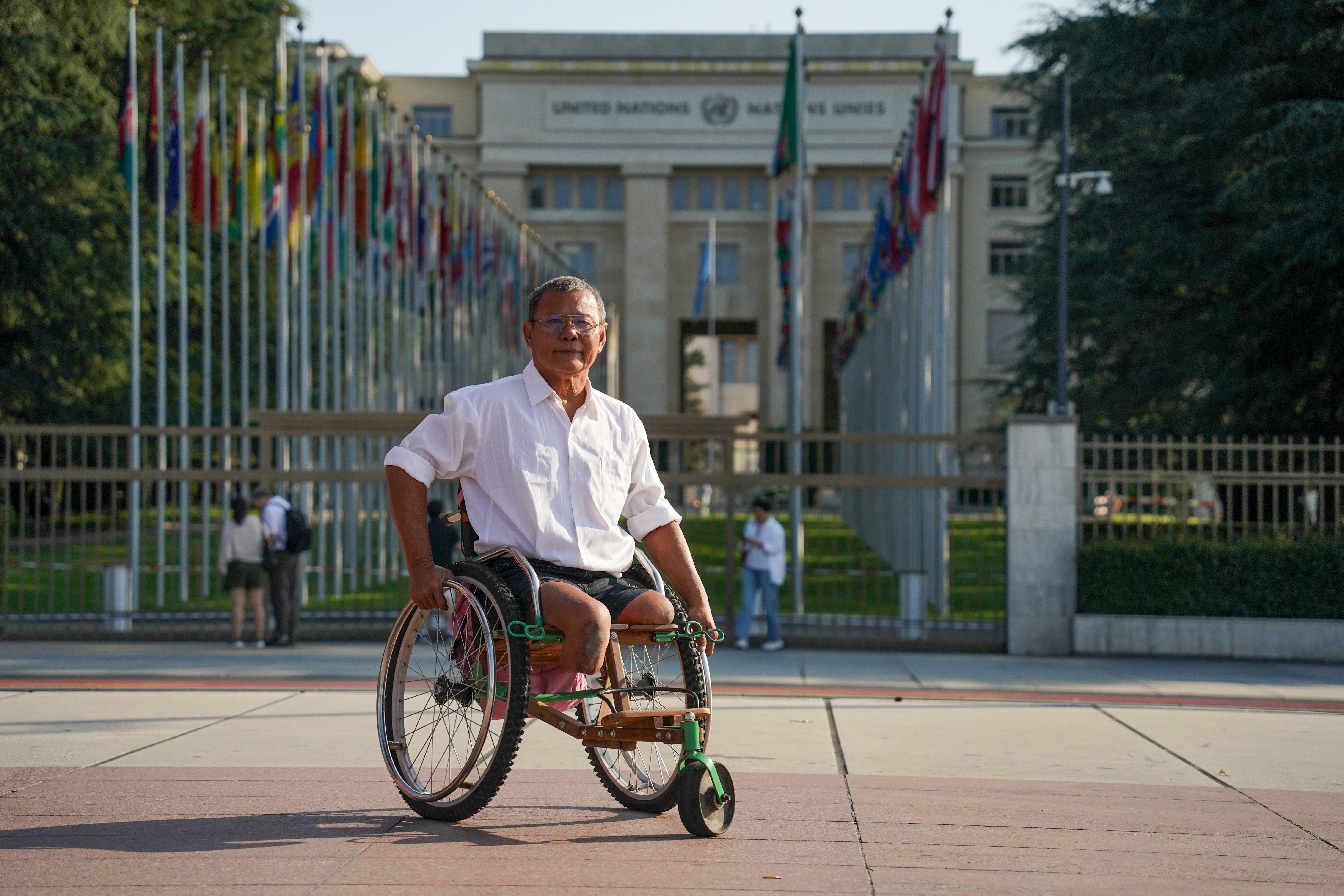
>> A portrait of Tun Channareth, a Cambodian activist who played a key role in the ban on anti-personnel mines:
More
More
Cambodia’s Tun Channareth renews fight for mine-free world in Geneva
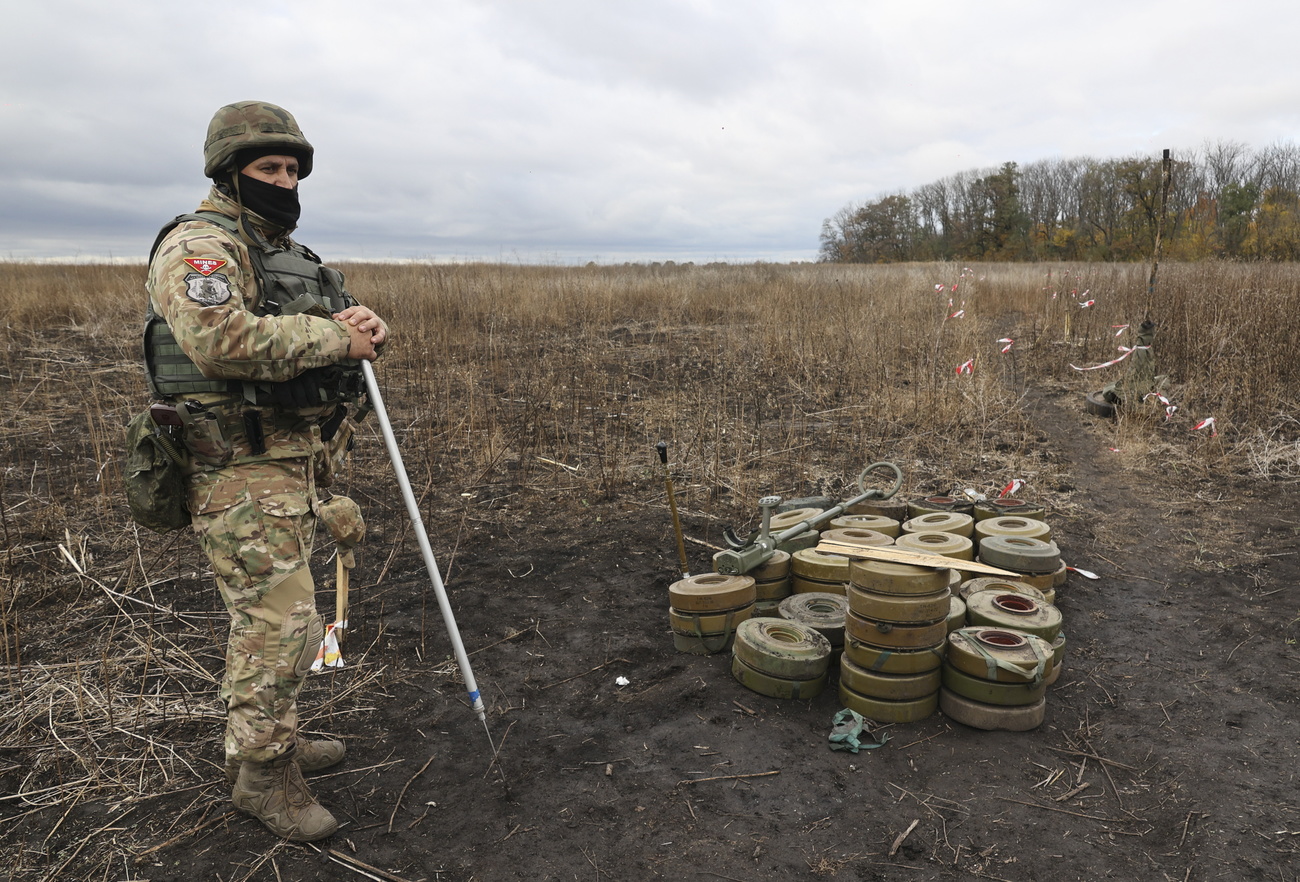
Russia is using anti-personnel mines as part of its invasion of Ukraine, which has become the most heavily mined country in the world, according to the UN. The Ukrainian army has also used these devices, according to the NGO Human Rights Watch.
Why is this withdrawal controversial?
The decision by these five countries has sparked outrage among defenders of international law and non-governmental organisations, which campaigned for years for the creation of the Ottawa Convention.
UN Secretary-General Antonio Guterres said he was “gravely concerned” by the states’ decision, which risks “weakening civilian protection and undermining two decades of a normative framework that has saved countless lives”.
Meanwhile, the president of the International Committee of the Red Cross (ICRC), Mirjana Spoljaric, spoke of a “dangerous shift”, noting that “the global consensus that made anti-personnel mines a symbol of inhumanity is starting to fracture”.
This treaty has strong symbolic value, as it is the first to ban an entire class of weapons on humanitarian grounds. Today, pacifist circles fear a domino effect, that the departure of these countries would encourage other states to withdraw from the convention or other disarmament treaties. For them, it is essential to maintain a stigma around these weapons.
Why are landmines considered a particularly problematic weapon?
Experts and NGOs point to the heavy toll paid by civilian populations. More than 80% of landmine victims are civilians, of whom around 40% are children, according to the ICRC.
Buried in the ground, these weapons continue to claim victims, even decades after the end of hostilities. Currently, civilians are regularly killed or maimed by anti-personnel mines in Cambodia, Bosnia-Herzegovina and Afghanistan. Mine clearance operations are as delicate as they are costly and time-consuming. At the beginning of the year, these projects slowed down due to budget cuts by the Trump administration, although it claims to have reinstated some programmes.
Following the creation of the Ottawa Convention, the annual number of victims – deaths and injuries – from anti-personnel mines fell sharply, from 25,000 in 1997 to just over 3,000 in 2013. By 2023, it had risen to 5,700, with an uptick of victims recorded in Ukraine and Burma.
At the same time, stocks representing some 55 million mines have been destroyed, while the number of countries producing them has fallen from several dozen to just a few today.
Are we witnessing a rollback of disarmament commitments?
Last year, Lithuania announced its withdrawal from the Convention on Cluster Munitions. This treaty forms one of the other pillars of humanitarian disarmament, a package of five conventions, including the Ottawa Convention and those banning biological, chemical and nuclear weapons.
>> Analysis of the erosion of humanitarian disarmament in Europe:
More

More
War in Ukraine erodes European support for humanitarian disarmament
At the time, there were fears that this choice would have a snowball effect. When interviewed by SWI swissinfo.ch, Professor Keith Krause of the Geneva Graduate Institute spoke of an “undeniable erosion of the commitment to humanitarian disarmament and the global disarmament architecture”, citing the withdrawal of the United States and Russia from the Intermediate-Range Nuclear Forces and Comprehensive Nuclear-Test-Ban treaties in 2019 and 2023 respectively.
Recent events seem to confirm the theory that these conventions, designed to protect civilians in wartime, are weakening.
Edited by Virginie Mangin/ds