


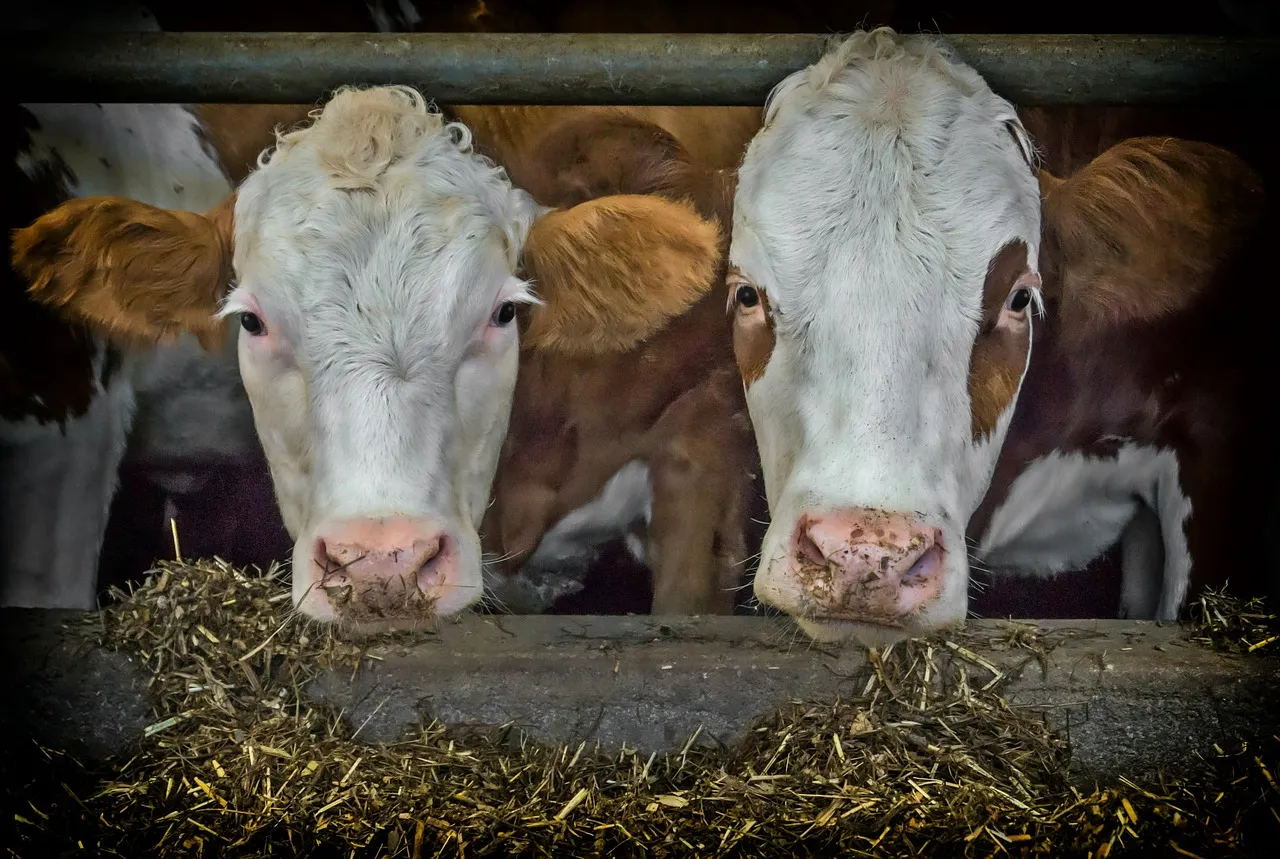
If you live in certain parts of Switzerland, you know it’s true: the smell of cows in the winter is often overpowering. Have you ever wondered why that is so?
The geography of Switzerland is such that ‘nature’ – that is, countryside – is often just a stone’s throw away from towns and cities.
You don’t have to go far, or travel long, to leave an urban area behind and find yourself – sometimes just minutes later – surrounded by farmland.
So it is more than likely that when autumn turns into winter, the countryside starts emanating distinctly recognisable cow-like smells – manure, fermier in French, dünger in German, fecondatore in Italian.
When the cows come home
If you wondering why that is, the answer is simple (and all Swiss usually know it).
During the summer months, Swiss cows graze in meadows and on Alpine pastures, where whatever smells they emit (read more about this below) are absorbed by the environment.
All any passerby is aware of are the soothing sounds of the bells, and, at times, an evil look the bovines give to anyone encroaching on their territory.
But in the autumn, as the weather is about to turn colder and food – like Alpine grass and flowers on which they munch in the summer – is scarce, the cows are brought down from the mountains to their ‘winter’ homes on the farms.
And that’s when Switzerland starts smelling…literally of bullshit.
Advertisement
This is why Switzerland stinks
Instead of being out in the fresh air, the animals live indoors in barns.
This concentration of bovines in an enclosed space makes the odour of their excrement more noticeable in agricultural areas – which are quite widespread in Switzerland – so this smell often spreads into other areas as well.
But while most people don’t mind it, others have turned up their noses on cow smells.
In 2019, for example, a temporary stable housing 40 bovines was installed in an area of Vevey (canton Vaud).
When one person living nearby returned from his vacation, he complained that his whole apartment smelled of cow dung, especially “when the wind blows a certain way.”
The stable was eventually moved elsewhere, but this would not happen in a rural area, where farming is the main activity.
Advertisement
But it’s not only a matter of smell emanating from barns
It is a well known fact that cows emit a fair amount of methane, which accounts for approximately 20 percent of global greenhouse gas emissions (and yes, Swiss cows are guilty of that as well).
How much they actually emit depends on the kind of feed they are getting.
Mindful of the damage that cows wreak on the fragile eco-system, Swiss agriculture cooperative Fenaco has introducing mineral-based, methane-inhibiting feed to the cattle’s diet.
“In total, the reduction potential for dairy cows in Switzerland is equivalent to several hundred thousand tonnes of CO2 “, Fenaco said in a press release.
Fenaco did not specify how exactly the amount of gases emitted by each cow into the atmosphere is being measured, but the company will start distributing special “climate protection” certificates to qualified bovines this fall.
You may think this udder nonsense, but even Switzerland’s largest supermarket chain, Migros, got involved in this undertaking – in order to, as the retailer put it, make “cows fart and burp less.”
It even set up its own Migros Climate Fund to help farmers buy specially-formulated, environmentally-friendly, “fart-reducing feed.”
READ ALSO: Why are cows so sacred in Switzerland?


