


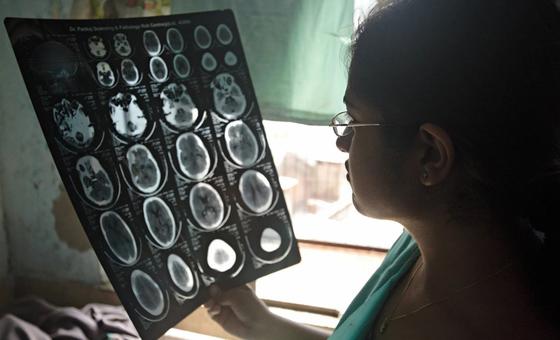
More than 40 per cent of the global population – over three billion people – are affected by neurological conditions, according to WHO’s first-ever report on the issue.
The top 10 include stroke, migraine, meningitis, Alzheimer’s disease and other dementias, as well as neurological complications linked to pre-term birth, autism spectrum disorders, and cancers of the nervous systems.
Improve healthcare
“With more than one in three people in the world living with conditions affecting their brain we must do all we can to improve the healthcare they need,” said Dr. Jeremy Farrar, a WHO Assistant Director-General.
“Many of these neurological conditions can be prevented or effectively treated, yet services remain out of reach for most – especially in rural and underserved areas.”
Despite the numbers, less than one in three countries has a national policy to address the growing burden.
Lack of attention, funding and personnel
WHO has 194 Member States and only 102 contributed to the report, or 53 per cent – “an indicator of the limited attention given to neurology,” the UN agency said.
Just 63 countries, 32 per cent, have a national policy on neurological disorders, and only 34 countries, 18 per cent, have dedicated funding to address them.
The report found that low-income countries have more than 80 times fewer neurologists than richer nations.
Services out of reach for many
Furthermore, essential services are out of reach for most as only 25 per cent of countries include neurological disorders in universal health coverage – while critical services such as stroke units and paediatric neurology are frequently lacking and concentrated in urban areas.
Although neurological conditions often require lifelong care, only 46 countries offer carer services and just 44 have legal protections for care givers. As a result, informal carers – who tend to be women – often have no recognition or support.
WHO urged governments “to make neurological disorders a policy priority through bold leadership and sustained investment,” and to expand access to care through universal health coverage.
Other actions include promoting brain health and strengthening both health systems and monitoring.


