


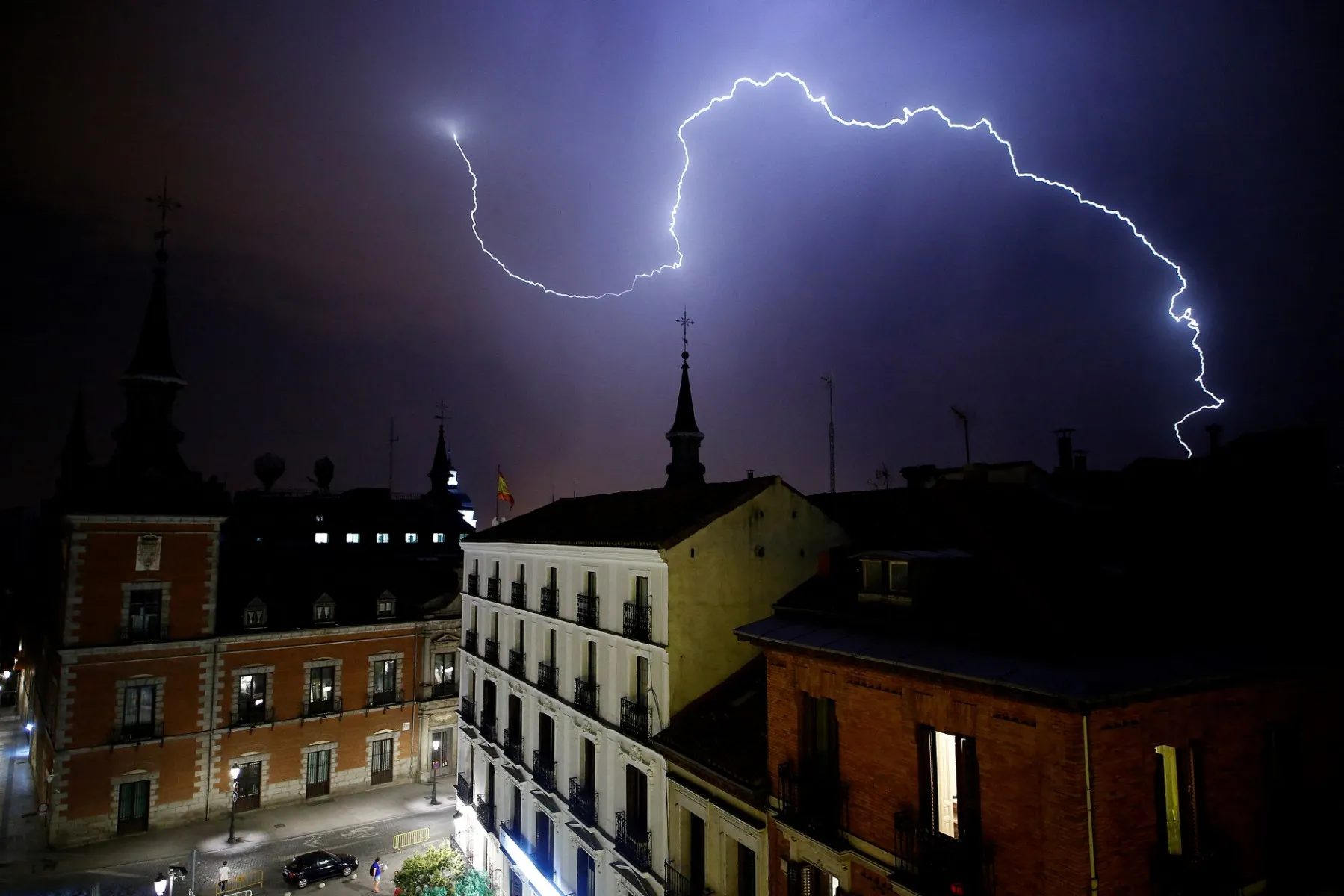
While human error and drought conditions can play a role in causing wildfires, experts are pointing to the relatively unknown phenomenon of ‘dry storms’ as making Spain’s summer of wildfires worse.
Spain has for the last week been suffering its second major heat wave of the summer.
The state meteorological agency, Aemet, has issued extreme red-level alerts in several part of the country such as the southern provinces of Seville and Córdoba, where temperatures have hit the low-40s.
The intense heat has been exacerbated by several wildfires around the country.
So far this summer four people have been killed, with firefighters still battling the most serious blazes in the northwest and west of the country in the regions of Castilla y León, Galicia, Asturias and Extremadura.
Drought conditions play a role in this, helping fires to spread quickly, but sadly many wildfires in Spain are ‘man-made’ and start because of human behaviour such as barbecuing, fireworks or discarding cigarettes.
Increasingly, however, experts are pointing to a lesser-known meteorological concept making wildfires worse: dry storms
Advertisement
Dry storms making Spain’s wildfires worse
Though the idea of ‘dry’ storms sound paradoxical, they are a real weather phenomenon that can put places already at risk of wildfire, such as swathes of inland Spain, at even greater risk during periods of particularly dry or hot weather.
During a dry storm the atmospheric conditions are created for rainfall, but because the air is very hot or dry, the rain evaporates before ever reaching the ground. There’s intense electrical activity and strong gusts of wind, but without significant rain.
If there are thunderstorm conditions, dry storms can still produce lighting. When the land and vegetation on the ground is dry, lightning strikes can start fires, according to BBC meteorologist Helen Willetts.
In regions where weather conditions create a very dry environment, as has been the case this summer in Spain, light rain cannot counteract the spread of fires.
“If the weather has been warm and dry for a prolonged period, a greater amount of rain is required to moisten the fuel bed and reduce the chances of ignition by lightning,” the U.S. National Oceanic and Atmospheric Administration told the BBC.
READ ALSO: Heatwave plans – Ten things to do in Spain when it’s too hot outside
Advertisement
The role of heat bursts
Behind many of these storms are so-called reventónes térmicos – heat bursts in English — that create the conditions for dry storms.
These are extremely powerful downward air currents that collapse from the base of convective clouds. They see the rise of hot, humid air, generating sudden winds that can reach speeds of up to 100 km/h.
Although, like dry storms, they don’t discharge water, they can carry dust and particles that increase spread of flames.
According to Aemet, heat bursts have been seen in inland areas of the peninsula in recent weeks, especially in the towns of Jaén and Granada.
Late on Sunday afternoon a heat burst “with strong, almost hurricane-force gusts of wind’ was recorded in the municipality of Motril, Granada, and at least five people had to be rescued off the beaches of Torrenueva Costa and Carchuna, according to the EFE news agency.
According to Aemet Andalusia, Motril experienced a sudden rise in temperature to 40.1 degrees at 7:50 p.m., accompanied by very strong gusts of wind of up to 86.8 km/hr
The sudden conditions caused a waterspout in Torrenueva Costa, surprising swimmers who were left adrift and needed rescuing.
READ ALSO: What do Spain’s orange and red weather alerts mean for the public?


