


Unlike citizens of the EU/EFTA, people from third states are required to have an authorisation to enter Switzerland. The type of clearance they need depends on the purpose of their travel.
If you are a national of an European Union or EFTA country (Norway, Iceland, and Liechtenstein), all you need to travel to Switzerland is your ID.
But things become more complicated for all the others, including for people from such countries as the UK, the United States, Canada, and Australia, among others outside the EU/EFTA.
EES/ETIAS versus D-visa
EES and ETIAS are acronyms for the Entry & Exit System and the European Travel Authorisation and Information System, respectively.
EES was introduced from October 12th, 2025 and is being phased in gradually while ETIAS is expected in the final quarter of 2026, though this date is yet to be confirmed.
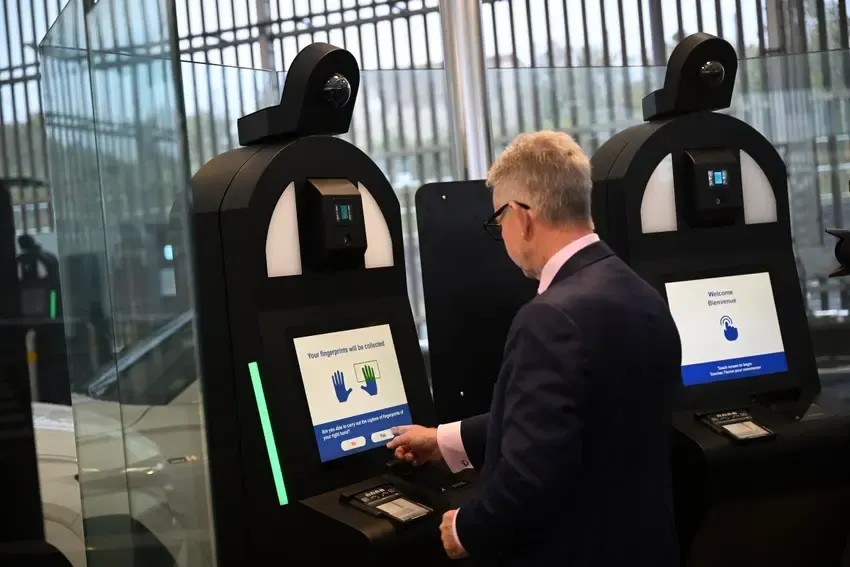
EES is an enhanced biometric passport check which also digitises enforcement of the 90-day rule to replace manual passport stamping.
ETIAS, on the other hand, is an online visa waiver or travel authorisation that will be required for visa-exempt tourists and other visitors into Switzerland and EU/Schengen zone in general.
It requires travellers to go online in advance of their trip, fill in a form and pay the €20 fee in order to receive the ETIAS travel authorisation. Once purchased this will last three years (or until you get a new passport) and covers multiple trips.
It is intended for stays of up to 90 days.
To clarify, the 90-day rule states that you can stay 90 days out of every 180 — so in total you can spend six months a year in Switzerland, but not all in one go. (It’s important to note that the 90-day limit applies to the whole of the Schengen zone; so time spent in France, Germany or Italy also counts towards your 90-day limit).
But regardless of whether you visit for 90 days or 180, the word ‘tourism’ is key here: third-country citizens are not allowed to seek employment in Switzerland, as the EES/ETIAS are not intended for this purpose.
READ MORE: Can a foreign tourist look for a job when visiting Switzerland?
This is where the D-Visa comes in.
Advertisement
Third-country citizens planning to stay in Switzerland for more than 90 days – for instance, for employment, studies, or family reunification – will need this visa to enter the country.
However, it is not enough to just fill out and submit the visa form to a Swiss embassy or consulate in their country if residence.
According to the Federal Department of Foreign Affairs, “this visa is issued subject to authorisation from the cantonal migration authority in the intended place of residence in Switzerland.”
In other words, you need to have an (approved) job lined up, or have another compelling and valid reason to immigrate to Switzerland.
READ MORE: What do third-country nationals need to do to move to Switzerland?
Advertisement
Do people from outside EU/EFTA need both ETIAS and the visa, or just one?
It is either or, not both.
The purpose of your travel to Switzerland determines which one you need.
For tourism (up to 90 days), you will need an ETIAS once the scheme is introduced towards the end of 2026.
For work/residency exceeding 90 days, you will need the visa.


