


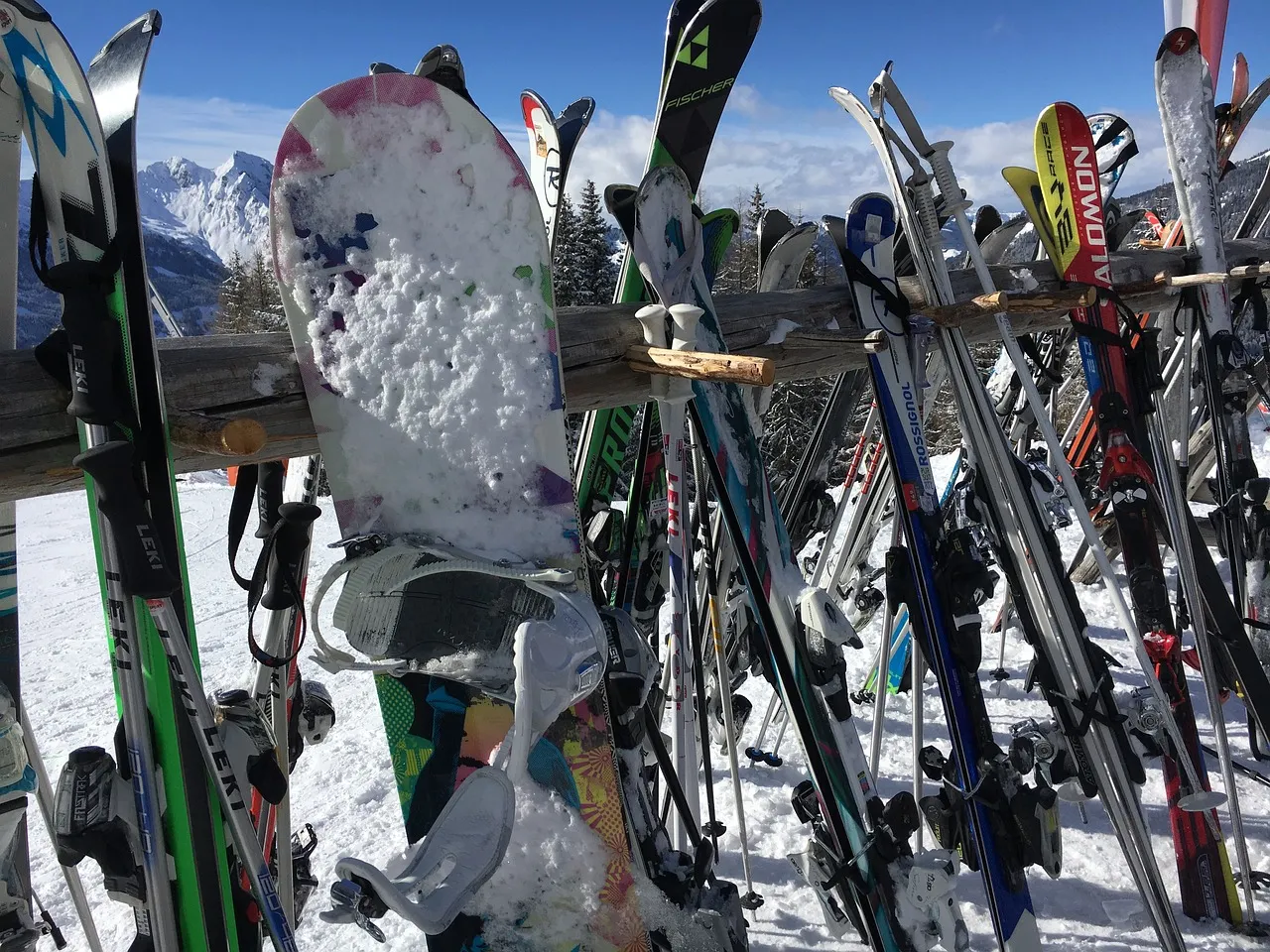
February is a traditional ‘family ski’ month in Switzerland, when children get a week off from school and families head to mountain resorts to enjoy skiing and other winter sports. There are a few things to keep in mind before you hit the slopes.
During February, many small towns and villages in Switzerland feel downright empty as families pack up their skis, poles, and boots and head for the Alps.
Mountain resorts, on the other hand, are filled to the brim throughout the month, with long queues forming at ski lifts, and skiers jostling for space on the crowded slopes.
If you too are going to ski in February (or at any other time, for that matter), prepare accordingly.
Arm yourself with patience
Roads leading to mountain resorts will be congested, so expect traffic jams and bottlenecks to slow you down more or less significantly, depending on factors such as the route you choose and the time of the day when you travel.
A good option could be to opt for public transport.
You are in luck on that score, as the country’s dense and efficient public transport system can get you practically everywhere — including to the mountains.
So if you would rather not deal with the hassle of driving , Swiss national railways (SBB) are running direct trains from major cities to a number of resorts.
READ ALSO: Where can you get to on one of Switzerland’s ‘ski trains’ in 2026?
If you choose this option, you will be able to transport your skis, ski boots, poles, snowboards, and sleds up to 23 kg, as there are separate luggage compartments on the train to accommodate your winter sports gear.
Advertisement
Choose the type of ski pass that suits you best
Most people typically buy their ‘regular’ ski passes ahead of time — the so-caled ‘fixed’ option.
In a number of Switzerland’s resorts, however, more flexible ski passes are available, which can cost you less or more — depending on the time of day you buy them.
That’s because they have introduced the so-called ‘dynamic’ ski pass pricing model.
What does this mean?
If, for instance, many ski passes have already been sold in a given day, the system automatically increases prices; if sales stagnate, prices are dropped.
Whether or not this system ultimately helps you to save money depends on various factors, both natural and man-made: expected weather and how many ski passes have already been sold in a given day.
Advertisement
Safety
This is probably something you don’t want to think about, but it is important information nevertheless.
According to Accident Prevention Office, around 63,000 skiers and snowboarders are injured each year in Switzerland.
This is only a small fraction — 1.8 percent — of the 3.5 million Swiss residents who ski each year. However, it means that tens of thousands of people face some kind of sports-related accidents.
If you live permanently in Switzerland, regardless of whether you are a Swiss national or a foreigner, you already have an accident insurance — either through your employer if you work more than eight hours a week, or through your own policy if you are self-employed.
In some cases, accidents are covered under your compulsory health insurance (KVG / LaMal); this applies particularly to stay-at-home partners, children, students, and retirees.
The insurance will cover most of the accident-related costs. But ‘most’ doesn’t mean ‘all.’
Rescues by helicopters, for instance, are only partially covered, so you could be left with a hefty bill to pay.
READ ALSO: Why getting rescued in the Swiss Alps could cost you thousands
If you want to be fully covered for such cases, consider buying a supplemental insurance that includes some coverage for search and rescue costs, medical transportation, and repatriation (if you ski abroad).


