


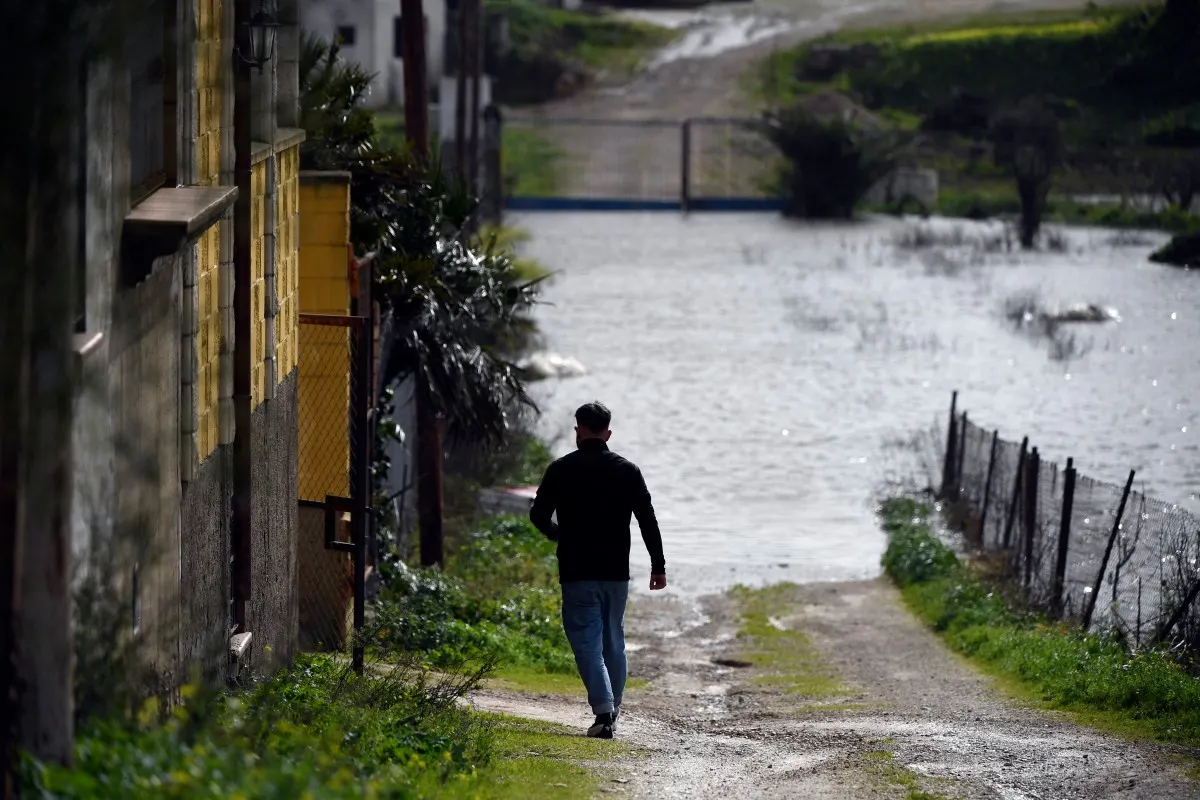
Flood warnings are becoming increasingly frequent in Spain, so it’s essential that you know what to do in the event of an official alert being issued in your area.
Given the amount of rain many places in Spain have been experiencing recently, flood warnings are not all that uncommon.
It’s important to know what to do and what not to do when a flood warning is issued, particularly given the fact that we all know how devastating they can be after the deadly floods in Valencia at the end of 2024.
A red alert is the highest level of warning when it comes to weather warnings issued by Spain’s State Meteorological Agency Aemet.
This implies an extraordinary level of danger both to people and property.
READ ALSO: Why is Grazalema the rainiest place in Spain?
Aemet’s recommendation for all types of weather under a red alert is to take preventative measures and follow instructions by the authorities, as well as avoid travel unless absolutely necessary.
A red alert for heavy rain is triggered when 60 millimetres of rainfall are forecast in one hour or 120 mm in 12 hours across much of Spain.
In Valencia, most of Catalonia and the Balearic Islands, the red alert threshold is 90 mm in one hour or 180 mm in 12 hours.
For Murcia, Santa Cruz de Tenerife, and southern Mallorca, the red alert is triggered at 60 mm of rainfall in one hour or 180 mm in 12 hours.
The general advice is to consult only official or professional sources, check the authority of the information before sharing and inform your friends and family if they are in the area.
READ ALSO: What do Spain’s orange and red weather alerts mean for the public?
Advertisement
Other steps to follow include:
- Check the weather forecast to be aware of what is happening and when rain will be expected.
- In case of flooding, locate the highest points nearest to you.
- If possible, position yourself in a place that is not likely to flood.
- Stay away from ravines, streams and bridges.
- Never cross flooded areas as the force of the current can sweep you away. If you find yourself in your car, the most important thing is to abandon the vehicle and seek higher ground.
- Do not park on the banks of rivers or next to ravines, gullies and bridges.
- Use priority routes and reduce your speed if driving.
- If you are leaving your home, seal any gaps around doors, windows, and ventilation openings. Place anything you want to save in the highest parts of the house.
- Call 112 in case of emergency.
Advertisement
For driving specifically, if travel is essential, check road conditions before setting out and follow the instructions on information panels and from law enforcement officers.
Make sure to listen to the news to find out the recommendations from the relevant authorities and services.
The Spanish Directorate General of Traffic (DGT) has published a video on how to react in case of torrential rain and flash floods if you are caught in them while out driving.
If you have driven through a flooded area for any reason, you should test the brakes by gently pumping them to ensure they are working. If you are also caught in a sudden surge of water inside the vehicle, you should leave it when the water rises above the wheel axle.
In the countryside during a storm, avoid trees, isolated rocks, and metal objects because they attract lightning.
In coastal areas during these alerts, avoid promenades, breakwaters, and viewpoints as the waves can be unpredictable and sweep you out to sea.


