

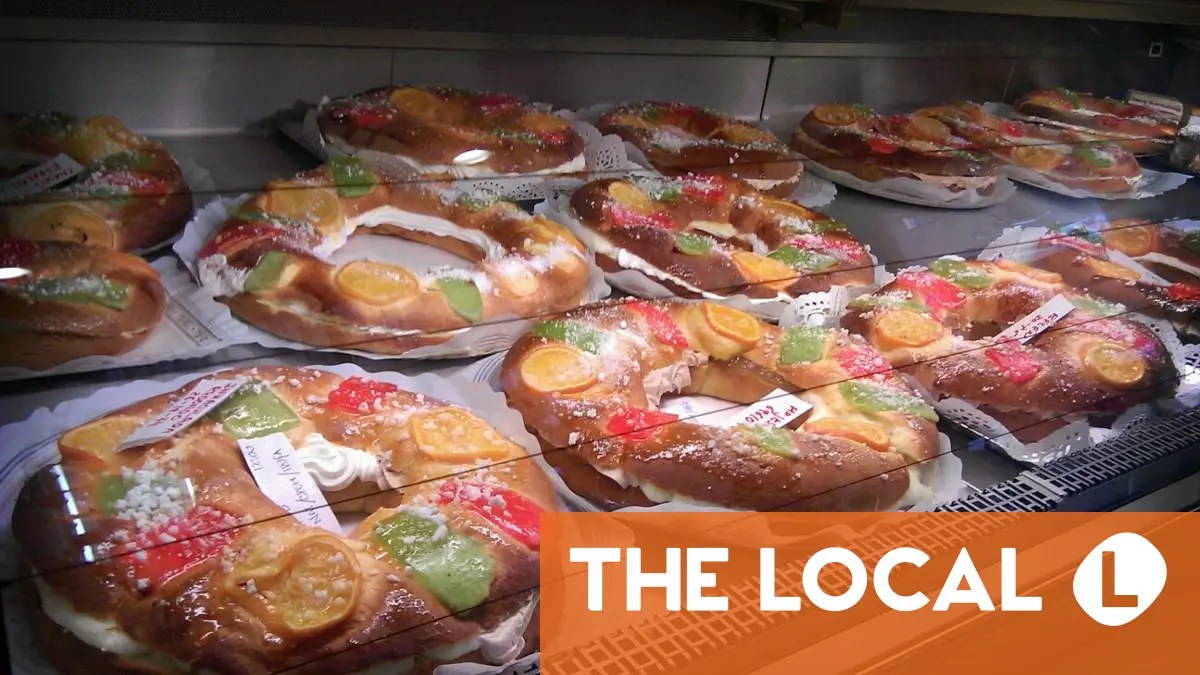
Every culture has a particular food associated with Christmas and in Spain there is nothing more typically festive than the Roscón de Reyes, the ‘Cake of Kings’. Here’s what you need to know about this tradition and its fascinating origins.
On January 6th, to celebrate Epiphany, Spaniards typically tuck into a Roscón de Reyes (also called rosca or rosco), a golden brioche shaped like a large doughnut decorated with candied fruit.
The traditional sweet dough of a roscón is scented with orange blossom and can be served with cream but for many it’s best when dunked into a steaming mug of rich hot chocolate after an evening watching the Cabalgata – the lavish parades held across Spain on January 5th when the Three Kings distribute sweets and presents to children.
The cakes, which symbolise the crowns worn by the Three Kings or Wise Men on their visit to baby Jesus, traditionally contain a little figurine for children as well as a dry fava bean.
Whoever finds the toy is crowned king or queen of the celebration, while the one who finds the bean has to buy the roscón next year.
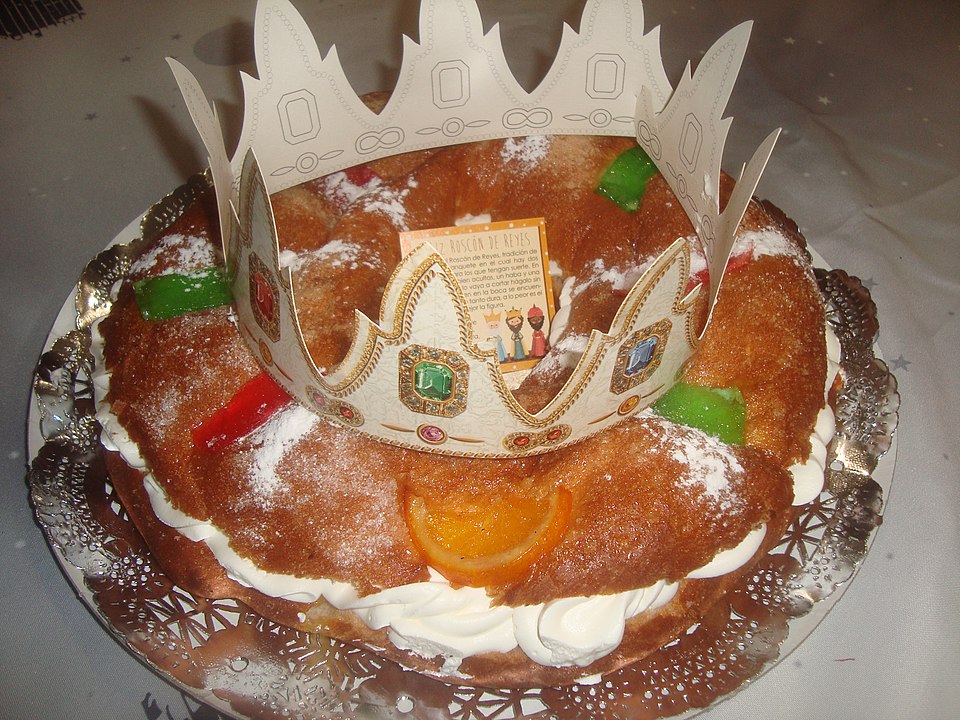 The Spanish Roscón de Reyes (pictured) is made differently to the roscón eaten in Mexico. Photo: Juan Emilio Prades Bel/Wikipedia
In previous years, El Corte Inglés promised an even greater prize by hiding one gram gold ingots in 1,000 of its cakes sold in the run up to Epiphany, each ingot with an estimated value of around €50, as well as three special prizes of a gold ingot weighing an ounce with a value of over €1,000.
Advertisement
Spain’s flagship department store sells around 600,000 of these cakes every year, in 25 different varieties.
History
The origin of the roscón can be traced back to the 2nd century AD as part of the Romans’ pagan Saturnalia celebrations, which also took place at the end of year and usually included a sacrifice, gift-giving, plenty of partying and a public banquet to celebrate the end of the darkest period of the year.
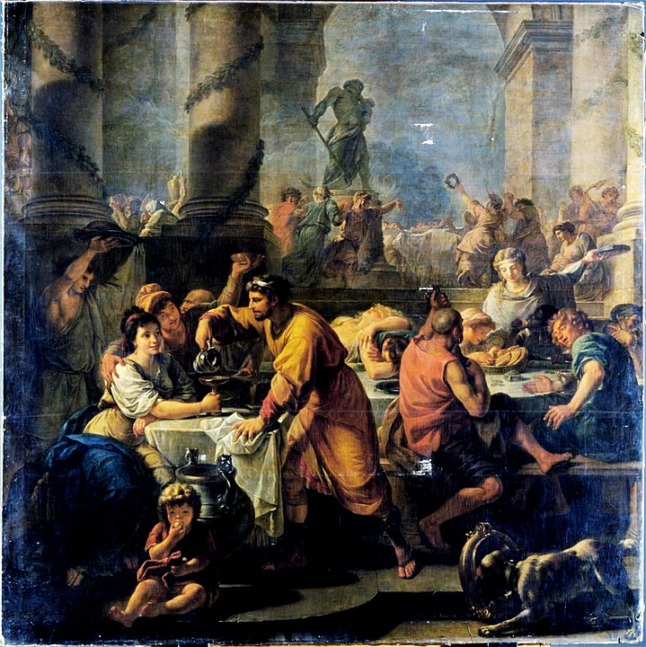
Saturnalia celebrations depicted by 18th century French painter Antoine Callet.
Of all the delicacies on offer the most popular was a honey-based cake with nuts, dates and figs.
A century later, they added a bean to the mix, a symbol of prosperity and fertility, but it wasn’t long before the consolidation of Christianity and then Moors in Spain saw this pagan tradition fade into the background.
Advertisement
There are some written references to its existence during the Middle Ages but it truly returned with a bang more than a millennium later thanks to French-born Spanish King Philip V, who followed the lead of his monarchic family over the border, as they’d already been enjoying a version of roscón at the Court of Versailles in the late 17th century.
Now rather than just hiding beans in the dough they also added gold coins, an idea which historians say a French chef came up with to try to dazzle a young King Louis XV of France.
Whoever got the coin was the winner, and whoever landed the bean was the loser.
The tradition has lived on in Spain until the present day and is now associated with the arrival of the Three Kings on January 6th for Epiphany, but other versions of roscón are also eaten in France, Portugal, Colombia and Mexico.


